 October 2023 in “Indian journal of ophthalmology. Case reports”
 This case report described acute vision loss in a patient after forehead injections of triamcinolone acetonide for alopecia areata, attributing retinal artery occlusion to embolization by steroid particles.
 January 2024 in “Dermatologic Surgery”
 This abstract pertains to a dermatology-related academic profile without reporting any specific study findings. Results or research details are not provided.
 8 citations
,
October 2019 in “Immunological investigations”
8 citations
,
October 2019 in “Immunological investigations” This study suggests that the rs2075876 variant in the AIRE gene may significantly increase susceptibility to alopecia areata in the examined male population.
23 citations
,
July 2003 in “Journal of Investigative Dermatology” Genetic testing for hairless gene mutations is crucial to correctly diagnose and treat atrichia with papular lesions.
 July 2011 in “Facial Plastic Surgery”
 The document provides a quiz for physicians to earn continuing medical education credits in facial plastic surgery.
This article provides a reference guide for various dermatological terms, treatments, and conditions, but reports no new clinical findings.
July 2025 in “Journal of the European Academy of Dermatology and Venereology” This study reports no new findings but provides corrected figures for the long-term safety and efficacy of ritlecitinib in treating alopecia areata from the ALLEGRO-LT phase 3 study.
 1 citations
,
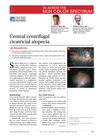
April 2022 in “The Journal of Family Practice”
1 citations
,
April 2022 in “The Journal of Family Practice” This report describes early and late stages of central centrifugal cicatricial alopecia in two Black women, highlighting progression from a small to a large central patch of hair loss.
 2 citations
,
January 2023 in “Dermatology Practical & Conceptual”
2 citations
,
January 2023 in “Dermatology Practical & Conceptual” This study found that patients with alopecia areata had a higher frequency of the AB+ blood group compared to healthy controls.
 4 citations
,
October 2024 in “American Journal of Clinical Dermatology”
4 citations
,
October 2024 in “American Journal of Clinical Dermatology” This study found that ritlecitinib improved patient-reported outcomes related to hair growth in individuals with alopecia areata, with some experiencing clinically meaningful hair regrowth, although changes in emotional symptoms and activity limitations were minimal and similar across treatment groups.
 January 2025 in “Dermatology Review”
 This case report from the provided study details a previously unreported adverse effect of salivary gland inflammation potentially linked to acitretin therapy for generalized pustular psoriasis, suggesting further research is needed to explore this association.
July 2025 in “The Egyptian Journal of Hospital Medicine” This study found that intralesional methotrexate and triamcinolone acetonide have similar efficacy for localized alopecia areata in adults, but differ in safety profiles, with methotrexate associated with hyperpigmentation and triamcinolone with atrophy.
March 2026 in “The Journal of Dermatology” This study found that ritlecitinib 50 mg is cost-effective compared to no treatment for patients in Japan with alopecia areata and significant scalp hair loss, demonstrating an incremental cost-effectiveness ratio below the country's cost-effectiveness threshold.
4 citations
,
November 2024 in “British Journal of Nursing” This article guides advanced clinical practitioners in performing dermatological assessments and examinations, addressing the common issue of feeling unprepared among these practitioners despite the high prevalence of skin problems they encounter.
 January 2024 in “Pharmaceutical medicine”
 In this study, most surveyed physicians were aware of the meningioma risk linked to cyproterone acetate monotherapy, but many did not recall receiving updated safety communications.
 June 2024 in “Military medicine”
 This review explored treatment options for alopecia areata in the military health care system, evaluating the pathogenesis and impact of the condition as well as the efficacy and safety of FDA-approved JAK inhibitors, baricitinib and ritlecitinib.
April 2024 in “Journal of the American Academy of Dermatology” Diagnosing and treating CCCA requires understanding multiple causes and using various diagnostic tools.
 April 2026 in “Frontiers in Medicine”
 In this case report, a female patient with both psoriasis and lichen planus initially responded to acitretin and topical mometasone but experienced a relapse after stopping the treatment. The authors reported marked improvement within 3 months after switching to upadacitinib, aiming to guide clinical decision-making.
56 citations
,
November 2007 in “Molecular and cellular endocrinology” This study identified enzymes responsible for regulating androgen action in the human prostate, suggesting that inhibiting AKR1C2 or RL-HSD may have therapeutic potential in androgen insufficiency or benign prostatic hyperplasia, respectively.
June 2026 in “Journal of Investigative Dermatology” This study reported that the anti-γc antibody hC2 restored hair follicle homeostasis and suppressed hair loss in an AA-like mouse model by inhibiting autoreactive T-cell activity, suggesting that hC2 may offer a safer and more effective treatment for alopecia areata compared to current Jak inhibitors.
 December 2015 in “Journal of Psoriasis and Psoriatic Arthritis”
 This case report describes a rare instance of prolonged alopecia following acitretin therapy where the patient's hair did not significantly regrow more than six months after stopping treatment.
 November 2025 in “The Journal of Medical Sciences”
 This article reviews the potential and limitations of cryotherapy for alopecia areata in middle-aged patients and highlights the need for further research, without reporting new clinical findings.
 28 citations
,
April 1936 in “Journal of the American Medical Association”
28 citations
,
April 1936 in “Journal of the American Medical Association” This report describes a case where applying fresh aloe vera leaf to roentgen dermatitis resulted in significant skin healing and reduced itching within five weeks.
 24 citations
,
April 2007 in “European Journal of Pharmaceutics and Biopharmaceutics”
24 citations
,
April 2007 in “European Journal of Pharmaceutics and Biopharmaceutics” This study found that artocarpin delivered via alginate/chitosan microparticles effectively suppressed the growth of hamster flank organs compared to artocarpin in solution form, without significant systemic effects.
13 citations
,
February 2025 in “Journal of the European Academy of Dermatology and Venereology” Ritlecitinib shows promise for treating alopecia areata, especially with early and extended treatment.
 3 citations
,
January 2019 in “Cureus”
3 citations
,
January 2019 in “Cureus” This review discusses confluent and reticulated papillomatosis in polycystic ovarian syndrome patients, noting successful treatment with azithromycin in one case, and suggests potential association with acanthosis nigricans; it reports no new results.
 February 2024 in “Actas dermo-sifiliográficas/Actas dermo-sifiliográficas”
 This study reviewed 562 alopecia areata patients in Colombia, observing a higher prevalence in women and common use of steroid injections and topical minoxidil as treatments.

This study reports that a combination of upadacitinib and oral minoxidil resulted in complete hair regrowth in a 20-year-old with alopecia universalis, Crohn's disease, and atopic dermatitis.
 2 citations
,
August 2017 in “British Journal of Dermatology”
2 citations
,
August 2017 in “British Journal of Dermatology” Hair loss in Cronkhite-Canada syndrome may be due to an autoimmune response.
 1 citations
,
February 2024 in “JEADV. Journal of the European Academy of Dermatology and Venereology/Journal of the European Academy of Dermatology and Venereology”
1 citations
,
February 2024 in “JEADV. Journal of the European Academy of Dermatology and Venereology/Journal of the European Academy of Dermatology and Venereology” In this research, the authors reported that long-term treatment with the JAK1/JAK2 inhibitor baricitinib effectively maintains hair regrowth in patients with severe alopecia areata and may gradually improve outcomes for partial responders over 104 weeks, without increasing side effect incidence.