 4 citations
,
May 2013 in “The Journal of Korean Medicine Ophthalmology and Otolaryngology and Dermatology”
4 citations
,
May 2013 in “The Journal of Korean Medicine Ophthalmology and Otolaryngology and Dermatology” This study observed that Korean medicine treatment, particularly with a cooling effect, significantly improved hair count and reduced symptoms in alopecia patients with parietal region fever.
January 2014 in “International Journal of Clinical Medicine” This case report suggests that premature aging may contribute to weakened immunity and the development of autoimmune diseases.
18 citations
,
April 2016 in “American Journal of Dermatopathology” This case series highlights that nail clipping can aid in early detection and surgical planning of onychomatrical tumors by distinguishing between benign and potentially malignant growths based on the cavities' average dimensions.
 February 2024 in “International journal of advanced academic studies”
 This review article outlines the common acquired causes of hair loss, aiming to equip general physicians with essential knowledge for diagnosing and managing hair loss and baldness. Results are not reported.
 24 citations
,
May 2012 in “International Journal of Dermatology”
24 citations
,
May 2012 in “International Journal of Dermatology” This review discusses the various causes and associations of eyelash trichomegaly, including congenital syndromes, acquired conditions, and drug effects, without reporting new clinical results.
 53 citations
,
October 1978 in “Archives of dermatology”
53 citations
,
October 1978 in “Archives of dermatology” This study reports two cases of acquired zinc deficiency presenting with skin symptoms such as hair loss and acrodermatitis, suggesting these manifestations may help in diagnosing zinc deficiency in humans.
14 citations
,
October 1978 in “Archives of Dermatology” This report describes two cases where acquired zinc deficiency was associated with skin symptoms like hair loss and eczema, suggesting a recognizable syndrome in zinc-deficient patients.
 9 citations
,
January 2001 in “Dermatology”
9 citations
,
January 2001 in “Dermatology” This study reports two cases where pili anulati, typically a non-fragile hair condition, showed increased fragility due to androgenetic alopecia, causing hair shaft fracturing in the affected area.
January 2026 in “International Journal of Dermatology” This study reports two cases where acquired perforating dermatosis was localized to the scalp and coincided with acute diffuse alopecia, suggesting perifollicular inflammation may link the two conditions.
 February 2025 in “American Journal of Biomedical Science & Research”
 This case report highlights two cases of alopecia areata in patients with celiac disease, noting the rare occurrence of one patient also having acquired hypertrichosis lanuginosa, which may be the first documented instance of this combination in the literature.
44 citations
,
July 2013 in “Journal of the American Academy of Dermatology” This review discusses various genetic and acquired conditions associated with poliosis circumscripta and reports no new clinical results.
March 1997 in “Medical Molecular Morphology” Zinc deficiency causes early scalp hair damage that recovers slower than skin symptoms.

In this retrospective study conducted at a dermatology institute in Mexico, researchers analyzed 1,888 adult alopecia cases, identifying alopecia areata as the most common type. The study underscores the importance of regional studies to better understand alopecia patterns and inform management strategies.
 September 2016 in “Elsevier eBooks”
 Different types of hair loss in dogs and cats have various causes and treatments, with outcomes ranging from good to uncertain.
 15 citations
,
September 2018 in “Medicine”
15 citations
,
September 2018 in “Medicine” This review discusses the causes and clinical presentations of ptosis in childhood and reports on several observed cases, but provides no new clinical results.
 33 citations
,
August 1985 in “Archives of Dermatology”
33 citations
,
August 1985 in “Archives of Dermatology” This study suggests that acquired progressive kinking of hair, which typically appears at or after puberty, may be androgen dependent and could progress to male pattern baldness.
 April 2023 in “Our Dermatology Online”
 Trichoscopy is effective in diagnosing trichotillomania by showing specific hair patterns.
 5 citations
,
March 2009 in “Pediatric Dermatology”
5 citations
,
March 2009 in “Pediatric Dermatology” The study found that pili bifurcati causes hair to intermittently split into two branches, each with its own outer layer.
 July 2024 in “Berkala Ilmu Kesehatan Kulit dan Kelamin”
 This study highlights the importance of identifying the various causes of hair loss in children to enable accurate diagnosis and management, emphasizing that proper treatment, including psychosocial support, can prevent a decline in their quality of life.
 22 citations
,
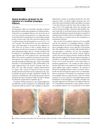
September 2004 in “Journal of The European Academy of Dermatology and Venereology”
22 citations
,
September 2004 in “Journal of The European Academy of Dermatology and Venereology” Bimatoprost can cause longer, thicker, darker eyelashes and eyebrows.
 67 citations
,
September 2003 in “Journal of cutaneous pathology”
67 citations
,
September 2003 in “Journal of cutaneous pathology” This review discusses the various skin manifestations associated with end-stage renal disease and their potential causes but reports no new clinical findings; the authors emphasize pruritus as a significant condition.
8 citations
,
July 2021 in “Journal of Pediatric Health Care” In this paper, the authors provide recommendations for primary care practitioners on evaluating and treating pediatric hair loss, emphasizing the importance of early diagnosis to prevent permanent scarring alopecia by classifying causes into acquired or congenital origins.
2 citations
,
November 2024 in “JCEM Case Reports” This study describes a case of a 35-year-old woman who developed symptoms of hyperandrogenism and disrupted steroidogenesis due to chronic use of electronic cigarettes containing compounds similar to etomidate, despite no genetic mutation indicating 11β-hydroxylase deficiency.
 4 citations
,
September 2017 in “Skin appendage disorders”
4 citations
,
September 2017 in “Skin appendage disorders” This case report describes the first dermoscopic evaluation of alopecia areata-like disease in a dog, where the condition mirrored human cases in terms of clinical presentation and treatment response.
 January 2026 in “International Journal of Science and Research (IJSR)”
 This source discusses ichthyosis, a disorder causing dry, scaly skin, by exploring its genetic causes, potential systemic associations, and treatments, and correlates modern medical insights with Unani medicine principles focused on humoral balance and holistic care.
 May 2015 in “Journal of The American Academy of Dermatology”
 A woman with Parry-Romberg syndrome developed new curly hair on one side of her scalp, a condition not previously linked to the syndrome.
 16 citations
,
June 2005 in “Clinical and Experimental Dermatology”
16 citations
,
June 2005 in “Clinical and Experimental Dermatology” In this study of 30 severe anorexia nervosa patients, true acquired pili torti was not found although twisted hair was observed in 6.6% of cases.
 11 citations
,
October 2015 in “Journal der Deutschen Dermatologischen Gesellschaft”
11 citations
,
October 2015 in “Journal der Deutschen Dermatologischen Gesellschaft” This study observed that women post-bariatric surgery may be at increased risk for dermatological signs of malnutrition during subsequent pregnancies, highlighting the need for dermatologists to recognize these early symptoms.
 10 citations
,
November 1997 in “British Journal of Dermatology”
10 citations
,
November 1997 in “British Journal of Dermatology” This case report documents acquired progressive kinking of the hair in a prepubertal boy but does not provide new clinical results.
 6 citations
,
January 2016 in “International Journal of Trichology”
6 citations
,
January 2016 in “International Journal of Trichology” This case study suggests that patients with acquired progressive kinking of the hair may benefit from finasteride treatment due to an increased risk of developing androgenetic alopecia.