June 2018 in “Dermatologic Surgery” This abstract describes the Dermatologic Surgery journal's extensive focus on skin surgery procedures, but it presents no new research findings.
1 citations
,
November 2024 in “Journal of Investigative Dermatology” Er:YAG laser therapy effectively treats Hailey-Hailey disease, leading to long-term remission and improved quality of life.
May 2025 in “Drug Delivery and Translational Research” September 2023 in “Journal of the American Academy of Dermatology” 35 citations
,
October 2003 in “Dermatologic clinics” This article discusses the lack of national credentialing for laser therapy practitioners and emphasizes the need for rigorous self-assessment and expertise, particularly when treating patients with darker skin, without presenting new research results.
27 citations
,
November 2010 in “JDDG Journal der Deutschen Dermatologischen Gesellschaft” This review discusses recent advancements in dermatological laser therapy, highlighting its growing applications but noting gaps in data on long-term effects and side effects.
 27 citations
,
August 2014 in “Journal of Cosmetic and Laser Therapy”
27 citations
,
August 2014 in “Journal of Cosmetic and Laser Therapy” This study compared the microscopic treatment zones created by different fractional lasers and radiofrequency in swine skin, finding distinct patterns and damage levels for each technology.
 25 citations
,
August 2017 in “Lasers in Medical Science”
25 citations
,
August 2017 in “Lasers in Medical Science” This literature review reported that fractional lasers, like the 1550-nm nonablative erbium-glass laser, may enhance hair regrowth by stimulating a wound healing process, but more randomized controlled trials are needed to confirm their effectiveness and optimize treatment parameters.
 17 citations
,
January 2021 in “Dermatology and Therapy”
17 citations
,
January 2021 in “Dermatology and Therapy” This review discusses laser-assisted drug delivery for enhancing topical treatment efficacy in various dermatological and medical applications but reports no new clinical results, emphasizing the need for further research to optimize its use.
 January 2023 in “The Egyptian Journal of Hospital Medicine ”
 This review suggests that fractional CO2 laser treatment may be a promising option for treating alopecia areata with a good safety profile.
May 2026 in “Journal of Cosmetic Dermatology” This meta-analysis found that fractional laser therapy significantly improved hair density in patients with androgenetic alopecia and exhibited a favorable safety profile, with mild to moderate adverse events. Combination therapy with laser and other treatments was more effective than other treatments alone.
January 2025 in “Journal of Biosciences and Medicines” This narrative review explores contraindications for fractional CO2 laser treatment of aesthetic disorders, highlighting conditions such as pigmentary disorders, active skin conditions, photosensitivity, and recent isotretinoin use, emphasizing the importance of careful patient selection to minimize risks and enhance safety and effectiveness.
 October 2023 in “Skin research and technology”
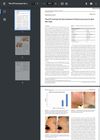
 This study evaluated the effectiveness of a 675 nm laser device on facial acne scars in patients with darker skin types, finding that 67% reported excellent improvement and 33% reported good improvement, with significant enhancements in skin texture and appearance after five treatments.
 June 2025 in “Medical alphabet”
 The authors concluded that combining fractional lasers with topical therapy may be a promising and effective approach for treating androgenetic alopecia, offering high safety and tolerability.
 February 2019 in “Case medical research”
 Using lasers to deliver minoxidil can potentially improve its effectiveness in treating male pattern hair loss.
3 citations
,
August 2024 in “Journal of Cosmetic Dermatology” This study found that using ablative fractional CO₂ laser therapy combined with FUE treatment in patients with post-traumatic eyebrow scars and defects improved follicular survival rates and resulted in well-defined eyebrow shapes.
 September 2021 in “Medical lasers”
 Laser treatment followed by a special hair growth solution increased hair count and thickness without side effects.
 55 citations
,
June 2013 in “Dermatologic Surgery”
55 citations
,
June 2013 in “Dermatologic Surgery” This review discusses the use of ablative and nonablative fractional resurfacing for enhanced topical drug delivery in dermatology and reports no new clinical results; further studies are needed to explore these methods.
22 citations
,
September 2022 in “Medicina” This study found that the dual-wavelength non-ablative fractional laser provides enhanced skin rejuvenation by increasing thermal lesion coverage and collagen remodeling compared to using the CO2 laser alone in an ex vivo setting.
 3 citations
,
March 2019 in “Chinese Medical Journal”
3 citations
,
March 2019 in “Chinese Medical Journal” In this study using mice, fractional CO2 laser therapy promoted hair regrowth by inducing moderate inflammation, enhancing VEGF-mediated angiogenesis, and activating the Wnt10b signaling pathway.
 1 citations
,
March 2024 in “International Journal of Dermatology”
1 citations
,
March 2024 in “International Journal of Dermatology” This case report describes a therapy-resistant folliculitis decalvans patient who showed nearly complete response with increased hair density after treatment with CO2 laser-assisted photodynamic therapy.
 February 2024 in “Lasers in Medical Science”
 This review discusses laser and energy-assisted drug delivery as a treatment for alopecia and concludes that although all studies show positive effects, some reports indicate no superiority over existing monotherapies.
16 citations
,
December 2022 in “Expert Opinion on Drug Delivery” This study reviewed preclinical and clinical research and found that AFL-assisted topical drug delivery is considered safe and effective, enhancing drug efficacy, reducing treatment time and pain, and improving cosmetic and safety outcomes, but larger clinical trials are needed to confirm these benefits.

This review concluded that laser-based therapies, particularly low-level lasers and fractional ablative lasers, are effective for treating hair loss, with combination therapies showing superior efficacy compared to monotherapies.
59 citations
,
September 2011 in “Lasers in Medical Science” This study concluded that the 800-nm diode laser is effective in enhancing skin structure and collagen expression via the TGF-β/Smad pathway, suggesting potential for non-ablative rejuvenation.
 1 citations
,
March 2019 in “Lasers in Surgery and Medicine”
1 citations
,
March 2019 in “Lasers in Surgery and Medicine” This article contains the late-breaking abstracts from the 39th Annual Conference of the American Society for Laser Medicine and Surgery and does not present new research results.
 33 citations
,
September 2016 in “Lasers in Surgery and Medicine”
33 citations
,
September 2016 in “Lasers in Surgery and Medicine” In this review, the authors report that fractional resurfacing can be a safe and effective technique for treating scars and promoting photorejuvenation in Asian skin, though it requires cautious use to minimize risks like post-inflammatory hyperpigmentation and rebound melasma.
 19 citations
,
September 2015 in “Therapeutic Delivery”
19 citations
,
September 2015 in “Therapeutic Delivery” This review discusses the application of active transdermal technologies in cosmetic devices for skin restoration and enhancement, reporting no new clinical results.
9 citations
,
January 2023 in “Indian Dermatology Online Journal” This review discusses the use of aesthetic treatments for medical purposes and their therapeutic potential but provides no new clinical results.
 5 citations
,
July 2018 in “The Egyptian Journal of Hospital Medicine”
5 citations
,
July 2018 in “The Egyptian Journal of Hospital Medicine” This study observed that S.epidermidis was more prevalent in normal skin, whereas P.acne was more common in acne lesions among Egyptian patients; antibiotic treatments may not be the most effective for acne, highlighting alternative therapies like retinoids or lasers.