 August 1996 in “Journal of Pediatric and Adolescent Gynecology”
 This article discusses the various manifestations and diagnostic challenges of polycystic ovarian syndrome and reviews its associated symptoms and clinical heterogeneity but reports no new clinical findings.
 25 citations
,
June 2014 in “Journal of Endocrinology/Journal of endocrinology”
25 citations
,
June 2014 in “Journal of Endocrinology/Journal of endocrinology” This study found that local androgen biosynthesis and metabolism in human sebaceous glands play a crucial role in sebum synthesis and secretion.
 February 2023 in “Research Square (Research Square)”
 This study reports that a new mouse model with a CARD14 mutation successfully mimics key human PRP symptoms, and anti-IL-17A antibody significantly reduces these symptoms.
 September 2023 in “Journal of The American Academy of Dermatology”
 This study found that adolescents with androgenetic alopecia showed distinct hormonal profiles between boys and girls, with concurrent metabolic dysfunction present in both sexes, highlighting the need for sex-specific diagnosis and management approaches.
 April 2017 in “Journal of Investigative Dermatology”
 This case study reports that a heterozygous missense GJA1 mutation, p.Gly138Ser, in a 2-year-old boy with oculodentodigital syndrome primarily resulted in syndactyly, fifth finger hypoplasia, and hypotrichosis, without neurological or craniofacial abnormalities.
March 2016 in “The Journal of Urology” This historical review traces the discovery of 5-alpha reductase inhibitors, widely used in urology, from the study of guevedoces, Dominican children with a rare disorder leading to significant androgenization at puberty.
November 2020 in “UNC Libraries” In this study, researchers identified seven new genetic loci associated with prostate cancer susceptibility through a multi-stage genome-wide association study.
June 2025 in “V F Snegirev Archives of Obstetrics and Gynecology” In this case study, a six-year-old girl was diagnosed with isolated adrenarche, linked to premature adrenal maturation, with increased dehydroepiandrosterone sulfate and axillary and pubic hair growth, and will require long-term monitoring due to increased risks of conditions like polycystic ovary syndrome and cardiovascular diseases.
January 2021 in “Figshare” This study developed a nanostructured lipid carrier for 17-α-estradiol that showed stable physicochemical properties and improved targeting to hair follicles in alopecia treatment.
 April 2018 in “The journal of investigative dermatology/Journal of investigative dermatology”
 This study observed that in an ex vivo setting, 17β-estradiol increased CB1 expression in human hair follicles, suggesting possible sensitivity to endocannabinoids and a potential mechanism for hair therapy.
2 citations
,
September 1992 in “Steroids” The researchers reported that compounds 11 to 13 derived from Westphalen-type steroids showed strong antiandrogenic activity in vivo, though their effects could not be attributed to 5α-reductase inhibition or androgen receptor binding.
1 citations
,
August 2019 in “Journal of pediatric & adolescent gynecology” This report describes a novel AR gene mutation in a female patient, contributing to androgen insensitivity syndrome, and emphasizes its potential impact on genetic counseling.
 April 2017 in “Turkish Journal of Pediatric Disease”
 This study found that 20% of children initially diagnosed with premature pubarche were later identified with other conditions like central puberty precox or congenital adrenal hyperplasia during follow-up, emphasizing the importance of ongoing differential diagnosis.
9 citations
,
March 2023 in “Chemosphere” This study found that exposure to certain pesticides may be associated with delayed sexual maturation in adolescent males.
34 citations
,
January 2016 in “Analytical Chemistry” This study reports that a new DART-HRMS method can effectively analyze intact hair for drug use timelines, with cocaine detection aligning with forensic standards and identifying multiple drugs from high-resolution data.
3 citations
,
July 2015 in “International Journal of School Health” This study found that in a sample of female adolescents in Shiraz, the most common PCOS phenotype was hyperandrogenic with polycystic ovary syndrome, warranting further investigation due to associated risks.
 6 citations
,
July 2017 in “Case Reports”
6 citations
,
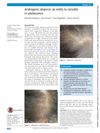
July 2017 in “Case Reports” This case study describes a 15-year-old girl with progressive hair thinning and reduced hair density at the frontal scalp, with a family history of alopecia.
123 citations
,
December 1997 in “Calcified Tissue International” This study concluded that higher androgen levels in males and specific skeletal sites may contribute to differences in skeletal morphology, with glucocorticoids, E2, and D3 enhancing androgen receptor expression and mitogenic action in human osteoblastic cells.
 5 citations
,
July 2021 in “Endocrinology, diabetes & metabolism”
5 citations
,
July 2021 in “Endocrinology, diabetes & metabolism” This study found that glioblastoma cells express key enzymes involved in androgen synthesis, suggesting these enzymes might be potential targets for new therapeutic strategies.
October 1984 in “Kidney international” This case report describes a 23-year-old woman with a history of ambiguous genitalia and complex medical conditions, including a pelvic mass and hirsutism, observed from childhood to adulthood.
53 citations
,
May 1996 in “The Journal of Clinical Endocrinology & Metabolism” This study identified multiple mutations in the 5 alpha-reductase-2 gene among male pseudohermaphrodites in the Dominican Republic, suggesting they do not share a common ancestry.
 September 2021 in “Fertility and Sterility”
 This study found that older men in North America had longer infertility durations and were more likely to have partners who underwent IVF, with age impacting referral patterns and substance use behaviors.
 December 2024 in “PubMed”
 This study evaluates the compatibility of six active pharmaceutical ingredients, including finasteride and spironolactone, with TrichoFoam™, a foam vehicle used in personalized treatments for alopecia, though it does not report specific results.
A new mutation in the TRPS1 gene caused Trichorhinophalangeal syndrome in a 17-year-old, highlighting the need for genetic testing.
 1 citations
,
October 2020 in “Current Drug Discovery Technologies”
1 citations
,
October 2020 in “Current Drug Discovery Technologies” This study investigated various synthesized 5-reductase inhibitors and found that compound 6 had the highest anti-androgenic activity and receptor affinity compared to finasteride, showing potential due to its improved efficacy and bioavailability for further research in treating lower urinary tract symptoms.
 1 citations
,
November 1995 in “Postgraduate medical journal”
1 citations
,
November 1995 in “Postgraduate medical journal” This article presents a case of 5-alpha-reductase deficiency in a Saudi individual, reporting no new research findings.
5 citations
,
January 2017 in “Arquivos Brasileiros de Oftalmologia” This report describes a novel mutation in the CDH3 gene in an 11-year-old Iranian boy with hypotrichosis and juvenile macular dystrophy, indicating a new genetic variant associated with the disorder.
17 citations
,
April 2009 in “Andrologia” This case study reports that hormonal imbalances in a young boy with precocious pseudopuberty returned to normal after the removal of a testicular interstitial cell tumor, with normal spontaneous puberty following.
 37 citations
,
January 2004 in “Hormone Research in Paediatrics”
37 citations
,
January 2004 in “Hormone Research in Paediatrics” In this study, the prevalence of clinical polycystic ovary syndrome among high school girls in Isfahan, Iran was reported at 3%, with a note that hormonal assessments might uncover higher rates.