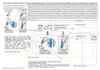
This study reports that melatonin influenced HaCaT cell proliferation, with high concentrations reducing DNA synthesis and low concentrations enhancing it after 24 hours.
February 2017 in “International Journal on Advanced Science, Engineering and Information Technology” This study found that hair follicle stem cells can proliferate and differentiate into keratinocytes on chitosan skin-engineered templates, suggesting potential applications in regenerative medicine.
3 citations
,
June 2021 in “Frontiers in genetics” This study found that STAT3 directly inhibited the activity of the sheep FST gene promoter, consequently reducing cell proliferation and promoting a better understanding of hair follicle development mechanisms.
3 citations
,
March 2013 in “PubMed” This study found that applying 10% platelet-rich plasma significantly increased hair follicle density and reduced the time for hair formation in a mouse model compared to no PRP treatment.
13 citations
,
June 2020 in “BMC genomics” This study found that chi-miR-30b-5p was more expressed in the telogen phase than in the anagen phase and inhibited dermal papilla cell proliferation by targeting CaMKIIδ.