14 citations
,
September 2019 in “Forensic Science International Genetics” This study found that hair shaft keratin proteins can be reliably identified from samples as small as 0.12 cm, suggesting their potential forensic utility with typical casework sample sizes.
 28 citations
,
November 2018 in “Journal of structural biology”
28 citations
,
November 2018 in “Journal of structural biology” This study found statistically significant patterns in hair morphology and ultrastructure linked to biogeographic ancestry among European, African, and East Asian populations.
18 citations
,
April 2018 in “Biotechniques/BioTechniques” This study developed a method for extracting proteins from micro-sized human head hairs, facilitating proteomic analysis even with limited hair sample availability.
68 citations
,
August 2014 in “PeerJ” This study found that proteomic analysis can distinguish hair samples across different ethnicities and body regions based on keratin protein levels, which may aid forensic hair identification.
51 citations
,
September 2012 in “Biomacromolecules” This study found that disulfide bonds in keratin increase its strength and toughness, with some loss of α-helical structure under load, highlighting their role in trichocyte α-keratin's mechanical properties.
 38 citations
,
October 2011 in “Analytical biochemistry”
38 citations
,
October 2011 in “Analytical biochemistry” This study used proteomic techniques to analyze human hair proteins, revealing keratin heterogeneity and identifying posttranslational modifications, such as cysteine trioxidation and methylation.
29 citations
,
August 2011 in “PubMed” This study describes how shotgun proteomics can identify over 300 proteins in hair shafts, potentially allowing for the diagnosis of diseases through noninvasive human proteome sampling.
26 citations
,
June 2010 in “Electrophoresis” This study reported advances in identifying low-abundance proteins in wool by using fractionation techniques to reduce the dominance of intermediate filament proteins, improving the understanding of the wool proteome.
 21 citations
,
October 2006 in “International Journal of Dermatology”
21 citations
,
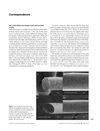
October 2006 in “International Journal of Dermatology” Asian hair is stronger and more damage-resistant than Caucasian hair due to a thicker cuticle layer.
122 citations
,
January 2006 in “Molecular & Cellular Proteomics” This study found that keratin and other hair proteins in humans are extensively modified posttranslationally, which helps explain the structural characteristics of mature hair.
226 citations
,
January 2006 in “International review of cytology” Keratin-associated proteins are crucial for hair strength and structure.
 226 citations
,
January 2002 in “Biological and Pharmaceutical Bulletin”
226 citations
,
January 2002 in “Biological and Pharmaceutical Bulletin” This study developed a rapid method to extract proteins from human hair, revealing phosphorylation on serine and threonine residues in alpha-keratins and matrix proteins.
 33 citations
,
September 1961 in “Archives of Dermatology”
33 citations
,
September 1961 in “Archives of Dermatology” This letter clarifies that colchicine induces anagen hair loss, as shown in animal studies, and corrects a misquotation by Kligman, who suggested it caused telogen effluvium.