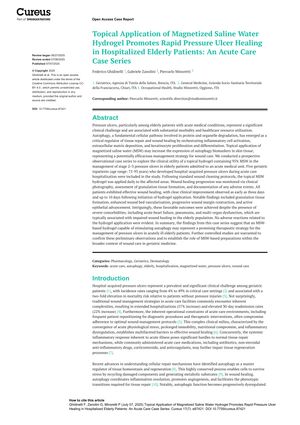
In this case series, elderly patients with chronic pruritus reported substantial improvement after using a topical serum containing magnetized saline water, although more research is needed to confirm these results.
 September 2025 in “ACS Applied Polymer Materials”
 This study reported that a composite hydrogel made with Chlorella-derived extracellular polysaccharide–selenium nanoparticles showed strong antibacterial and anti-inflammatory effects in vitro and significantly accelerated wound healing in vivo, offering potential for managing infected wounds and monitoring healing progression.
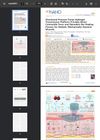
This study developed a directional pressure-pump hydrogel delivery platform that enhances wound healing in diabetic mechanically dynamic wounds by targeting antibacterial agents and nanozymes directly to the lesion site, disrupting biofilms, mitigating tissue damage, and supporting proper skin closure and vascular remodeling in animal models.
June 2026 in “Journal of Biomedical Materials Research Part B Applied Biomaterials” This study found that a hydrogel made from human placenta-derived ECM, copper, and endothelial progenitor cells significantly enhanced pressure ulcer healing in a mouse model by improving wound closure and tissue regeneration.
September 2025 in “OPAL (Open@LaTrobe) (La Trobe University)” This study developed a novel hydrogel combining Chlorella extracellular polysaccharide–selenium nanoparticles (EPS-SeNPs) with biocompatible components, which demonstrated strong antibacterial and anti-inflammatory effects, significantly accelerating wound healing in an infected rat model, and enabling pH-based monitoring of healing.