4 citations
,
November 2021 in “Journal of The American Academy of Dermatology” This article notes that low-dose systemic minoxidil combined with antiandrogen therapy is effective for treating female pattern hair loss, though hypertrichosis can occur in a significant percentage of patients.
4 citations
,
October 2021 in “Journal of The European Academy of Dermatology and Venereology” Low-dose oral minoxidil increases hair density and thickness in people with hair loss.
 59 citations
,
July 2020 in “Journal of The American Academy of Dermatology”
59 citations
,
July 2020 in “Journal of The American Academy of Dermatology” This study concluded that oral minoxidil is an effective and well-tolerated alternative to topical minoxidil for healthy patients struggling with application-related compliance issues.
 19 citations
,
June 2020 in “International Journal of Dermatology”
19 citations
,
June 2020 in “International Journal of Dermatology” In this systematic review, oral minoxidil was found to be a safe and effective treatment for androgenetic alopecia and alopecia areata, with additional benefits for female pattern hair loss and other types of alopecia, although common side effects included hypertrichosis and postural hypotension.
 November 2019 in “Actas Dermo-Sifiliográficas”
 This article discusses the historic use of oral minoxidil for severe hypertension and the subsequent development of a topical formulation for treating pattern hair loss, but reports no new results.
 12 citations
,
March 2018 in “Australasian Journal of Dermatology”
12 citations
,
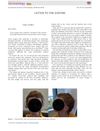
March 2018 in “Australasian Journal of Dermatology” This letter to the editor discusses the use of systemic minoxidil for loose anagen hair syndrome, noting a significant change in hair color, but reports no new study results.
 11 citations
,
December 2014 in “Clinical Obstetrics and Gynecology”
11 citations
,
December 2014 in “Clinical Obstetrics and Gynecology” This article presents a systematic approach for obstetricians/gynecologists to diagnose and manage common types of nonscarring hair loss in women, reporting no new clinical results.
 21 citations
,
January 2007 in “Australasian Journal of Dermatology”
21 citations
,
January 2007 in “Australasian Journal of Dermatology” This case report describes how a 53-year-old woman with female pattern hair loss experienced further hair regrowth when topical minoxidil was added to her spironolactone treatment after initial results plateaued.
3 citations
,
July 2001 in “PubMed” This article reviews various treatment options for androgenetic alopecia, like finasteride, camouflage agents, and surgical methods, emphasizing patient education about each approach's limitations, but reports no new clinical results.
44 citations
,
January 1997 in “British Journal of Dermatology” In this study, five women with androgenetic alopecia experienced severe facial and limb hypertrichosis after using 5% topical minoxidil, which resolved after discontinuing the treatment.
 2 citations
,
September 1987 in “International Journal of Dermatology”
2 citations
,
September 1987 in “International Journal of Dermatology” Minoxidil caused hair to grow in unintended areas, like a tail, in a young girl.
 34 citations
,
January 1987 in “Dermatology”
34 citations
,
January 1987 in “Dermatology” In this study, topical minoxidil was found to be an effective, safe, and easy treatment for individuals with alopecia areata affecting 25–99% of the scalp, but less effective for total scalp hair loss.
 16 citations
,
January 1986 in “Dermatology”
16 citations
,
January 1986 in “Dermatology” In this study, 1% minoxidil lotion led to good results in 18% of male patients with androgenetic alopecia, but only 6% maintained regrowth one year after stopping treatment.
 55 citations
,
February 1985 in “Archives of Dermatology”
55 citations
,
February 1985 in “Archives of Dermatology” In this randomized trial, topical minoxidil treatment resulted in cosmetically acceptable hair growth in 32% of men with hereditary male pattern baldness, with no serious side effects reported.
 80 citations
,
September 1984 in “Journal of The American Academy of Dermatology”
80 citations
,
September 1984 in “Journal of The American Academy of Dermatology” In this study, 5% topical minoxidil was observed to promote hair regrowth in some patients with androgenic alopecia, while no regrowth was noted in patients with alopecia areata.
 78 citations
,
April 1984 in “Archives of Dermatology”
78 citations
,
April 1984 in “Archives of Dermatology” This study found that 1% minoxidil topical solution led to terminal hair regrowth in some patients with alopecia areata, though it was only cosmetically acceptable in less than half of those cases.