Rare Challenges in Diagnosing Cushing's Syndrome and Primary Aldosteronism: A Case Report of a Female With a Negative Workup
July 2023
in “
Curēus
”
New to Hydrocortisone? There is a guide in the encyclopedia. Read the guide → Cushing's syndrome primary hyperaldosteronism resistant hypertension muscle weakness weight gain bruising hair loss tachycardia serum cortisol urine cortisol salivary cortisol dexamethasone suppression test adrenal mass adrenal venous sampling cortisol aldosterone right adrenalectomy glucocorticoid-remediable aldosteronism Cushing's hyperaldosteronism high blood pressure fast heart rate cortisol test urine test saliva test dexamethasone test adrenal tumor adrenal vein sampling adrenal gland removal GRA
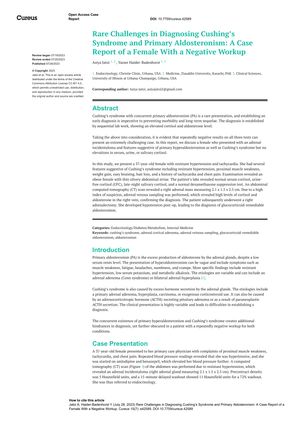
Studysummary In this study, a 37-year-old female with resistant hypertension and signs of Cushing's syndrome and primary aldosteronism was found to have normal cortisol levels but high levels of cortisol and aldosterone via adrenal venous sampling, leading to a diagnosis confirmed by right adrenalectomy. Our plain-language summary of this paper — not a Tressless recommendation.
This case report discusses a 37-year-old female with symptoms indicative of both Cushing's syndrome and primary hyperaldosteronism, including resistant hypertension, muscle weakness, weight gain, bruising, hair loss, and tachycardia. Despite these symptoms, her serum cortisol, urine cortisol, salivary cortisol, and dexamethasone suppression test results were normal. An abdominal CT scan showed a right adrenal mass. Due to persistent suspicion, adrenal venous sampling was conducted, revealing elevated cortisol and aldosterone levels in the right adrenal vein, confirming the diagnosis. After a right adrenalectomy, the patient developed hypotension, which led to the diagnosis of glucocorticoid-remediable aldosteronism. This case highlights the diagnostic challenges when standard tests fail to detect Cushing's syndrome and primary aldosteronism.