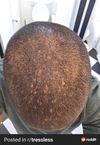
Finasteride for 3 years still losing ground. Started min 3mg recently. 9/3/2026
The user has been on finasteride for 3 years but is still experiencing hair loss and recently started taking 3mg oral minoxidil. Suggestions include switching to dutasteride for stronger DHT blocking and considering other conditions like alopecia areata or telogen effluvium.
View this post in the Community →
Similar Community Posts Join
5 / 5 resultscommunity Dutasteride has been nuking me
The user experienced significant hair loss after 9 months of using 0.5mg dutasteride and oral minoxidil, possibly due to alopecia areata. It is advised to consult a doctor for accurate diagnosis and treatment, as dutasteride and finasteride may not be effective.
community What hair loss pattern is this?
The user noticed small circular hairless spots after a buzz cut and has been using finasteride, dutasteride, and oral minoxidil for hair loss. They are experiencing continuous shedding and thinning, and it is suggested they consult a dermatologist for a scalp examination and possible biopsy to determine if it's alopecia areata or androgenetic alopecia.
community 1year Fin -> 1 year DUT + oral Minox; No results :(
The user tried finasteride, dutasteride, and oral minoxidil for hair loss with no success and was diagnosed with androgenetic alopecia. They are considering increasing dosages and trying other treatments like RU58841, GHK-CU, and clascoterone, while seeking further medical opinions.
community DUPA/Retrograde might not be DHT based...GET A BIOPSY QUICK or permanent Hair Loss!
DUPA and retrograde alopecia may not be solely DHT-based, and a biopsy is crucial for accurate diagnosis and treatment. Treatments mentioned include dutasteride, oral minoxidil, pioglitazone, clobetasol, calcipotriol, ketoconazole, and doxycycline, depending on the specific condition.
community The Real Cause Of Androgenetic Alopecia
Androgenetic alopecia is caused by DHT affecting hair growth. Finasteride and minoxidil are used to manage hair loss by blocking DHT and promoting hair growth.
Related Research
6 / 6 resultsresearch Hair characteristics and androgenetic alopecia in Koreans
This article reviews factors influencing hair growth and treatment options for androgenetic alopecia, but it reports no new clinical results on their effectiveness.
research Androgenetic, Diffuse and Senescent Alopecia in Men: Practical Evaluation and Management
This review discusses the evaluation and management of male baldness and related conditions, but reports no new clinical results.
research Novel agents for the treatment of alopecia
This review examines recent approvals and emerging treatments for androgenetic alopecia, discussing newly approved drugs like Propecia and Rogaine Extra Strength 5%, but without presenting new clinical results.
research ALOPECIA ANDROGENÉTICA: DIAGNÓSTICO, TERAPIAS CLÍNICAS E PROCEDIMENTOS ESTÉTICOS
This study conducted a narrative literature review on androgenetic alopecia, highlighting the clinical diagnosis and management strategies, including minoxidil and 5-alpha-reductase inhibitors for men, and antiandrogens for women, along with the use of aesthetic procedures like microneedling as complementary therapies.
research The inflammatory component of androgenetic alopecia
This article discusses hormonal mechanisms underlying androgenetic alopecia but does not report any new findings; it reviews the roles of dihydrotestosterone and available FDA-approved treatments.
research Androgenetic alopecia: An update
This study describes androgenetic alopecia as a common non-scarring hair loss condition primarily influenced by genetic factors and androgen sensitivity, notably impacting psychosocial well-being, especially in females and younger males seeking treatment.