57 citations
,
December 2011 in “Lasers in Surgery and Medicine” This study suggests that selective photothermolysis of sebaceous glands using free electron laser pulses may offer a novel approach to treating acne by causing targeted thermal damage without affecting the epidermis.
 13 citations
,
April 2016 in “Journal of Dermatology”
13 citations
,
April 2016 in “Journal of Dermatology” In this study, 308-nm excimer light therapy showed significant effects in some patients with treatment-resistant alopecia universalis, suggesting it as a potential alternative therapy.
 January 2015 in “Przegla̧d dermatologiczny”
 This study evaluated 308 nm excimer light therapy for alopecia areata but the abstract does not provide specific clinical results or conclusions.
 November 2023 in “Deleted Journal”
 In this study, the researchers found no superiority of combining 308-nm excimer laser with intralesional corticosteroid over corticosteroid alone for treating frontal fibrosing alopecia, and reported side effects such as erythema and postinflammatory hyperpigmentation in both treatment groups.
7 citations
,
August 2024 in “Skin Research and Technology” The study's findings are unreliable due to retraction.
 September 2024 in “Journal of the American Academy of Dermatology”
 This study found that both fractional and excimer lasers are effective in increasing hair density and promoting regrowth in various types of alopecia, although further trials are needed to compare their efficacy to more traditional treatments.
 1 citations
,
November 2020 in “Journal of Cosmetic Dermatology”
1 citations
,
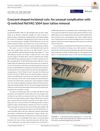
November 2020 in “Journal of Cosmetic Dermatology” This letter to the editor discusses an unusual complication, crescent-shaped incisional cuts, observed with Q-switched Nd:YAG 1064 laser tattoo removal and reports no new clinical results.
1 citations
,
November 2023 in “Skin Appendage Disorders” This study found that 308 nm excimer lamp therapy provides a good clinical response with fewer adverse effects for limited alopecia areata but is less effective for widespread hair loss like alopecia totalis.
4 citations
,
April 2014 in “Lasers in Surgery and Medicine” This observational study reports that a TRASER device using specific wavelengths for vascular and follicular targets showed both clinical responses and histological changes, suggesting its potential as an effective vascular and hair removal tool.
1 citations
,
February 2025 in “Archives of Dermatological Research” Using Excimer light with topical steroids is the most effective treatment for alopecia areata.
22 citations
,
September 2022 in “Medicina” This study found that the dual-wavelength non-ablative fractional laser provides enhanced skin rejuvenation by increasing thermal lesion coverage and collagen remodeling compared to using the CO2 laser alone in an ex vivo setting.
2 citations
,
December 2024 in “Microscopy Research and Technique” This study introduced a novel microscopy system using an Er3 + −doped femtosecond fiber laser, achieving detailed imaging of biological structures in plant and skin samples with improved spatial resolution for various applications, including in vivo imaging.
4 citations
,
August 2015 in “JEADV. Journal of the European Academy of Dermatology and Venereology/Journal of the European Academy of Dermatology and Venereology” This study concluded that both low and incremental radiant exposures of diode lasers produced similar hair reduction and patient satisfaction, but low radiant exposure was less painful and better tolerated.
 October 1997 in “Dermatologic Surgery”
 The Epilight Hair Removal System is effective for temporary hair removal with few side effects, but more research is needed to confirm its safety and long-term results.
19 citations
,
August 2018 in “Journal of the American Academy of Dermatology” In this study, the researchers found that the picosecond pulsed alexandrite laser (PSAL) may be as effective and safe as the Q-switched alexandrite laser (QSAL) for treating freckles in Chinese patients.
September 2021 in “Zenodo (CERN European Organization for Nuclear Research)” This study evaluated a new high-power, 810 nm diode laser for hair removal, finding it to be effective and safe, with a mean hair reduction of 74.4% in one session, and noted it worked efficiently on both large and small areas with minimal side effects.
 1 citations
,
April 2018 in “Lasers in Surgery and Medicine”
1 citations
,
April 2018 in “Lasers in Surgery and Medicine” This review summarizes late-breaking abstracts from the American Society for Laser Medicine and Surgery, 2018, and reports no new clinical findings.
36 citations
,
June 2016 in “Journal of dermatological treatment” This study found that a combination of low-fluence Q-switched 1064 nm Nd:YAG laser, hydroquinone cream, and oral tranexamic acid showed promising results for Riehl’s melanosis in Asian patients, with no serious adverse events reported.
 19 citations
,
August 2007 in “Seminars in Plastic Surgery”
19 citations
,
August 2007 in “Seminars in Plastic Surgery” This review discusses five popular resurfacing technologies for facial rejuvenation, highlighting their role in achieving smoother, healthier, and younger-looking skin, and reports no new clinical results.
8 citations
,
January 2023 in “Skin Research and Technology” This study found that treatment with fractional 1064 nm picosecond Nd:YAG laser effectively reduced post-acne erythema in adult Chinese patients without causing scarring or pigmentation issues, though some experienced temporary erythema, oedema, pruritus, and acne eruptions.
 February 2009 in “Journal of The American Academy of Dermatology”
 Fractional infrared technology is effective and safe for treating cervical laxity.
December 2025 in “Lasers in Surgery and Medicine” 2 citations
,
January 2017 in “Indian Dermatology Online Journal” This case report describes a rare instance of dermographic urticaria triggered by an 810 nm diode laser for hair removal, with symptoms managed effectively by pre-treatment with levocetirizine.
39 citations
,
June 1999 in “Seminars in cutaneous medicine and surgery” This article discusses the scientific and safety aspects of optical hair removal devices but reports no new clinical results; it notes encouraging initial reports of long-term efficacy.
September 1998 in “Journal of the European Academy of Dermatology and Venereology” 1 citations
,
January 2024 in “Dermatologic Therapy” This study found that combining excimer light at 308 nm with tacrolimus 0.1% was more effective in treating alopecia areata of the scalp compared to excimer light alone, as indicated by a greater reduction in the SALT score and better improvement in Treg function.
 4 citations
,
January 2020 in “Lasers in Surgery and Medicine”
4 citations
,
January 2020 in “Lasers in Surgery and Medicine” This study found that combining a 308-nm excimer lamp with minoxidil led to significant hair regrowth in alopecia areata patients, with side effects like hyperpigmentation being tolerable.
March 2026 in “Health Science Reports” Among individuals with skin types II and III, this study found the 755 nm laser more effective for axillary hair removal than the dual-wavelength laser, with a better safety profile and enduring results up to 12 months.
115 citations
,
January 2002 in “American Journal of Clinical Dermatology”  February 2026 in “Cureus”
 In this case report, a 38-year-old woman experienced progressive lightening of a blue-green eyebrow tattoo treated with a QS ruby laser, but eyebrow hair density reduction was noted as a potential adverse effect.