
This study introduced a new hair shading model that more accurately simulates light scattering on hair fibers, capturing effects not predicted by previous models.
July 2009 in “International Journal of Cosmetic Science” This study found that 53% of Japanese women have straight hair while 47% have varying degrees of curved hair, with distinct structural differences observed in the internal makeup of curved hair fibers.
 161 citations
,
July 2003 in “ACM Transactions on Graphics”
161 citations
,
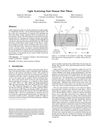
July 2003 in “ACM Transactions on Graphics” In this study, a new shading model for hair was developed that better matches real-life light scattering, thanks to detailed new measurements of hair fiber scattering not predicted by existing models.
 33 citations
,
August 2013 in “British Journal of Dermatology”
33 citations
,
August 2013 in “British Journal of Dermatology” Lack of small, fine hair on the front hairline is a key sign of frontal fibrosing alopecia.
18 citations
,
April 2010 in “Langmuir” This study found that human hair surfaces exhibit nonhomogeneous wettability, potentially influenced by daily rhythms and even monthly changes possibly linked to the menstrual cycle.
65 citations
,
May 2006 in “Journal of Structural Biology” This study concluded that the curliness of human hair, regardless of ethnicity, originates from the inhomogeneous internal nanostructure due to differences in the distribution of two types of cortices.
January 2026 in “International Journal of Cosmetic Science” This study identifies key attributes—luminosity, structural integrity, and vitality—that define hair vibrancy, providing insights to guide the development of hair products that align with consumer expectations.
 29 citations
,
September 1989 in “Journal of The American Academy of Dermatology”
29 citations
,
September 1989 in “Journal of The American Academy of Dermatology” This article describes cases of unusual scalp whorl patterns, including triple parietal and right temporal whorls, that were associated with normal development, and discusses theories of hair whorl development.
16 citations
,
January 1977 147 citations
,
September 2001 in “Computer graphics forum” This paper introduces a novel approach to simulate hair dynamics by modeling hair volume as a continuum, effectively treating interaction dynamics as fluid dynamics for realistic hair animation rendering.
 22 citations
,
May 2021 in “Nature Communications”
22 citations
,
May 2021 in “Nature Communications” This study found that in wound-induced hair neogenesis, African spiny mice and laboratory mice exhibit different morphogenetic field formation patterns related to tissue stiffness, suggesting evolutionary developmental biology advantages.
 17 citations
,
June 2001 in “Journal of the National Cancer Institute”
17 citations
,
June 2001 in “Journal of the National Cancer Institute” A specific hair diffraction pattern may indicate breast cancer if tested with the correct method.
December 2021 in “INDIGO (University of Illinois at Chicago)” This study used single-cell RNA sequencing to characterize 19 distinct cell populations in sheep hair follicles, uncovering differentiation signatures and intercellular communication that may influence wool curvature and sheep breeding.
 34 citations
,
October 1982 in “Journal of applied polymer science”
34 citations
,
October 1982 in “Journal of applied polymer science” This study found that the moisture content of human hair significantly influences the type of fracture under tensile loading, with low or high humidity levels leading to smooth fractures and intermediate humidity resulting in step fractures.
 19 citations
,
October 1985 in “British Journal of Dermatology”
19 citations
,
October 1985 in “British Journal of Dermatology” This review proposes a new approach for categorizing and diagnosing unruly hair forms, building on previous literature and clinical experience, without presenting new clinical results.
97 citations
,
March 2010 in “The American Journal of Human Genetics” A mutation in the KRT74 gene causes tightly curled hair.
95 citations
,
January 2007 in “Human biology” This study proposes a new, objective method to classify human hair into eight categories based on specific shape measurements, rather than traditional ethnicity-based classifications.
 10 citations
,
December 2021 in “Frontiers in cell and developmental biology”
10 citations
,
December 2021 in “Frontiers in cell and developmental biology” This study used single-cell RNA sequencing to map the cellular composition of sheep hair follicles, revealing differentiation pathways and potential molecular mechanisms for wool curvature, which may inform sheep breeding.
July 2026 in “Journal of Investigative Dermatology” 1 citations
,
January 2025 in “International Journal of Cosmetic Science” In this study, researchers identified a three-step process underlying age-related curved hair from cyclical extension: surface lipid transfer, specific disulfide bond cleavage, and unraveling of α-helices into β-structures, which may inform care strategies to manage hair curvature.
2 citations
,
January 2010 This study observed that different hair types on Tianzhu white yaks have similar ultrastructures, but coarse hair fibers show distinct structural differences across body parts.
February 2024 in “Medicina” In this study, researchers used atomic force microscopy to capture and analyze morphological changes in the surface of healthy hair, identifying features such as pitting and rod-shaped macro-fibrillar elements, which could inform future research on hair conditions and care.
 7 citations
,
August 2009 in “Applied Mathematics and Mechanics-English Edition”
7 citations
,
August 2009 in “Applied Mathematics and Mechanics-English Edition” This study demonstrates that (9+2) topological patterns derived from fractal fiber sets exist, with nine total patterns and only two being independent or fundamental.
27 citations
,
March 2018 in “Journal of Experimental Biology” This study found that hair curvature in merino wool is influenced by differences in cell type length rather than the proportions of orthocortical and paracortical cells.
 6 citations
,
June 1981 in “PubMed”
6 citations
,
June 1981 in “PubMed” This article reviews previously reported cases of whisker hair in individuals who develop severe androgenic alopecia and offers a hypothesis concerning its eventual fate, without presenting new findings.
1 citations
,
January 2013 in “PubMed” In this study, treating hair with thioglycolic acid was found to alter disulfide bond patterns in keratin-associated proteins, shifting them from an ellipsoidal to a near-spherical shape.
 1 citations
,
January 2018 in “Acta dermato-venereologica”
1 citations
,
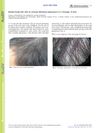
January 2018 in “Acta dermato-venereologica” A teenager's hair with alternating white and dark bands, known as Pili annulati, is a genetic condition that is usually harmless and often considered attractive.
April 2018 in “Journal of Investigative Dermatology” African spiny mice can regenerate skin and hair after wounds due to specific tissue mechanics.
3 citations
,
August 2008 in “PubMed” This study found that digital perm treatments using sodium thioglycolate lotion led to the most significant reduction in protein content and greater hair damage compared to other methods and lotions.
1 citations
,
July 2018 in “JAMA dermatology” This abstract contains navigation and subscription information for JAMA Dermatology and reports no new clinical findings.