8 citations
,
July 2024 in “European journal of medical research” This study reported that alopecia areata following COVID-19 vaccination is rare, occurring mostly after the first dose and associated with several vaccine types, particularly Pfizer.
 5 citations
,
January 2022 in “Journal of the European Academy of Dermatology and Venereology”
5 citations
,
January 2022 in “Journal of the European Academy of Dermatology and Venereology” In this study, Covishield vaccination was associated with cutaneous adverse effects, notably telogen effluvium and urticaria, among recipients at a hospital in northern India.
8 citations
,
May 2024 in “Journal of Medical Virology” This study found that SARS-CoV-2 infection was associated with an increased long-term risk of developing alopecia areata in a large bi-national cohort from South Korea and Japan.
 2 citations
,
February 2023 in “Vaccines”
2 citations
,
February 2023 in “Vaccines” This study reported cases of post-vaccine telogen effluvium and alopecia among five individuals in Ecuador following a mixed COVID-19 vaccination regimen, typically appearing within 3 to 17 days after inoculation.
This study found that both intradermal BCG vaccine and intralesional triamcinolone acetonide were similarly effective for treating patchy alopecia areata, though intralesional triamcinolone was preferable due to fewer side effects associated with BCG vaccine.
28 citations
,
September 2021 in “JAAD Case Reports” This study reports that the Pfizer-BioNTech COVID-19 vaccine showed 52% protection against COVID-19 after the first dose and 95% after the second in phase 3 trials.
 September 2012 in “Reactions Weekly”
 Two girls experienced temporary hair loss after getting the HPV vaccine, which may be related to the vaccine.
 23 citations
,
January 2009 in “Veterinary Dermatology”
23 citations
,
January 2009 in “Veterinary Dermatology” This study found that recombinant hepatitis B vaccine may increase the risk of alopecia areata onset in older predisposed mice but larger trials suggest this effect might lie within normal variation.
 November 2009 in “Reactions Weekly”
 Two women lost hair after mesotherapy for hair loss, with one having permanent and the other temporary hair loss.
 60 citations
,
January 2023 in “Biomaterials Science”
60 citations
,
January 2023 in “Biomaterials Science” This study reviews recent advancements in microneedles made from PLGA, highlighting their use in delivering vaccines, drugs, and proteins through the skin with minimal invasiveness, and discusses the challenges and future potential of these delivery systems.
 4 citations
,
January 2022 in “Yonsei Medical Journal”
4 citations
,
January 2022 in “Yonsei Medical Journal” This article discusses the potential of novel microneedle transdermal systems for enhanced drug and vaccine delivery through the skin, but reports no clinical results and emphasizes ongoing trials.
2 citations
,
April 2020 in “International Journal of Dermatology and Venereology” This review summarizes current evidence on how beta-human papillomavirus and Merkel cell polyomavirus may contribute to the development of nonmelanoma and Merkel cell skin carcinomas, respectively, but it reports no new clinical findings.
11 citations
,
January 2015 in “Journal of nanomedicine & biotherapeutic discovery” This review discusses the applications of nanotechnology in dermatology and cosmetics, describing types of nanoparticles, their potential uses, and considerations regarding their safety, but it presents no new clinical results.
35 citations
,
October 2021 in “Journal of the European Academy of Dermatology and Venereology” This report describes two cases where a viral vector COVID-19 vaccine was associated with the recurrence of cutaneous lymphoma conditions that had been in remission.
 1 citations
,
September 2023 in “Journal of the American Academy of Dermatology”
1 citations
,
September 2023 in “Journal of the American Academy of Dermatology” COVID-19 vaccines have been linked to an increase in hair loss conditions.
January 2025 in “Updates in clinical dermatology” This study highlights that the skin can serve as a marker for systemic health during COVID-19 by showing symptoms like rashes and pigmentary changes, while also emphasizing dermatologists' key role in diagnosing COVID-induced and vaccine-related skin issues to enhance patient care and address vaccine hesitancy.
 87 citations
,
May 2018 in “Scientific Reports”
87 citations
,
May 2018 in “Scientific Reports” This study found that in healthy men, higher levels of free testosterone were associated with a stronger immune response to the influenza vaccine, suggesting androgens may function as immunomodulators rather than strict immunosuppressants.
January 2025 in “Updates in clinical dermatology” COVID-19 vaccines can cause minor skin reactions, including those related to Bullous Pemphigoid, but these usually resolve on their own.
November 2025 in “Cureus” This study found that COVID-19 vaccines were generally well-tolerated among Bangladeshi medical students, with most side effects being mild and decreasing in frequency after subsequent doses.
 March 2023 in “Медицинский совет”
 This review discusses various types of hair loss associated with COVID-19 and vaccinations, highlighting acute telogen hair loss as the most common form, but reports no new clinical results.
19 citations
,
August 2017 in “American journal of clinical dermatology” This analysis reports that hepatitis B surface protein antigen exposure is associated with an increased risk of alopecia areata.
 August 2023 in “Iranian Journal of Clinical Infectious Diseases”
 This study observed a variety of skin conditions related to COVID-19 and its vaccines in a Brazilian setting, classifying them into five categories, including peri-infectious reactions and vaccine-related adverse effects, to aid physicians managing similar cases.
1 citations
,
October 2025 in “Journal of the American Society of Nephrology” In this case report, a 56-year-old man developed acute granulomatous interstitial nephritis following Moderna Covid-19 vaccination, with his kidney function improving after steroid treatment but declining upon cessation; the report suggests a vaccine-related cause given his atypical clinical course.

In this study, patient-reported flare symptoms after COVID-19 vaccination in individuals with systemic lupus erythematosus were generally mild, with 17% experiencing flares mostly characterized by joint pain and fatigue; vaccine type did not affect flare incidence.
 January 2025 in “Annals of Dermatology”
 In this nationwide cross-sectional study, researchers found that COVID-19 vaccination was associated with an increased risk of hair loss disorders, including total alopecia, alopecia areata, and telogen effluvium, while no significant link was observed between COVID-19 infection and these conditions.
 13 citations
,
February 2006 in “Clinical and Experimental Dermatology”
13 citations
,
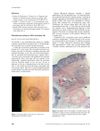
February 2006 in “Clinical and Experimental Dermatology” A benign tumor developed at a girl's BCG vaccination site, not previously linked to the vaccine.
June 2025 in “British Journal of Dermatology” This report describes two unusual cases of frontal fibrosing alopecia in men, highlighting potential vaccine-related immune triggers and genetic factors, especially regarding the pronounced facial papular phenotype observed.
June 2022 in “Zenodo (CERN European Organization for Nuclear Research)” This review discusses the potential of microneedles as a pain-free drug delivery method that improves medication distribution while addressing issues associated with traditional transdermal formulations.
 January 1999 in “Current Problems in Pediatrics”
 Swimming in Lake Malawi can lead to schistosomiasis, hepatitis B vaccine might cause temporary hair loss, and certain drinks affect kidney stone risk.
Covid-19 vaccination during pregnancy is safe for mothers and babies.