 13 citations
,
March 2002 in “Pediatric Dermatology”
13 citations
,
March 2002 in “Pediatric Dermatology” This article discusses temporal triangular alopecia, emphasizing the need for increased awareness to prevent misdiagnosis and ineffective treatment, but reports no new clinical results.
This case report highlights that Tjalma Syndrome may present as a main symptom of systemic lupus erythematosus and should be considered in patients with ascites, pleural effusions, and elevated CA-125 levels.
May 2017 in “The journal of investigative dermatology/Journal of investigative dermatology” In this study, researchers found potential evidence of inducible skin-associated lymphoid tissue (iSALT) in alopecia areata patients undergoing topical immunotherapy, which may suggest an essential role in treatment efficacy.
11 citations
,
March 2002 in “Pediatric Dermatology” Temporal triangular alopecia is a non-scarring hair loss seen in some Asian children.
 56 citations
,
March 2010 in “Journal of Dermatology”
56 citations
,
March 2010 in “Journal of Dermatology” This review provides a synopsis of 53 cases of temporal triangular alopecia, noting its frequent detection in early childhood and potential association with congenital diseases, but it reports no new clinical findings.
February 2026 in “Australasian Journal of Dermatology” This study developed a handheld card to simplify the calculation of the SALT score for assessing alopecia areata severity, noting that while it accelerates the process, formal validation against existing methods is still needed.
 April 2012 in “Informa Healthcare eBooks”
 Temporal triangular alopecia is a lifelong condition with hairless patches on the side of the head that may be present from birth.
 January 2024 in “JEADV clinical practice”
 This article reviews how SALT scores are used in clinical trials for alopecia areata and provides patient images to help clinicians understand and apply these scores in practice; it reports no new clinical results.
March 2025 in “Journal of Investigative Dermatology” 1 citations
,
March 2023 in “Journal of the Turkish Academy of Dermatology” This report suggests a possible association between temporal triangular alopecia and sebaceous nevus, and identifies a pinkish background as a new trichoscopic finding for TTA.
1 citations
,
January 2016 in “Dermatology Online Journal” This case report documents a rare instance of triangular temporal alopecia in an adult woman, emphasizing the importance of correct diagnosis to avoid unnecessary treatments, and reviews the literature on TTA.
July 2025 in “Clinical Medicine” In this institution-based randomized trial, oral betamethasone mini-pulse therapy for alopecia areata showed a faster therapeutic response compared to oral tofacitinib, as measured by trichoscopic changes and achievement of 50% hair regrowth.
35 citations
,
September 2011 in “The Journal of Dermatology” This article discusses the trichoscopic diagnosis of temporal triangular alopecia, but reports no new clinical results.
July 2025 in “International Journal of Trichology” This study reported six pediatric cases of temporal triangular alopecia and highlighted the use of trichoscopy to distinguish it by detecting a distinctive carpet of vellus hair, helping to differentiate TTA from other hair loss conditions.
 1 citations
,
September 2024 in “Indian Journal of Postgraduate Dermatology”
1 citations
,
September 2024 in “Indian Journal of Postgraduate Dermatology” In this report, trichoscopy was highlighted as a valuable tool for diagnosing temporal triangular alopecia in children due to its ability to reveal distinctive patterns that differentiate it from similar conditions like alopecia areata, eliminating the need for invasive biopsy.
32 citations
,
August 2016 in “Journal of the American Academy of Dermatology” This letter discusses congenital triangular alopecia (TTA), a non-scarring hair loss condition often seen in children, without reporting new clinical findings.
This study found that prophylactically administering amotosalen-treated allogeneic donor T cells at transplantation significantly improved immune reconstitution and protection against murine cytomegalovirus infection without inducing graft-versus-host disease.
3 citations
,
November 2020 in “Dermatologic Therapy” This study found that intralesional triamcinolone acetonide was more effective than saline for hair regrowth in scalp alopecia areata, with 10 mg/mL showing the best response but more side effects.
 February 2026 in “Oncology Reviews”
 This review highlights the promising clinical outcomes of sacituzumab tirumotecan (sac-TMT), an antibody-drug conjugate for breast cancer that targets TROP2, demonstrating improved response rates and progression-free survival, with manageable safety concerns including primarily mild-to-moderate nausea and alopecia.
33 citations
,
December 2005 in “British Journal of Clinical Pharmacology” This study found that the Transdermal Delivery System efficiently delivers testosterone systemically and showed bioequivalent hormone concentrations to a known topical gel in healthy males.
 7 citations
,
March 2025 in “Archives of Dermatological Research”
7 citations
,
March 2025 in “Archives of Dermatological Research” This study found that trichoscopy is essential for evaluating the severity of alopecia areata and predicting treatment responses, contributing to more personalized patient management.
October 2025 in “Diagnostics” In this case study, an 18-year-old woman's triangular alopecic patch diagnosed as temporal triangular alopecia was considered non-progressive and had no impact on her quality of life, so no treatment was initiated.
 16 citations
,
June 2009 in “Dermatologic Surgery”
16 citations
,
June 2009 in “Dermatologic Surgery” This abstract does not contain research results or findings.
 November 2009 in “Actas dermo-sifiliográficas/Actas dermo-sifiliográficas”
 Hair transplantation effectively treated a bald patch in an 18-year-old woman with Temporal Triangular Alopecia.
 2 citations
,
May 2022 in “Journal of the American Academy of Dermatology”
2 citations
,
May 2022 in “Journal of the American Academy of Dermatology” This study observed that most patients with traction alopecia showed improved or stabilized hair loss with therapeutic counseling and adjunctive treatments, but follow-up was often inconsistent, highlighting the need for better awareness and management.
March 2026 in “Journal of the European Academy of Dermatology and Venereology” This study introduced and validated the VESALT, a visual extension of the Severity of Alopecia Tool, finding it offers improved reliability and user-friendliness over SALT by incorporating pattern recognition and broader coverage, including non-scalp regions, in assessing alopecia areata severity.
 22 citations
,
March 1932 in “Journal of the American Medical Association”
22 citations
,
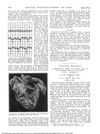
March 1932 in “Journal of the American Medical Association” This report describes eleven cases of thallium poisoning in individuals who consumed tortillas made from barley mixed with thallium sulphate, leading to symptoms including tingling, abdominal pain, vomiting, and limb weakness.
 2 citations
,
March 2023 in “Skin research and technology”
2 citations
,
March 2023 in “Skin research and technology” This study observed that temporal triangular alopecia in infants presents with distinct clinical and dermatoscopic features, indicating the usefulness of dermatoscopy for diagnosis and differential diagnosis.
 December 2020 in “TURKDERM”
 This case report describes a 3-year-old boy diagnosed with temporal triangular alopecia, emphasizing the importance of clinical and dermoscopic examination for correct diagnosis due to the condition's rarity and risk of misdiagnosis.
 April 2016 in “Journal of The American Academy of Dermatology”
 The study found that Temporal Triangular Alopecia often starts in early childhood, mainly affects the left side of the scalp, and has no effective treatment except surgery.