 20 citations
,
May 2013 in “International Journal of Molecular Medicine”
20 citations
,
May 2013 in “International Journal of Molecular Medicine” This study identified a novel missense MAFB variant in a family with some unaffected members, suggesting incomplete penetrance and the potential influence of modifier genes, epigenetic mechanisms, or environmental factors on MCTO phenotype.
 3 citations
,
April 2012 in “Bioinformation”
3 citations
,
April 2012 in “Bioinformation” This study concluded that specific SNPs in the TRPS1 gene significantly alter its protein structure, affecting interactions and contributing to the development of congenital hypertrichosis.
 6 citations
,
October 2012 in “Journal of Heredity”
6 citations
,
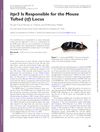
October 2012 in “Journal of Heredity” This study identified the Itpr3 gene as responsible for the tufted hair loss phenotype in the BTBR mouse strain.
3 citations
,
January 2011 in “生物医学研究杂志:英文版” In this study, a novel heterozygous transition mutation in the KRT86 gene was identified, which may be pathogenic for monilethrix in a Chinese family.
May 2005 in “Faculty Opinions – Post-Publication Peer Review of the Biomedical Literature” In this study, transgenic mice with a truncated latent transforming growth factor-beta-binding protein showed reduced keratinocyte proliferation and alterations in the hair cycle due to mis-localization of transforming growth factor-beta.
15 citations
,
August 2013 in “Gene” This study found that the MTHFR gene C677T mutation appears to be a susceptibility factor for alopecia areata in the Turkish population.
A new mutation in the TRPS1 gene caused Trichorhinophalangeal syndrome in a 17-year-old, highlighting the need for genetic testing.
40 citations
,
May 2005 in “Journal of Cell Science” In this study, transgenic mice expressing a truncated form of latent transforming growth factor-β-binding protein exhibited altered hair cycles due to increased active transforming growth factor-β, impacting keratinocyte proliferation and hair cycle phases.
 April 2026 in “Human Genome Variation”
 In this study, researchers identified a recurrent MBTPS2 splice-site variant as a mutational hotspot in IFAP syndrome across diverse families, with phenotype severity suggesting the influence of additional modifiers.
January 2010 in “Chinese Journal of Dermatovenereology of Integrated Traditional and Western Medicine” This study found a novel nonsynonymous genetic variant in the hHb1 gene of a family with monilethrix, which differs from ten previously reported pathogenic mutations.
January 2026 in “American Journal of Medical Genetics Part A” The researchers reported two brothers with a new variant of X-linked trichothiodystrophy associated with an RNF113A gene mutation, highlighting features such as intellectual disability and growth failure, but without previously reported endocrinological or genital abnormalities, underlining the importance of genetic counseling for such variants.
 August 2012 in “Nature Cell Biology”
 In this study, researchers found that β-catenin directly promotes TERT expression in stem and cancer cells by interacting with the Tert promoter, illustrating a mechanistic link between tumorigenesis and pluripotency.
79 citations
,
March 2005 in “Journal of Medical Genetics” This study identified a novel heterozygous missense mutation in the hHb3 gene associated with monilethrix, highlighting its role in this hair disorder.
January 1996 in “Studia iuridica” This study identified two novel point mutations in the hHb6 gene associated with monilethrix, suggesting these mutations could serve as diagnostic markers for this genetic hair disorder.
 3 citations
,
February 2011 in “Journal of Biomedical Research/Journal of biomedical research”
3 citations
,
February 2011 in “Journal of Biomedical Research/Journal of biomedical research” This study identified a novel mutation, R430Q in the KRT86 gene, in a Han family with monilethrix, which may contribute to the disease's pathogenic mechanism.
 91 citations
,
May 2005 in “The Journal of Clinical Endocrinology & Metabolism”
91 citations
,
May 2005 in “The Journal of Clinical Endocrinology & Metabolism” In this study, a novel mutation in the glucocorticoid receptor gene was identified in a young woman, impairing glucocorticoid signaling and leading to generalized glucocorticoid resistance.
53 citations
,
May 1996 in “The Journal of Clinical Endocrinology & Metabolism” This study identified multiple mutations in the 5 alpha-reductase-2 gene among male pseudohermaphrodites in the Dominican Republic, suggesting they do not share a common ancestry.
34 citations
,
November 1998 in “Journal of Investigative Dermatology” A common mutation in the hHb6 gene is linked to monilethrix, but other factors may also play a role.
 January 2024 in “Genetics in Medicine Open”
 In this report, two adult patients with Tatton-Brown-Rahman syndrome exhibited new cardiac features, such as atrial fibrillation and ventricular and atrial dilatation, highlighting the importance of cardiovascular follow-up in adults with this condition.
28 citations
,
February 2010 in “Experimental Dermatology” This study concluded that the frizzy mutation in mice is linked to a T to A transversion in Prss8 and is orthologous to the 'hairless' mutation in rats.
 45 citations
,
January 2010 in “Journal of Veterinary Medical Science”
45 citations
,
January 2010 in “Journal of Veterinary Medical Science” This study identified a mutation in the keratin 71 gene that causes curly hair in certain rats, advancing our understanding of hair formation.
 5 citations
,
August 2019 in “iScience”
5 citations
,
August 2019 in “iScience” In this study, Trf1 genetic deletion in mice, including those with cancer-prone mutations, was shown to not affect overall viability and cause only mild effects, while being necessary for tumor formation, suggesting a potential therapeutic window for Trf1 as an anti-cancer target.
47 citations
,
September 2002 in “Journal of Bone and Mineral Research” This study found that a specific VDR amino acid substitution in children with hereditary vitamin D-resistant rickets disrupts ligand binding and gene activation but does not impair hair follicle development.
2 citations
,
April 2008 in “PubMed” This study identified the c.1204G to A (p.E402K) mutation in the hHB6 gene as a cause of monilethrix in a Chinese family, highlighting the gene's role in the condition.
April 2012 in “Neuropediatrics” This article reviews the genetic and phenotypic characteristics of Trichothiodystrophy and discusses the associated DNA repair defects, but does not report new clinical findings.
 June 2023 in “British Journal of Dermatology”
 In this case report, researchers described a female child with total alopecia due to a mutation in the SNRPE gene, emphasizing the need for updated genetic testing as knowledge advances to avoid diagnostic delays in hereditary nonsyndromic hypotrichosis.
June 2020 in “Zenodo (CERN European Organization for Nuclear Research)” This study suggests that the DNMT3B -579 G>T polymorphism may be a genetic risk factor for colorectal cancer in the Azerbaijani population.
 May 2022 in “Experimental dermatology”
 In this study, hair shafts from trichothiodystrophy patients with ERCC2 mutations revealed abnormal cuticle structures and protein imbalances compared to normal hair shafts.
15 citations
,
June 2012 in “British Journal of Dermatology” This study identified a novel KRT86 mutation associated with autosomal dominant monilethrix, expanding understanding of its genetic basis beyond known motifs.
4 citations
,
August 2013 in “Chinese Medical Journal” This study found that a mutation in the seventh exon of the KRT86 gene plays a major role in the pathogenesis of monilethrix in a Chinese family.