 68 citations
,
August 2012 in “Journal of the American Academy of Dermatology”
68 citations
,
August 2012 in “Journal of the American Academy of Dermatology” This paper discusses the use of dermatoscopy as a fast, noninvasive technique for diagnosing hair shaft disorders and reports no new results; the authors highlight its advantages over traditional microscopy methods.
Recognizing bamboo hair helps diagnose Netherton’s syndrome.
 9 citations
,
December 2002 in “Novartis Foundation Symposium”
9 citations
,
December 2002 in “Novartis Foundation Symposium” In this research, LEF1 was identified as a crucial transcription factor for submucosal gland development in mouse and ferret tracheas, though it requires other factors to induce gland formation.
 May 2024 in “International journal of surgery case reports”
 In this case report, an 18-year-old male with an oral epidermoid cyst experienced trouble swallowing and respiratory distress, but recovered well following surgical removal of the cyst.
 4 citations
,
January 2011 in “Dermatology”
4 citations
,
January 2011 in “Dermatology” This case report describes a patient who developed localized hypertrichosis of the pinnae after undergoing orchiectomy and chemotherapy for testicular carcinoma.
This study on Antirrhinum trichomes found that stickiness in A. hispanicum is due to a recessive allele and mapped it to a specific region on Chromosome 1, while baldness in A. siculum likely involves a novel hairy allele.
11 citations
,
January 2010 in “Journal of oral and maxillofacial surgery” 34 citations
,
December 1984 in “Journal of Cutaneous Pathology” This study observed that the thinning and structural abnormalities in monilethrix-affected hair occur at the internodes due to possible periodic dysfunction of the hair matrix, particularly in the cortex.
2 citations
,
February 2013 in “Journal of the Saudi Society for Dermatology & Dermatologic Surgery” This case study describes an acquired localized form of trichorrhexis nodosa resulting from physical-chemical trauma.
January 2005 in “Journal of Cutaneous Pathology” This report presents the first known case of a proliferating hybrid cyst containing both epidermoid and trichilemmal components on the scrotum of a 44-year-old man.
 36 citations
,
November 2019 in “Molecular biology and evolution”
36 citations
,
November 2019 in “Molecular biology and evolution” This study suggests that the keratins found in reptile and bird skin appendages evolved independently from mammalian hair keratins, highlighting convergent evolution in these species.
 9 citations
,
April 2020 in “Journal of dermatology”
9 citations
,
April 2020 in “Journal of dermatology” This case report describes a Thai male with TRPS1 who exhibited unique and unreported features such as hypoplastic mandibular condyles, double mental foramina, and distinctive hair abnormalities.
 January 2024 in “Jurnal Ilmu Kesehatan Hewan”
 In this study, a two-month-old dog diagnosed with scabiosis and toxocariosis showed significant clinical improvement after being treated with sarolaner and pyrantel, evidenced by resolved skin lesions, hair regrowth, and a return to normal abdominal size and oral mucosa color after 30 days.
 1 citations
,
September 2024 in “Indian Journal of Postgraduate Dermatology”
1 citations
,
September 2024 in “Indian Journal of Postgraduate Dermatology” In this report, trichoscopy was highlighted as a valuable tool for diagnosing temporal triangular alopecia in children due to its ability to reveal distinctive patterns that differentiate it from similar conditions like alopecia areata, eliminating the need for invasive biopsy.
 14 citations
,
March 2007 in “Pediatric pulmonology”
14 citations
,
March 2007 in “Pediatric pulmonology” This study found evidence suggesting that hypertrichosis may be an adverse effect of inhaled corticosteroids in children, although it does not always resolve after stopping treatment.
24 citations
,
May 2000 in “Journal of the American Academy of Dermatology” This case report describes a patient with pseudopelade affecting both the scalp and beard area, highlighting the unusual presentation of a rare hair disorder.
 September 2024 in “Indian Journal of Dermatology”
 This study found that trichoscopic examination in patients with androgenetic alopecia revealed that hair shaft heterogeneity was common, while the white peripilar sign and focal atrichia were associated with more advanced disease stages in both genders.
 September 2006 in “Dermatologic Surgery”
 This study reported that squamous cell carcinomas of the scalp can be extraordinarily aggressive, potentially metastasizing and causing death, highlighting the need for early diagnosis and careful treatment approaches.
1 citations
,
October 1978 in “The Journal of Pediatrics” 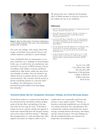 9 citations
,
November 2013 in “Dermatologic Surgery”
9 citations
,
November 2013 in “Dermatologic Surgery” Hair transplant complications were likely due to deep graft placement and rough handling.
 3 citations
,
May 2013 in “Pediatric Dermatology”
3 citations
,
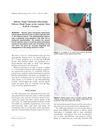
May 2013 in “Pediatric Dermatology” This case report documents the second known instance of a salivary gland choristoma on the chest wall of a newborn, highlighting its benign nature and the importance of accurate diagnosis.
 October 2024 in “Dermatology Practical & Conceptual”
 In this study, the authors evaluated 200 Egyptian children with focal non-cicatricial alopecia, finding that alopecia areata (42%) and tinea capitis (40.5%) were the most prevalent causes. Trichoscopy identified unique features for each condition, enhancing diagnosis and management.
 9 citations
,
January 2008 in “Medical mycology”
9 citations
,
January 2008 in “Medical mycology” In this study, ketoconazole treatment successfully cured a dog with erythematous epilation caused by Chaetomium globosum, with new hair growth observed 9 weeks later.
1 citations
,
June 2016 in “Medicina” This article reviews monilethrix, a rare genetic hair disorder causing brittle hair and alopecia, and emphasizes the need for clinical diagnosis and characteristic tricoscopic findings.
21 citations
,
January 2010 in “International journal of trichology” This report on two Indian male siblings with monilethrix highlights trichoscopy's role in diagnosing this condition, which can be complicated by early-onset androgenetic alopecia.
2 citations
,
October 1931 in “Archives of Dermatology and Syphilology” This report describes a rare case of scalp kerion due to microsporosis in a Portuguese child, noting the unusual combination with other microsporid features and treatment details.
 December 2024 in “Texila international journal of public health”
 In this study conducted from September to November 2023, researchers used trichoscopy to accurately diagnose cicatricial alopecias by revealing unique patterns, reducing the need for biopsies, and proving to be a valuable non-invasive diagnostic method.
This study involved using smartphone applications and low-cost trichoscopy devices to assess various hair and scalp conditions, with diagnoses confirmed through detailed imaging during remote consultations and in-person evaluations.
1 citations
,
December 2018 in “Veterinary dermatology” This study documented that symmetrical, noninflammatory alopecia in schipperkes is associated with hormonal abnormalities and hair cycle arrest, resembling Alopecia X clinically and histologically.
 2 citations
,
November 2017 in “Case Reports”
2 citations
,
November 2017 in “Case Reports” This case report describes an instance of hair thread tourniquet syndrome in an infant, successfully treated through surgical release of the constricting hair.