 December 2013 in “Appetite”
 This study identified a nonfunctional Itpr3 gene in BTBR mice, attributed to a 12-bp deletion, which likely causes their simultaneous hair loss and taste perception deficits.
 5 citations
,
November 2020 in “medRxiv (Cold Spring Harbor Laboratory)”
5 citations
,
November 2020 in “medRxiv (Cold Spring Harbor Laboratory)” In this study, the authors reported that dutasteride significantly reduced total remission time for COVID-19 symptoms in men compared to placebo, especially for fatigue and loss of taste or smell.
 6 citations
,
October 2012 in “Journal of Heredity”
6 citations
,
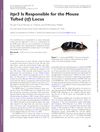
October 2012 in “Journal of Heredity” This study identified the Itpr3 gene as responsible for the tufted hair loss phenotype in the BTBR mouse strain.
May 2005 in “Molecular Carcinogenesis” This study found that mrp/plf-mRNA expression in murine skin increases in response to different tumor promoters, suggesting its potential as a short-term biomarker for chemical carcinogenesis.
 10 citations
,
September 1997 in “Molecular carcinogenesis”
10 citations
,
September 1997 in “Molecular carcinogenesis” This study found that mirex and TPA promote papilloma formation in CD-1 mouse skin through distinct populations of mutant Ha-ras cells, resulting in additive tumor yields.
 1 citations
,
December 2018 in “Journal of genetic medicine”
1 citations
,
December 2018 in “Journal of genetic medicine” In this case report, a 20-year-old male with tricho-rhino-phalangeal syndrome was found to have a de novo frameshift mutation in the TRPS1 gene, highlighting the challenges in diagnosing this rare disorder.
 41 citations
,
February 2021 in “Cureus”
41 citations
,
February 2021 in “Cureus” In this study, Proxalutamide significantly increased the rate of viral clearance and reduced clinical remission time in patients with mild to moderate COVID-19 compared to placebo.
 41 citations
,
February 2021 in “Cureus”
41 citations
,
February 2021 in “Cureus” This study found that in males with mild COVID-19, treatment with dutasteride, along with standard therapy, may reduce viral shedding and inflammation compared to placebo.
 5 citations
,
July 2021 in “medRxiv (Cold Spring Harbor Laboratory)”
5 citations
,
July 2021 in “medRxiv (Cold Spring Harbor Laboratory)” This study found that proxalutamide treatment significantly reduced 30-day hospitalization rates in women with mild-to-moderate COVID-19 compared to placebo, with no safety issues identified.
 4 citations
,
March 2022 in “Journal of Infection”
4 citations
,
March 2022 in “Journal of Infection” This study suggests that anti-androgen therapy may reduce the risk of SARS-CoV-2 infection and associated mortality, though results were not consistently supportive across all studies analyzed.
 April 2022 in “International journal of respiratory and pulmonary medicine”
 The authors propose that higher testosterone levels in hospitalized COVID-19 patients might be associated with worse outcomes.
5 citations
,
July 2014 in “Molecular Biology Reports” July 2025 in “Journal of Investigative Dermatology”  16 citations
,
May 2000 in “Endocrinology”
16 citations
,
May 2000 in “Endocrinology” This study identified a new gene, mrp4, in mice, which suggests it may have a unique role in the growth and development of hair follicles in the ears and tails.
1 citations
,
January 2021  January 1999 in “American Journal of Medical Genetics Part A”
 This case report describes a rare occurrence of ectodermal dysplasia features in a 14-year-old with MBTPS1 gene variants, expanding the known spectrum of related disorders.
 April 2026 in “Human Genome Variation”
 In this study, researchers identified a recurrent MBTPS2 splice-site variant as a mutational hotspot in IFAP syndrome across diverse families, with phenotype severity suggesting the influence of additional modifiers.
2 citations
,
September 2016 in “Journal of Dermatological Science” Reduced TRPS1 leads to increased STAT3 and SOX9 in hair follicles, affecting hair growth.
324 citations
,
May 2002 in “Oncogene” 59 citations
,
November 2011 in “Development” This study found that the transcription factor Trps1 acts as a novel regulator of the Wnt signaling pathway and early hair follicle progenitors in developing vibrissa follicles in mice.
 July 2022 in “The journal of investigative dermatology/Journal of investigative dermatology”
 In this study, researchers found that TSPyV T antigens can disrupt normal cell differentiation and proliferation in hair follicles and interfollicular epidermis, possibly contributing to trichodysplasia spinulosa pathology.
 5 citations
,
July 2021 in “medRxiv (Cold Spring Harbor Laboratory)”
5 citations
,
July 2021 in “medRxiv (Cold Spring Harbor Laboratory)” This study found that proxalutamide improved immunologic, inflammatory, thrombotic, and oxygen markers in both female and male COVID-19 outpatients, which may support its association with lower hospitalization rates compared to standard care.
1 citations
,
March 2022 in “Irish Journal of Medical Science” This study suggests that the Gabrin sign and hypertension in male patients are associated with a worse prognosis for COVID-19.
October 2025 in “Influenza and Other Respiratory Viruses” This study found that bis-benzylisoquinoline and Amaryllidaceae alkaloids, especially aromoline, show potential as antiviral agents, suggesting they could serve as foundations for developing new treatments against coronaviruses by enhancing the understanding of their structure-activity relationships.
February 2024 in “Indian Dermatology Online Journal” In this study, researchers at a tertiary care center reported a significant correlation between severe COVID-19 cases and the presence of androgenic alopecia, suggesting that androgen receptor expression may influence COVID-19 severity.
July 2025 in “Clinical Case Reports” In this case report, a 17-year-old male with a specific TRPS1 gene mutation presented with sparse, soft hair, short thumbs and toes, misaligned teeth, and distinctive bone abnormalities in the fingers and toes as observed through X-ray analysis.
9 citations
,
May 2014 in “BMC medical genetics” In this case report, the authors suggest that a novel enhancer element's translocation near the TRPS1 gene may contribute to the TRPS phenotype, expanding understanding of the syndrome's genetic basis.
October 2022 in “Hair Transplantation” This article discusses the temporary scalp trichopigmentation procedure, detailing its unique approach compared to traditional scalp micropigmentation, and reports no new clinical findings.
188 citations
,
June 1998 in “Molecular cell” This study found that mimicking the XPD point mutation in mice resulted in trichothiodystrophy-like symptoms, supporting the role of basal transcription and DNA repair defects in the disease.
 3 citations
,
March 2024 in “Cureus”
3 citations
,
March 2024 in “Cureus” This study found that PRP may effectively reduce TMJ pain and improve jaw function and quality of life in young adults with mild TMD.