September 2017 in “OhioLink ETD Center (Ohio Library and Information Network)” In this study, dementia caregivers showed lower hair cortisol levels than controls despite reporting higher perceived stress, providing weak support for the Perseverative Cognition Hypothesis and suggesting complex effects of caregiving stress.
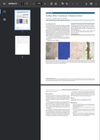
In this case study, a 15-year-old obese boy was diagnosed with acanthosis nigricans and hair casts in the axillae, with Wood's lamp and dermoscopic examination revealing specific features, yet fungal infection was ruled out through a negative KOH test.
August 2024 in “NPI Journal of Science and Technology.” In this case report, a six-year-old Golden Retriever diagnosed with patchy demodex infestation and secondary bacterial infection was successfully treated with medicated shampoo and antibiotics, leading to healing of lesions and a negative skin scraping test after two weeks.
 June 2024 in “JURNAL PENDIDIKAN DAN KELUARGA”
 This experimental study evaluated celery extract as a hair tonic, finding it contains vitamin A and flavonoids. Organoleptic and pH tests indicated favorable smell, color, absorption, and user preference, supporting its potential as a natural ingredient for hair health applications.
June 2024 in “Lontara Journal Of Health Science And Technology” This study evaluated the effects of candlenut oil, olive oil, and their combination on hair growth in male rabbits, finding that candlenut oil led to the greatest hair length increase compared to olive oil or the combination, which also showed significant effects.
This review focuses on treatment options and safety for various types of pediatric alopecia, providing no new clinical findings; the authors highlight the need for early diagnosis and intervention.
April 2021 in “Cermin Dunia Kedokteran” This study reports improvement in tinea capitis symptoms in two siblings after two months of treatment with ketoconazole lotion and shampoo, following initial findings of M. canis and Rhodotorulla infections.
 May 2015 in “Journal of The American Academy of Dermatology”
 This review discusses an algorithm using patient history, clinical examination, and tests to help diagnose hair loss in women, but it reports no new clinical results.
 January 2015 in “Springer eBooks”
 Hair damage shows as fragility, dullness, and discoloration, varies by ethnicity, and is worsened by cosmetic procedures and diseases.
 August 2012 in “Reactions Weekly”
 Albendazole likely caused temporary hair loss in a 25-year-old woman.
 July 2007 in “Clinical Risk”
 A woman got severe scalp burns from a salon's improper hair bleaching treatment.
July 2000 in “The Pediatric Infectious Disease Journal” This case report highlights tinea faciei as a potential diagnosis for vesicular lesions in neonates, suggesting its consideration over more invasive diagnostics for similar presentations.
March 1997 in “Fertility and sterility” This review suggests that finasteride is well-tolerated and potentially more effective than other treatments for hirsutism, with results confirmed by other studies.
354 citations
,
August 1991 in “Molecular Endocrinology” This study found that distinct isoenzymes of 3 beta-hydroxysteroid dehydrogenase are expressed in human adrenals and gonads compared to the placenta and skin.
 12 citations
,
January 2020 in “touchREVIEWS in Endocrinology”
12 citations
,
January 2020 in “touchREVIEWS in Endocrinology” Testosterone may both worsen and protect against COVID-19 effects in men.
 May 2023 in “Al-Mağallaẗ al-ʻirāqiyyaẗ li-l-ṣaydalaẗ”
 In this study, young albino rats whose mothers received high doses of rosemary extract during lactation showed negative health effects, including inhibited weight gain and organ damage, suggesting potential teratogenicity of rosemary extract when used in such conditions.
 February 2018 in “The Journal of Sexual Medicine”
 In this animal study, finasteride exposure led to impaired spermatogenesis in rats, while the novel compound DA-9401, derived from three medicinal herbs, demonstrated potential in improving sperm parameters and reducing testicular apoptosis when used alone or with finasteride.
 4025 citations
,
December 2003 in “Human Reproduction”
4025 citations
,
December 2003 in “Human Reproduction” This review discusses the evolution of diagnostic criteria for polycystic ovary syndrome and emphasizes its association with various metabolic and cardiovascular risks, but it provides no new research findings.
This study suggests that estimating autism likelihood as early as one month after birth may enable more precise early intervention for children with developmental support needs, potentially improving diagnosis, workflows, and reducing service wait times.
 October 2022 in “Gadua Journal of Pure and Allied Science”
 In this study, Trichophyton tonsurans and Microsporum canis were identified as the primary causes of tinea capitis, with terbinafine treatment showing the highest cure rate. Non-commercial kits surpassed real-time PCR commercial kits in specificity and sensitivity for diagnosis.
 86 citations
,
May 2013 in “American journal of obstetrics and gynecology”
86 citations
,
May 2013 in “American journal of obstetrics and gynecology” This article reviews the care of transgender patients, encompassing diagnosis, treatment options, and challenges in health care access, but does not present new research findings; the authors emphasize the critical role of providers in addressing transgender health needs.
 49 citations
,
January 2010 in “International Journal of Pediatric Endocrinology”
49 citations
,
January 2010 in “International Journal of Pediatric Endocrinology” This review covers the pathophysiology, diagnosis, and treatment of nonclassic congenital adrenal hyperplasia due to P450c21, but it reports no new clinical results.
 36 citations
,
April 2017 in “journal of current ophthalmology”
36 citations
,
April 2017 in “journal of current ophthalmology” This review highlights essential preoperative assessments for ophthalmologists and non-oculo-facial surgeons performing upper facial rejuvenation, emphasizing the importance of understanding ocular and periocular anatomy to achieve both cosmetic and functional improvements.
 26 citations
,
March 2009 in “Dermato-endocrinology”
26 citations
,
March 2009 in “Dermato-endocrinology” This review discusses the evaluation, clinical presentation, and cutaneous manifestations of congenital adrenal hyperplasia, focusing on differential diagnosis challenges with polycystic ovary syndrome, and reports no new clinical findings.
 3 citations
,
July 2012 in “British journal of hospital medicine”
3 citations
,
July 2012 in “British journal of hospital medicine” This article reviews common hair loss disorders, emphasizing their potential links to systemic disease and the importance of thorough diagnostic evaluation, but reports no new clinical results.
 1 citations
,
April 2018 in “Our Dermatology Online”
1 citations
,
April 2018 in “Our Dermatology Online” This article discusses the familiarity of identifying male androgenetic alopecia but presents no new research findings.
 December 2020 in “bioRxiv (Cold Spring Harbor Laboratory)”
 In this study, 25% of CCHCR1-deficient mice exposed to stress developed hair loss similar to human alopecia areata, suggesting CCHCR1 is a susceptibility gene for the disease.

The document concludes that hair loss in women is complex, often linked to aging, health conditions, and nutritional deficiencies, and emotional impacts should not be underestimated.
 88 citations
,
June 2009 in “Cleveland Clinic Journal of Medicine”
88 citations
,
June 2009 in “Cleveland Clinic Journal of Medicine” This article reviews various causes of diffuse hair loss, highlighting the importance of identifying triggers through thorough examination for effective treatment and emphasizing patient education in management; it reports no new clinical findings.
 28 citations
,
September 1998 in “Medical Clinics of North America”
28 citations
,
September 1998 in “Medical Clinics of North America” This article reviews common causes of hair loss, noting that a well-directed history and examination are often sufficient for diagnosis, and reports no new clinical findings.