10 citations
,
March 1997 in “Pediatric Dermatology” This case report describes a patient with trichothiodystrophy presenting with autism, mental retardation, and seizures, characterized by distinct hair abnormalities under microscopy.
1 citations
,
November 2021 in “International Journal of Dermatology and Venereology” This paper highlights a case where a 2-year-old boy with temporal triangular alopecia was initially misdiagnosed with alopecia areata, emphasizing the importance of dermoscopy for accurate early diagnosis to avoid unnecessary treatments.
October 2006 in “Urology” The study found that different criteria led to different patient groups in the CombAT study compared to the MTOPS study.
11 citations
,
March 2002 in “Pediatric Dermatology” Temporal triangular alopecia is a non-scarring hair loss seen in some Asian children.
 5 citations
,
February 2021 in “Journal of The American Academy of Dermatology”
5 citations
,
February 2021 in “Journal of The American Academy of Dermatology” This commentary discusses ethical concerns with direct-to-consumer teledermatology services, highlighting potential conflicts of interest and issues with care quality.
 1 citations
,
January 2022 in “Skin appendage disorders”
1 citations
,
January 2022 in “Skin appendage disorders” This case series reported that telogen effluvium may reveal underlying traction alopecia, emphasizing the importance of recognizing this to ensure accurate diagnosis and treatment.
2 citations
,
July 1994 in “Journal of Dermatological Science” This study found that a laboratory model using nude mice can produce human hair follicles with amino acid compositions resembling both normal and trichothiodystrophy-affected human scalp hair over extended periods.
 24 citations
,
July 2016 in “Revue Neurologique”
24 citations
,
July 2016 in “Revue Neurologique” This review discusses treatment options for tics in Gilles de la Tourette syndrome, highlighting existing therapies and potential future advancements, but reports no new clinical findings.
36 citations
,
March 1989 in “British journal of dermatology/British journal of dermatology, Supplement” In this study, the authors compared topical diphencyprone and tretinoin gel for treating alopecia totalis and universalis, but the abstract does not report any definitive clinical results.
 1 citations
,
July 2022 in “The journal of investigative dermatology/Journal of investigative dermatology”
1 citations
,
July 2022 in “The journal of investigative dermatology/Journal of investigative dermatology” In this open-label trial, Tofacitinib was well tolerated and improved IFN and cytokine scores, as well as overall skin pathology, in individuals with Down syndrome and immune skin conditions.
1 citations
,
May 2025 in “The Journal of Dermatology” In this study, increased Treg cell activity indicated by IL-10 and IL-15 was identified as a feature of ADTA, distinguishing it from AA and potentially explaining ADTA's more favorable prognosis.
40 citations
,
August 2021 in “JAAD international” This review found that teledermatology was significantly used during the COVID-19 pandemic, particularly for managing common ambulatory dermatoses like acne and eczema.
3 citations
,
February 2019 in “Molecular genetics and metabolism” This study found that coadministration of tadalafil and finasteride improved lower urinary tract symptoms and erectile function in men with benign prostatic hyperplasia better than finasteride alone over 26 weeks.
 7 citations
,
April 2012 in “Clinical investigation”
7 citations
,
April 2012 in “Clinical investigation” This review examines existing research on transdermal testosterone for treating hypoactive sexual desire disorder, suggesting it improves female sexual function with minimal side effects but highlights the need for more long-term safety data.
11 citations
,
December 2002 in “Controlled Clinical Trials” This study suggests that simple absolute threshold monitoring rules for compliance using the biomarker DHT perform similarly to more complex methods in the Prostate Cancer Prevention Trial.
October 2024 in “Journal of the Endocrine Society” This case report highlights that a patient with resistance to thyroid hormone was misdiagnosed as having Graves’ disease, leading to unnecessary radioactive iodine treatment.
 2 citations
,
June 2016 in “PubMed”
2 citations
,
June 2016 in “PubMed” This case study reports successful treatment of an 11-year-old girl's trichotillomania with cognitive behavioral therapy, mild topical treatments, and supportive parental involvement, without psychopharmacologic intervention.
 October 2022 in “Endocrine journal”
 In this study of male patients with 46,XY 5α-reductase type 2 deficiency, DHT therapy was effective in achieving penile enlargement during infancy, while testosterone replacement therapy proved more beneficial during puberty, possibly due to increased conversion to DHT.
37 citations
,
January 1986 in “Carcinogenesis” This study found that TPA treatment transiently induces high levels of ODC in mouse epidermal cells, particularly around hair follicles, with localization reduced by retinoic acid or cycloheximide pretreatment.
5 citations
,
June 2015 in “The Journal of Dermatology” This study identified "HTLV-1-associated lichenoid dermatitis" as a skin condition in HTLV-1-infected individuals, characterized by reactive eruptions associated with increased immunity toward infected CD4+ T cells.
 6 citations
,
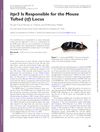
October 2012 in “Journal of Heredity”
6 citations
,
October 2012 in “Journal of Heredity” This study identified the Itpr3 gene as responsible for the tufted hair loss phenotype in the BTBR mouse strain.
January 2023 in “Indian Dermatology Online Journal” This case report identifies a 23-year-old man with congenital triangular alopecia, a non-scarring alopecia characterized by preserved follicles and vellus hair, for which unnecessary interventions should be avoided.
2 citations
,
June 2024 in “Parasites & Vectors” This study provides insights into how chronic T. gondii infection might affect testicular tissue and suggests a potential impact on male fertility.
42 citations
,
September 1985 in “British Journal of Dermatology” This study found that trichothiodystrophic hair shows reduced and disoriented protein deposition in follicles, with both the cuticle and cortex affected, providing localized structural insights into keratin abnormalities.
 10 citations
,
January 2011 in “Case reports in dermatological medicine”
10 citations
,
January 2011 in “Case reports in dermatological medicine” This report documented a successful and sustained hair restoration surgery using follicular unit transplantation for temporal triangular alopecia, lasting over six years.
 June 2024 in “Archives of dermatological research”
 Targeted testing for telogen effluvium patients can save healthcare costs.
 7 citations
,
January 2014 in “Case reports in pediatrics”
7 citations
,
January 2014 in “Case reports in pediatrics” This report discusses a case of hair toe tourniquet syndrome in an infant and emphasizes the importance of early diagnosis and treatment to prevent severe complications.
 3 citations
,
November 2018 in “PubMed”
3 citations
,
November 2018 in “PubMed” This study identifies a specific subtype of Telogen Effluvium associated with scalp dysesthesia, such as itch or burning, in the absence of any inflammatory scalp disorder or medication association.
 August 2018 in “Journal of Investigative Dermatology”
 This study of alopecia areata patients found that a 10 mg twice-daily dose of oral tofacitinib led to significant hair regrowth, suggesting it may be beneficial for treatment.
 4 citations
,
September 2024 in “BMC Cancer”
4 citations
,
September 2024 in “BMC Cancer” In this prospective phase II clinical trial, researchers are investigating whether adding dutasteride to combined androgen blockade can improve the response rate and clinical outcomes for patients with androgen receptor-positive recurrent or metastatic salivary duct carcinoma.