 2 citations
,
April 2019 in “Dermatologic Therapy”
2 citations
,
April 2019 in “Dermatologic Therapy” A patient with alopecia had hair regrowth with tofacitinib but developed a skin reaction, choosing to continue the treatment despite the side effect.
This report details a case of hair, nail, and pigmentary disorders occurring 10 months after starting abemaciclib for metastatic breast cancer, highlighting that cutaneous side effects, although less frequent, can lead to discontinuation in 25% of cases.
 50 citations
,
June 1999 in “Annals of Oncology”
50 citations
,
June 1999 in “Annals of Oncology” This study found that long-term weekly administration of docetaxel is feasible at doses up to 45 mg/m² per week with acceptable toxicity, and suggests further evaluation with 40 mg/m² for phase II studies.
 June 2015 in “Reactions Weekly”
 A man developed alopecia areata after starting cancer treatment with vandetanib.
 44 citations
,
October 2017 in “Journal of the American Academy of Dermatology”
44 citations
,
October 2017 in “Journal of the American Academy of Dermatology” In this study, tofacitinib monotherapy was effective in achieving hair regrowth in over half of Korean patients with moderate-to-severe and refractory alopecia areata, though treatment discontinuation typically led to hair loss recurrence.
 January 2025 in “Nanoscale”
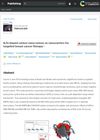
 This study reports that a new boron/nitrogen-doped carbon nano-onion-based delivery system for doxorubicin enhanced its uptake and anticancer effects in specific cancer cell types, while reducing cardiotoxicity in human heart cells.
July 2026 in “International Journal of Molecular Medicine” In this study, cepharanthine showed potent antiviral effects against tick-borne encephalitis virus in vitro by reducing viral replication and inflammation in human lung and neuroblastoma cells.
 August 2013 in “Hospital Pharmacy”
 This article discusses the importance of recognizing adverse drug reactions, methods of prevention, and encourages reporting them to the FDA's MedWatch program; it reports no new results.
January 2024 in “Pharmacoepidemiology” This study found that patients with rheumatoid arthritis taking tofacitinib had higher rates of serious adverse events compared to those with alopecia areata, highlighting the need for careful assessment when using it off-label for alopecia areata.
 29 citations
,
August 2007 in “Annals of Oncology”
29 citations
,
August 2007 in “Annals of Oncology” Docetaxel and oxaliplatin are effective and have manageable side effects for recurrent platinum-sensitive ovarian cancer.
 December 2025 in “International Journal of Innovative Technologies in Social Science”
 This study found that ritlecitinib, approved for alopecia areata in patients aged 12 and older, has an acceptable safety profile with mild to moderate side effects and no increase in serious adverse events compared to placebo.
65 citations
,
February 2011 in “Molecular cancer therapeutics” This study reported that the novel AKT inhibitor CCT128930 demonstrated significant antitumor activity in human cancer cell lines and xenografts, highlighting its potential as an anticancer therapy.
February 2025 in “Borneo Journal of Pharmacy” This study reviewed evidence on eribulin's efficacy and safety for treating metastatic triple-negative breast cancer, highlighting variable survival outcomes and manageable safety profiles for both monotherapy and combination therapies.
2 citations
,
November 2024 in “In Silico Pharmacology” July 2024 in “Journal of Investigative Dermatology” A new test helps find drugs to treat head and neck cancer by targeting c-Rel.
 279 citations
,
June 1990 in “Journal of Clinical Oncology”
279 citations
,
June 1990 in “Journal of Clinical Oncology” The study found that for positive-node breast cancer patients aged 50 and older, adding chemotherapy to tamoxifen significantly improved disease-free survival compared to tamoxifen alone.
 3 citations
,
August 2024 in “Frontiers in Oncology”
3 citations
,
August 2024 in “Frontiers in Oncology” This review explores molecular targets for head and neck squamous cell carcinoma and discusses potential advancements in radiopharmaceuticals for targeted radionuclide therapy, reporting no new clinical results.
 November 2025 in “Clinical Cosmetic and Investigational Dermatology”
 This study evaluated the efficacy and safety of tofacitinib for treating severe alopecia areata in five patients, finding that three responded favorably with mild side effects, supporting its potential use based on existing research.
 March 2002 in “Reactions Weekly”
 Some birth control pills increase blood clot risk; use them for specific conditions only.
 93 citations
,
May 2010 in “European Journal of Cancer”
93 citations
,
May 2010 in “European Journal of Cancer” This phase II trial found that BI 2536 demonstrated limited antitumor activity across five solid tumor types, with no confirmed objective responses observed.
August 2010 in “Oncology Times” This article discusses the approval and perceived potential of Provenge, a new prostate cancer vaccine, highlighting its capability to extend survival in certain patients while also noting ongoing debates about its cost and mechanisms; it reports no new clinical results.
 1 citations
,
April 2018 in “Journal of Investigative Dermatology”
1 citations
,
April 2018 in “Journal of Investigative Dermatology” This open-label study found that oral tofacitinib led to significant hair regrowth in patients with moderate-to-severe alopecia areata, supported by changes in gene expression and T cell dynamics.
 February 2011 in “Annales de dermatologie et de vénéréologie”
 This study found that tofacitinib was well tolerated and led to clinical improvement in 77% of potential responders with severe alopecia areata, alopecia totalis, or alopecia universalis.
July 2024 in “Journal of Controlled Release” In this study, researchers developed topical tofacitinib-loaded cationic lipid nanoparticles, which improved absorption and targeted hair follicles in an ex vivo pig ear model, showing promise in treating alopecia areata by reducing symptoms through the JAK/STAT pathway.
 December 2023 in “Journal of Ayub Medical College Abbottabad”
 In this study, Ritlecitinib was reported as a newly approved treatment for alopecia areata that can be used in patients aged 12 and older; after 24 weeks, it resulted in 80% or more scalp hair coverage in treated patients compared to a placebo.
1 citations
,
May 2025 in “BMC Cancer” In this study, the researchers found that different CDK4/6 inhibitors used in treating HR+/HER2- advanced breast cancer have varying safety profiles and impacts on patient quality of life.
January 2016 in “Refubium (Universitätsbibliothek der Freien Universität Berlin)” In this study, the safety profile of the prodrug CAP7.1 was found to be similar to other topoisomerase inhibitors, with myelosuppression as the main dose-limiting toxicity.
1 citations
,
February 2025 in “Pediatric Dermatology” This study found that oral tofacitinib achieved significant hair regrowth in children with moderate to severe alopecia areata, with 72.2% reaching a 75% improvement and 52.8% achieving complete regrowth, though some patients did not respond and further research is needed on the treatment's long-term effects.
 March 2018 in “International journal of basic and clinical pharmacology”
 This study found that while the carboplatin-paclitaxel regimen for advanced lung cancer is more affordable than newer treatments and maintains a good performance status, it significantly increases risks of alopecia and peripheral neuropathy.
56 citations
,
July 2014 in “PloS one” This study found that selective androgen receptor modulators (SARMs) significantly inhibited tumor growth and metastasis-promoting factors in AR-positive triple-negative breast cancer models.