 52 citations
,
June 1981 in “International Journal of Dermatology”
52 citations
,
June 1981 in “International Journal of Dermatology” Oral retinoids are effective for severe skin conditions but require careful use due to side effects.
48 citations
,
June 2003 in “Journal of Investigative Dermatology Symposium Proceedings” This review assesses the effectiveness of various alopecia areata treatments and concludes that only contact sensitizers like diphenylcyclopropenone and squaric acid dibutylester have shown efficacy in evidence-based studies, but it reports no new clinical results.
7 citations
,
August 2024 in “JAAD reviews.” This review reports that low-dose oral minoxidil can cause hypertrichosis due to increased systemic absorption, and highlights the importance of patient-centered care to manage the psychosocial impacts of this side effect effectively.
 August 2024 in “Journal of Clinical Medicine”
 This study evaluates the effectiveness of hydroxychloroquine in treating lichen planopilaris, suggesting varying success based on a real-life retrospective analysis.
30 citations
,
August 1998 in “International Journal of Dermatology” This study found that systemic corticosteroids led to satisfactory hair regrowth in 38.9% of severe alopecia areata patients, but hair fall occurred upon therapy discontinuation or tapering.
June 2026 in “Scientific Reports” This study found that systemic testosterone exposure in transgender individuals with XX genotype alters skin biology, increasing androgen and estrogen receptor-positive cells, collagen density, and fibronectin expression while reducing immune cells, which could affect surgical outcomes by promoting a male skin phenotype.
 41 citations
,
June 2010 in “Clinics in Dermatology”
41 citations
,
June 2010 in “Clinics in Dermatology” This review discusses the negative effects of cigarette smoking on various skin conditions and emphasizes the importance of dermatologists advising patients to quit smoking, but it presents no new research findings.
 37 citations
,
April 2019 in “Journal of The American Academy of Dermatology”
37 citations
,
April 2019 in “Journal of The American Academy of Dermatology” This review assessed the effectiveness of various treatments for frontal fibrosing alopecia and found that intralesional steroids and 5α-reductase inhibitors showed the most positive outcomes in slowing or halting hair loss, though the lack of placebo-controlled studies and consistent outcome measures limits definitive conclusions.
24 citations
,
November 1992 in “Archives of Dermatology” This study found that a 6-week taper of prednisone led to more than 25% hair regrowth in 30% to 47% of alopecia areata patients, and applying 2% topical minoxidil helped maintain this growth.
 9 citations
,
October 2021 in “International Journal of Dermatology”
9 citations
,
October 2021 in “International Journal of Dermatology” This study found that tofacitinib effectively induced hair regrowth in 62.2% of severe alopecia areata patients in Saudi Arabia after six months, with higher baseline Severity of Alopecia Tool scores and past steroid use linked to reduced response.
 2 citations
,
August 2022 in “JAAD case reports”
2 citations
,
August 2022 in “JAAD case reports” This review discusses vaccine safety concerns for individuals with autoimmune and inflammatory conditions, noting vaccine hesitancy due to observed exacerbations post-vaccination and a lack of comprehensive trial data.
 1 citations
,
January 2015 in “Springer eBooks”
1 citations
,
January 2015 in “Springer eBooks” Chemotherapy can cause skin side effects that affect patients' lives, but they can be managed to avoid interrupting cancer treatment.
1 citations
,
January 2004 This study found that low-dose intermittent corticosteroid therapy may be a successful and well-tolerated treatment option for patients with alopecia areata, including those with alopecia totalis and universalis.
This pilot study found that a high fat lard diet may protect against fibrosis and affect the hair follicle cycle in a mouse model of systemic sclerosis, unlike a high fat coconut oil diet.
 December 2023 in “Alzheimer's & dementia”
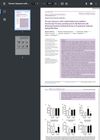
 In this rodent study, researchers found that the drug finasteride may reduce anxiety and depression-like behaviors in a model of aging, despite inducing metabolic disturbances and depressive-like behaviors in young rats, suggesting potential considerations for its use in elderly populations.
September 2015 in “Der Internist” Finasteride and minoxidil are effective for hair loss, with potential side effects, and JAK inhibitors show promise for alopecia areata.
September 2024 in “International Journal of Women’s Dermatology” This study emphasizes that for effective management of alopecic sarcoidosis, evidence-based strategies including prompt diagnosis and systemic evaluation, particularly for scarring alopecia, are crucial to achieve better patient outcomes.
This study explored the experiences of systemic lupus erythematosus patients receiving Anifrolumab, revealing improvements in self-reported symptoms and daily life impacts alongside decreased disease activity and lowered corticosteroid use.
 September 1997 in “Journal of The European Academy of Dermatology and Venereology”
 The document concludes that corticosteroids effectively treat vasculitis allergica in over 90% of cases, with long-term kidney issues being the main adverse outcome.
 101 citations
,
November 1992 in “Archives of Dermatology”
101 citations
,
November 1992 in “Archives of Dermatology” In this study, tapering prednisone followed by 2% topical minoxidil helped limit hair loss in some patients with alopecia areata, with 30% to 47% showing over 25% hair regrowth initially.
 117 citations
,
March 2013 in “Journal of the European Academy of Dermatology and Venereology”
117 citations
,
March 2013 in “Journal of the European Academy of Dermatology and Venereology” This study reported that while no effective treatment exists for frontal fibrosing alopecia, oral 5-alpha-reductase inhibitors showed the most promise, inducing a good clinical response in 45% of patients.
44 citations
,
August 2014 in “Anais brasileiros de dermatologia/Anais Brasileiros de Dermatologia” This study found that methotrexate may be an effective and safe treatment option for severe alopecia areata, with better regrowth results when combined with corticosteroids.
 7 citations
,
October 2022 in “Expert opinion on emerging drugs”
7 citations
,
October 2022 in “Expert opinion on emerging drugs” This review reports on new and effective drug developments for treating severe alopecia areata, including oral baricitinib, but emphasizes that no treatment guarantees permanent remission or works for all patients, with high recurrence rates after stopping medication.
 2 citations
,
October 2018 in “Springer eBooks”
2 citations
,
October 2018 in “Springer eBooks” Cancer treatments can cause skin-related side effects that may affect patient quality of life and require changes in treatment.
 2 citations
,
January 2018 in “Elsevier eBooks”
2 citations
,
January 2018 in “Elsevier eBooks” Targeted therapies for lung cancer are effective but require careful management of side effects to benefit patients.
 November 2023 in “Indian Dermatology Online Journal”
 This study found that tofacitinib was safe and effective for patients with severe or treatment-resistant alopecia areata, alopecia totalis, and alopecia universalis, resulting in significant hair regrowth for most participants.
 April 2018 in “Dermatologic Surgery”
 A new surgical technique using vellus hair grafts effectively treated vitiligo without causing unwanted hair growth.
January 2025 in “Updates in clinical dermatology” COVID-19 vaccines can cause minor skin reactions, including those related to Bullous Pemphigoid, but these usually resolve on their own.
January 2007 in “Frontiers in Medicine” This study found that tofacitinib was an effective and better-tolerated treatment for moderate-to-severe AA compared to SCs, though its efficacy decreased in patients with disease episodes longer than two years.
 3 citations
,
September 2024 in “Dermatology and Therapy”
3 citations
,
September 2024 in “Dermatology and Therapy” Previous alopecia areata treatments do not affect the long-term effectiveness of ritlecitinib.