 1 citations
,
September 2017 in “Dermatologic Surgery”
1 citations
,
September 2017 in “Dermatologic Surgery” The cephalic approach for nerve blocks is less painful than the anterior approach during hair restoration surgery.
In this study, researchers found that adding zygomaticotemporal nerve blocks to supratrochlear and supraorbital nerve blocks in mesotherapy lowered pain significantly during and after the procedure for hair regrowth in alopecia patients.
March 2024 in “Likarska sprava” This source reviewed contemporary methods of local anesthesia for hair transplantation, highlighting current innovations and identifying key areas for improvement and the integration of various techniques within practical trichology and plastic surgery.
 March 2018 in “Journal of Pakistan Association of Dermatology”
 This study found that using vibration during supraorbital/supratrochlear nerve blocks in hair restoration surgery significantly reduced pain levels compared to not using vibration, with patients reporting lower Wong-Baker Faces Pain scores when vibration was applied.
 January 2019 in “Headache”
 This source discusses the use of nerve blocks as potential treatments for head and neck neuralgias and primary headaches, highlighting their effectiveness and various applications, including during intervals between onabotulinum toxin A injections.
 February 2024 in “Curēus”
 In this study, researchers found that using regional nerve blocks (STN and SON blocks) for anesthesia in platelet-rich plasma treatment for hair regrowth resulted in significantly less pain and better analgesia compared to the more common ring block technique.
 March 2025 in “Pain Physician”
 This retrospective study found that applying local skin precooling before scalp nerve block significantly reduced injection site pain during PRP mesotherapy for patients with androgenetic alopecia, compared to those who did not receive precooling, thus improving patient comfort and compliance.
 17 citations
,
February 2018 in “British Journal of Oral & Maxillofacial Surgery”
17 citations
,
February 2018 in “British Journal of Oral & Maxillofacial Surgery” This paper reviews the evolution and classification of forehead reduction and orbital contouring techniques in transgender females, but reports no new clinical findings.
 March 2024 in “Asian journal of medical sciences”
 In this study, researchers found that a ring block technique was the most accepted anesthesia modality for platelet-rich plasma injections in hair loss treatment, with the least post-procedural pain compared to other methods like vibration anesthesia and nerve blocks.
 1 citations
,
January 2010 in “Elsevier eBooks”
1 citations
,
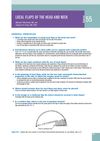
January 2010 in “Elsevier eBooks” The document concludes that local flaps are effective for reconstructive surgery in the head and neck, offering good skin match and function.
 January 2022 in “Journal of Cutaneous and Aesthetic Surgery”
 Using truncal anesthesia on the supraorbital nerve reduces pain in hair loss treatments and improves patient comfort.
 April 2024 in “Asian Journal of Medical Sciences”
 This study found that ring block anesthesia was the most acceptable method for reducing pain during platelet-rich plasma injections for hair loss.
 17 citations
,
January 1996 in “Aesthetic Plastic Surgery”
17 citations
,
January 1996 in “Aesthetic Plastic Surgery” This study suggests that the tumescent technique effectively provides anesthesia and reduces bleeding during hair micrografting, eliminating the need for multiple needle injections or nerve blocks.
1 citations
,
January 1996 in “Aesthetic Plastic Surgery” This study suggests that the tumescent technique can improve hair micrografting by effectively providing anesthesia and reducing bleeding without the need for multiple needle injections or nerve blocks.
 13 citations
,
November 2014 in “Clinics in Plastic Surgery”
13 citations
,
November 2014 in “Clinics in Plastic Surgery” This article reviews the use of the transtemporal approach for midface and lower eyelid-cheek junction rejuvenation, detailing surgical techniques, post-operative care, and potential complications, but reports no new clinical results.
 9 citations
,
July 2014 in “Facial Plastic Surgery”
9 citations
,
July 2014 in “Facial Plastic Surgery” The authors find the endoscopic forehead midface lift to be a reliable and safe method for facial rejuvenation.
 4 citations
,
July 2016 in “Dermatologic Surgery”
4 citations
,
July 2016 in “Dermatologic Surgery” In this study, the duration of epinephrine-induced vasoconstriction in scalp tissue increased with concentration and was longer at the frontotemporal junction compared to the midfrontal area, significantly so at the highest concentration used.
 August 2016 in “InTech eBooks”
 This source highlights the diverse scope of facial plastic and reconstructive surgery, noting the specialty's adaptability to changing trends and ethnic preferences for aesthetic outcomes, without reporting specific study results.

This chapter discusses the role of orthognathic surgeons in facial feminization surgery, focusing on procedures such as forehead reduction and orbital rim contouring, but reports no new clinical results.
 7 citations
,
September 2015 in “Archives of Plastic Surgery”
7 citations
,
September 2015 in “Archives of Plastic Surgery” This study reported that an open surgical technique for lateral brow lifts produced satisfactory results in most patients (94.41%) and was associated with long-lasting effects and some complications.
 2 citations
,
October 2017
2 citations
,
October 2017 Vibration anesthesia can significantly lessen the pain during hair restoration surgery.
 July 2025 in “Communications Biology”
 In this study, researchers used synchrotron X-ray imaging to examine rat vibrissa follicles, finding that despite variations in vibrissa length and follicle size, certain sensory structures remain consistent, suggesting specialized roles in sensory processing depending on the vibrissa type.
20 citations
,
March 2015 in “Archives of Plastic Surgery” This article discusses the unique challenges of performing facelifts on Asian patients due to their thicker and larger skin, and it reports no procedural outcomes.
 January 2025 in “Nature Communications”
 Using synchrotron X-ray imaging, this study mapped the complex innervation of male rat vibrissa follicles, revealing distinct types of myelinated afferent neurons and patterns of axonal organization that may inform sensory processing in the brainstem.
 January 2023 in “Operative Techniques in Otolaryngology-Head and Neck Surgery”
 This chapter reviews the role of hair transplantation in gender affirming procedures for transitioning patients but reports no new clinical findings.
 January 1989 in “Side effects of drugs annual”
 This chapter reviews studies on the side effects of cytostatics and immunosuppressive drugs, detailing various toxicities such as cardiovascular, pulmonary, and neurotoxicity, but provides no new clinical results.
 3 citations
,
September 2010 in “International Society of Hair Restoration Surgery”
3 citations
,
September 2010 in “International Society of Hair Restoration Surgery” This article discusses the importance of artistic hairline design and clear outlining in planning the recipient area for hair transplants but reports no clinical results.

This paper reviews the process and considerations for hair transplant surgery using the FUE method, but does not present new clinical results.
 2 citations
,
January 1908 in “Journal of the American Medical Association”
2 citations
,
January 1908 in “Journal of the American Medical Association” Fear of hair-related issues causes significant mental distress, especially in high-stress women.
 3 citations
,
May 2011 in “International Journal of Dermatology”
3 citations
,
May 2011 in “International Journal of Dermatology” In this study, using a 16G epidural needle for preparing the recipient area in hair implantation minimized grafts popping out and resulted in a natural-looking hairline with satisfactory graft survival.