 15 citations
,
January 2013 in “Journal of Cutaneous and Aesthetic Surgery”
15 citations
,
January 2013 in “Journal of Cutaneous and Aesthetic Surgery” This study observed that direct hair transplantation, as a modification of follicular unit extraction, was effective in improving baldness in the majority of treated male patients.
 12 citations
,
October 2017 in “Journal of Cosmetic Dermatology”
12 citations
,
October 2017 in “Journal of Cosmetic Dermatology” This study found that plasma rich in growth factors (PRGF) as an adjuvant to follicular unit extraction (FUE) surgery may enhance hair graft performance and reduce post-surgical inflammation and pain in hair loss patients.
 7 citations
,
November 2017 in “Plastic and reconstructive surgery. Global open”
7 citations
,
November 2017 in “Plastic and reconstructive surgery. Global open” This review discusses the combined use of follicular unit extraction and scalp micropigmentation for hair loss treatment, reporting no new clinical results; the authors note significant industry growth.
 2 citations
,
March 2020 in “Medical journal, Armed Forces India”
2 citations
,
March 2020 in “Medical journal, Armed Forces India” This study found that hair transplantation using the follicular unit extraction method significantly improved hair density and patient satisfaction in males with androgenetic alopecia, especially those younger than 33 and with less severe hair loss.
 1 citations
,
March 2017 in “Archives of Plastic Surgery”
1 citations
,
March 2017 in “Archives of Plastic Surgery” This paper describes a new technique using gentian violet to improve visualization during follicular unit extraction in white-haired patients, suggesting it enhances the accuracy of the procedure.
 December 2023 in “International Journal of Science and Research (IJSR)”
 In this observational study, researchers at a dental and craniofacial hospital found that the FUE technique for beard and moustache transplants is effective and safe, with minimal complications such as pinpoint white scars in some patients but no significant issues like infection or numbness.
 February 2018 in “Dermatologic Surgery”
 This study found that nonshaven follicular unit extraction is an effective method for pubic hair restoration in women with pubic atrichosis or hypotrichosis, based on high satisfaction scores from both patients and the surgeon.
 December 2008 in “Dermatologic Surgery”
 This study found that the novel powered FUE (P-FUE) technique reduced harvesting time and graft transection rates in hair restoration compared to manual FUE, with broader patient applicability.
 21 citations
,
January 1995 in “Journal of the American Institute for Conservation”
21 citations
,
January 1995 in “Journal of the American Institute for Conservation” This study describes a new method for extracting red mordant dyes from wool fibers using ethylene diamine tetraacetic acid and N,N-dimethyl formamide, preserving the fibers for further examination.
 19 citations
,
April 2010 in “Journal of Dermatological Treatment”
19 citations
,
April 2010 in “Journal of Dermatological Treatment” This study found that partial follicular units extracted from the donor area can survive and regenerate new hairs at their original site and when transplanted, effectively creating two hair follicles from one.
 16 citations
,
December 2016 in “Dermatologic Surgery”
16 citations
,
December 2016 in “Dermatologic Surgery” This study observed that donor strip scar width after hair transplantation was correlated with preoperative scalp laxity and elasticity but not with glidability.
 13 citations
,
January 1995 in “Journal of the American Institute for Conservation”
13 citations
,
January 1995 in “Journal of the American Institute for Conservation” This study introduced a new method for extracting red mordant dyes from wool fibers that preserved the fibers for further analysis and allowed for spectrophotometric examination of the dyes' absorption curves.
 9 citations
,
September 2016 in “Plastic and reconstructive surgery. Global open”
9 citations
,
September 2016 in “Plastic and reconstructive surgery. Global open” In this study, a curved nonrotary punch was found to achieve the lowest follicular unit transection rates of less than 5% compared to conventional rotary punches in hair transplantation for patients with tightly curled Afro-textured hair.
 5 citations
,
November 2019 in “Dermatology and therapy”
5 citations
,
November 2019 in “Dermatology and therapy” This review discusses the use of beard hair as a donor source for hair transplantation in hirsute patients and highlights the lack of extensive studies on its efficacy and safety in East Asian populations.
 4 citations
,
September 2019 in “Journal of Cosmetic Dermatology”
4 citations
,
September 2019 in “Journal of Cosmetic Dermatology” This study found that follicular unit extraction megasession resulted in high patient satisfaction without infections for treating severe androgenetic alopecia, offering a promising one-stage option compared to multi-stage hair transplants.
 1 citations
,
June 2016 in “Aesthetic Surgery Journal”
1 citations
,
June 2016 in “Aesthetic Surgery Journal” This report discusses the author's unique experience using body hair as a donor source for hair transplants, noting no reported complications but highlighting its limited applicability.
 May 2026 in “International Journal of Drug Delivery Technology”
 This study found that infiltrating dilute adrenaline into the recipient area during implanter-based FUE hair transplantation significantly reduced intraoperative bleeding, improving graft precision and visualization, without major safety concerns among the 50 patients observed.
 September 2025 in “Cellular and Molecular Biology”
 This systematic review suggests that intraoperative corticosteroids can reduce postoperative edema in FUE hair transplantation donor areas, but highlights a need for more mechanistic studies to improve understanding of tissue regeneration.
 March 2024 in “Revista Argentina de de Cirugía Plástica Estética y Reparadora”
 In this study, researchers describe the FUE method of hair micrografting, which involves extracting and implanting follicular units using advanced tools, leading to more natural results, quicker recovery, and less damage to donor sites.
 May 2017 in “InTech eBooks”
 This article reviews the follicular unit extraction technique in hair transplantation for androgenetic alopecia and other hair loss conditions, noting it can effectively meet patient expectations but reports no new clinical data.
 13 citations
,
November 2018 in “Annals of Plastic Surgery”
13 citations
,
November 2018 in “Annals of Plastic Surgery” This article presents a surgical approach for nonshaven follicular unit extraction in hair transplantation, describing its application across various conditions with an average graft transection rate of 8.2%.
 1 citations
,
September 2016 in “Indian Journal of Plastic Surgery”
1 citations
,
September 2016 in “Indian Journal of Plastic Surgery” This article describes a modified follicular unit extraction technique using a reverse rake scalp elevator, which may reduce follicular transection rates in hair transplantation from the lower occipital donor region.
 23 citations
,
January 2017 in “Journal of Oleo Science”
23 citations
,
January 2017 in “Journal of Oleo Science” This review discusses the use of supercritical carbon dioxide for extracting rice bran oil, noting its advantages over conventional methods for preserving nutrients and antioxidants, but provides no new experimental results.
 January 2025 in “International Journal For Multidisciplinary Research”
 In this study, the researchers developed and evaluated eco-friendly poly-herbal soap strips using plant extracts from Lantana camara, Moringa Oleifera, and Corn silk, finding that the strips exhibited superior physicochemical properties and significant anti-fungal activity compared to conventional anti-fungal soaps.
 25 citations
,
May 2011 in “Annals of Plastic Surgery”
25 citations
,
May 2011 in “Annals of Plastic Surgery” This study reported that follicular unit extraction using nonhead hair sources like the chest or beard may successfully restore hair density and achieve aesthetically pleasing results in severely bald men with limited head donor hair.
 6 citations
,
March 2008 in “Dermatologic Surgery”
6 citations
,
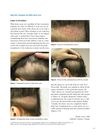
March 2008 in “Dermatologic Surgery” Transplanting chest hair into scars can effectively treat wide donor scars from hair restoration surgery.
 1 citations
,
January 2014 in “Archives of Aesthetic Plastic Surgery”
1 citations
,
January 2014 in “Archives of Aesthetic Plastic Surgery” This study found that follicular unit extraction for Asian female hairline surgery produced satisfactory aesthetic results without leaving a linear scar, contrary to some surgeons' beliefs about its limitations.
 26 citations
,
October 2012 in “Dermatologic Clinics”
26 citations
,
October 2012 in “Dermatologic Clinics” This article reviews recent advancements in hair transplantation techniques, particularly follicular unit transplantation, and suggests an expansion of its applications beyond male pattern hair loss, but reports no new results.
 23 citations
,
September 2014 in “Journal of The American Academy of Dermatology”
23 citations
,
September 2014 in “Journal of The American Academy of Dermatology” This study reports that a robotic device effectively harvests hair follicles with a 95.1% yield in Korean patients undergoing hair restoration surgery.
 14 citations
,
May 2019 in “Journal of Maxillofacial and Oral Surgery”
14 citations
,
May 2019 in “Journal of Maxillofacial and Oral Surgery” This article explains the FUE technique for hair transplantation, its associated risks and complications, and outlines a protocol for maxillofacial surgeons, but reports no new clinical results.