 31 citations
,
November 2016 in “Cell Reports”
31 citations
,
November 2016 in “Cell Reports” This study reveals that somatosensory neurons in mouse skin exhibit structural plasticity during hair-follicle regeneration, which may temporarily impair the reliability of encoding gentle touch.
72 citations
,
September 1975 in “Biology of Reproduction” This study found that zinc is primarily located in the tails of mature rat sperm, associated with -S-S-bonded structures, and suggests a possible similarity in zinc interactions between sperm keratin and hair proteins.
This report presents a rare case of lichen spinulosus in a 52-year-old woman, featuring hyperkeratotic follicular papules and a dense lymphohistiocytic infiltrate in affected skin areas.
 1 citations
,
January 2018 in “Acta dermato-venereologica”
1 citations
,
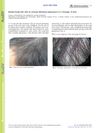
January 2018 in “Acta dermato-venereologica” A teenager's hair with alternating white and dark bands, known as Pili annulati, is a genetic condition that is usually harmless and often considered attractive.
40 citations
,
September 2004 in “Biomacromolecules” In this study, molecular dynamics simulations indicated that the Glu413Lys mutation in human hair keratin significantly affects the stability of coiled coil structures, whereas Glu413Asp showed no impact on stability.
1 citations
,
January 2017 in “Science” In this study, researchers used iron ion coordination to successfully create a molecular knot with three organic ligand strands and eight crossings.
 161 citations
,
July 2003 in “ACM Transactions on Graphics”
161 citations
,
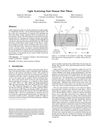
July 2003 in “ACM Transactions on Graphics” In this study, a new shading model for hair was developed that better matches real-life light scattering, thanks to detailed new measurements of hair fiber scattering not predicted by existing models.
20 citations
,
July 2005 in “Experimental dermatology” This study found that the fuzzy mutation in mice is linked to both structural hair defects and accelerated hair follicle cycling, influencing the regulation of hair cycle phases such as catagen and anagen.
 2 citations
,
January 2020 in “Skin appendage disorders”
2 citations
,
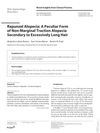
January 2020 in “Skin appendage disorders” This article discusses traction alopecia in children and adolescents, emphasizing its occurrence due to hairstyles that exert chronic tension on hair, but reports no new findings.
 December 2025 in “BMC Medical Genomics”
 This study demonstrated that RNA-seq can effectively expand hair follicle transcriptomic profiling in a multi-center study, offering deeper insights than blood transcriptomics alone.
54 citations
,
May 2001 in “Journal of Investigative Dermatology” This study suggests that increased putrescine levels may disrupt normal hair follicle development in transgenic mice, leading to hair loss and altered skin structure, yet these mice appear more resistant to skin tumorigenesis.
This paper examines factors affecting the stretching setting treatment of human hair and wool, concluding that the intended outcomes can be achieved using their customized testing equipment and technology.
December 2021 in “INDIGO (University of Illinois at Chicago)” This study used single-cell RNA sequencing to characterize 19 distinct cell populations in sheep hair follicles, uncovering differentiation signatures and intercellular communication that may influence wool curvature and sheep breeding.
22 citations
,
September 1982 in “Journal of ultrastructure research” This study reports new cellular features and complex interaction systems in fiber differentiation, indicating more intricate cellular organization than previously recognized, including features like mast cells and primary cilia.
March 2022 in “Book Publisher International (a part of SCIENCEDOMAIN International)” This study documented that human hair shafts exhibit bipolar electrical properties, potentially influencing blood coagulation by inducing fibrin formation through a positive side of the shaft.
 18 citations
,
July 2003 in “Dermatologic Surgery”
18 citations
,
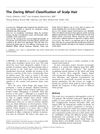
July 2003 in “Dermatologic Surgery” This study identified five distinct scalp whorl patterns, noting that white males have the most distinct whorls, while African Americans and women more often exhibit a diffusion pattern.
 3 citations
,
January 2022 in “Biomaterials Science”
3 citations
,
January 2022 in “Biomaterials Science” This study found that bioinspired conductive dressings with aligned wrinkles can monitor joint motion and significantly accelerate wound healing in mice by promoting collagen deposition, hair follicle regeneration, and epithelialization.
 5 citations
,
March 2001 in “Journal of biomechanics”
5 citations
,
March 2001 in “Journal of biomechanics” This study found that anagen hairs require less force to be extracted than telogen hairs in an in vitro pig skin model, indicating different anchorage mechanisms.
 1 citations
,
January 2026 in “Physical review. D/Physical review. D.”
1 citations
,
January 2026 in “Physical review. D/Physical review. D.” In this study, researchers found that black holes with primary Proca hair exhibit distinctive optical properties, including a two-boundary shadow structure and additional inner rings, offering novel observational signatures and potential insights into strong-gravity environments.
55 citations
,
February 2014 in “Journal of Structural Biology” This study observed that human hair macrofibrils predominantly exhibit a double-twist architecture with varying inter-macrofibril angles, advancing insights into their structural organization and mechanical implications.
 26 citations
,
August 2016 in “ACS Applied Materials & Interfaces”
26 citations
,
August 2016 in “ACS Applied Materials & Interfaces” In this study, cell membrane remodeling with a thermoresponsive boronic acid copolymer was shown to rapidly form spheroids from cancer or cardiac cell lines under standard conditions, promising advances in tissue engineering.
 2 citations
,
January 2015 in “Sen'i Gakkaishi”
2 citations
,
January 2015 in “Sen'i Gakkaishi” This study found that washing hair after reduction in a permanent waving process allows for significant reformation of disulfide cross-links, enhancing the strength and elasticity of hair fibers.
January 1991 in “Acta Dermato Venereologica” This article describes a new method for staining hair fibers that visualizes keratin filaments without the need for OsO4 fixation or sulfur bond breakage, but it provides no new experimental results beyond the method itself.
 45 citations
,
December 2006 in “Biopolymers”
45 citations
,
December 2006 in “Biopolymers” This study found that permanent waving treatment induces structural changes in the cortex proteins of white human hair, significantly reducing its tensile strength without altering the S-S band intensity.
 22 citations
,
February 2008 in “Journal of Dermatological Science”
22 citations
,
February 2008 in “Journal of Dermatological Science” This research found that spontaneous and depilation-induced hair growth result in biologically distinct telogen phases in murine skin, with variations in thickness, pigment content, and hair follicle composition.
 33 citations
,
March 2006 in “Seminars in cutaneous medicine and surgery”
33 citations
,
March 2006 in “Seminars in cutaneous medicine and surgery” This article illustrates various hair shaft defects and suggests that dermatologists can diagnose most of them using light microscopy and polarization without needing advanced imaging techniques.
10 citations
,
July 2022 in “Electronic Journal of Biotechnology” This study found that the methylation level of the IGFBP4 promoter is negatively correlated with mRNA expression and may serve as an epigenetic marker for wool fineness in Super Merino sheep.

Trichodysplasia spinulosa can occur after a heart transplant due to immunosuppressive drugs.
13 citations
,
February 2019 in “Zoology” Lustre mutant sheep have normal hair structure and proteins but differ in felting properties.
 May 2006 in “Dermatologic Surgery”
 This study found that multi-hair follicles naturally orient perpendicular to the radial line from the crown whirl, suggesting that perpendicular transplantation of grafts could replicate this natural appearance.