1 citations
,
March 2021 in “Frontiers in Medicine” In this study, female pattern hair loss in Chinese Han patients was characterized by decreased hair density and shaft diameter, with minor gender differences and the vertex most affected.
 September 2023 in “Clinical, Cosmetic and Investigational Dermatology”
 The researchers reported that one-third of women with female pattern hair loss in their study had occipital region involvement, which is important for diagnosing and planning treatment, including hair restoration surgery, as the occipital region is often used as a normal reference.
June 2026 in “British Journal of Dermatology” This case study suggests that intense inflammation after photodynamic therapy may trigger or worsen fibrosing alopecia in susceptible individuals.
 May 2026 in “Journal of Drugs in Dermatology”
 This study reports that a dual cosmetic serum system by KilgourMD significantly improved hair loss in predominantly menopausal women over a 4-month period, as evidenced by objective and clinical assessments.
 July 2012 in “British Journal of Dermatology”
 This article discusses the challenges dermatologists face in treating hair loss, exploring hair fibre diameter and density, and reports no new clinical results.
 32 citations
,
December 2017 in “International Journal of Molecular Sciences”
32 citations
,
December 2017 in “International Journal of Molecular Sciences” This review suggests that decreased serum 25-hydroxyvitamin D levels may play a role in different types of non-scarring alopecia, but further studies are needed to explore vitamin D supplementation as a therapeutic option.
 14 citations
,
April 2014 in “Medical Clinics of North America”
14 citations
,
April 2014 in “Medical Clinics of North America” This review discusses common skin conditions in primary care settings and provides guidance on differential diagnoses and selecting appropriate topical treatments, but it reports no new clinical results.
August 2024 in “International Journal of Women’s Dermatology” This study characterizes alopecia in ARCI, highlighting its prevalence among patients with severe forms and revealing new associated trichoscopic features.
 April 2019 in “Sohag Medical Journal”
 This study found that androgenetic alopecia was the most common cause of hair loss among patients at Sohag University Hospital's hair clinic.
 January 2015 in “Springer eBooks”
 Chronic kidney disease can cause hair loss, which may be related to zinc deficiency or certain medications, and sometimes hair grows back when the underlying issue is treated.
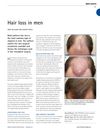 May 2013 in “Trends in Urology & Men's Health”
 This article reviews non‐surgical treatments and surgical techniques for male‐pattern hair loss and does not present new findings.
 111 citations
,
March 1951 in “Annals of the New York Academy of Sciences”
111 citations
,
March 1951 in “Annals of the New York Academy of Sciences” This article discusses the hair cycle of mice and its relevance in studying experimental carcinogenesis sequences, but it reports no new research findings.
 52 citations
,
April 2004 in “Journal of The American Academy of Dermatology”
52 citations
,
April 2004 in “Journal of The American Academy of Dermatology” This article proposes three mechanisms by which dihydrotestosterone may contribute to baldness but reports no new research findings.
 42 citations
,
September 2000 in “British Journal of Dermatology”
42 citations
,
September 2000 in “British Journal of Dermatology” This report describes two children with congenital hypotrichosis and found their short hair is due to a shortened anagen phase, with the condition resolving spontaneously during puberty.
 2 citations
,
May 2018 in “Australasian Journal of Dermatology”
2 citations
,
May 2018 in “Australasian Journal of Dermatology” This article is a letter to the editors about a novel observation regarding chemotherapy-induced alopecia and does not include an abstract with new research results.
1 citations
,
January 2020 in “Bioscientia medicina” This review covers female pattern hair loss, outlining its progression, existing treatments like topical minoxidil and laser therapy, and notes that anti-androgen therapies need further investigation.
 1 citations
,
June 2011 in “Journal of The American Academy of Dermatology”
1 citations
,
June 2011 in “Journal of The American Academy of Dermatology” This study found that iron deficiency was common in both women with hair loss and control subjects, with no higher incidence in the hair loss group.
April 2025 in “Cosmetics” In this randomized, double-blind study, a shampoo containing Plantago asiatica L. significantly improved hair thickness and density while reducing hair loss over 12 weeks in adults compared to a placebo.
 April 2024 in “Skin research and technology”
 This study suggests that while subcutaneous Botulinum Toxin Type A may offer short-term symptom improvement for female pattern hair loss, its effectiveness does not extend beyond three months.
 January 2017 in “Springer eBooks”
 Over 40% of postmenopausal women experience hair loss, with treatments aiming to stop further loss and possibly thicken hair.
 January 1983 in “Journal of The American Academy of Dermatology”
 The document suggests improvements for a hair and scalp disease book and recommends a two-volume skin surgery reference for dermatologists.
 155 citations
,
August 2003 in “Journal Of Experimental Zoology Part B: Molecular And Developmental Evolution”
155 citations
,
August 2003 in “Journal Of Experimental Zoology Part B: Molecular And Developmental Evolution” This review discusses the conserved molecular mechanisms controlling hair follicle development and cycling and suggests they may also apply to other ectodermal derivatives, like teeth and feathers, but it reports no new results.
 122 citations
,
April 1995 in “Journal of Cutaneous Pathology”
122 citations
,
April 1995 in “Journal of Cutaneous Pathology” The document describes how to tell different types of non-scarring hair loss apart by looking at hair and scalp tissue under a microscope.
 91 citations
,
January 2009 in “International Journal of Trichology”
91 citations
,
January 2009 in “International Journal of Trichology” This review discusses the advantages and limitations of various hair loss evaluation methods but reports no new results; it emphasizes the importance of cautious interpretation for these diagnostic tools.
 56 citations
,
January 2008 in “Dermatology”
56 citations
,
January 2008 in “Dermatology” This article discusses the controversy over serum ferritin levels in diagnosing iron deficiency in women with hair loss but reports no new findings, emphasizing the need for consistent reference ranges.
 47 citations
,
January 2013 in “International Journal of Cosmetic Science”
47 citations
,
January 2013 in “International Journal of Cosmetic Science” This review explores genetic and lifestyle factors influencing hair diversity and reports no new findings, calling attention to the potential for future discoveries in genetic and epigenetic research.
 23 citations
,
July 2018 in “Journal of Cosmetic Dermatology”
23 citations
,
July 2018 in “Journal of Cosmetic Dermatology” This study describes a distinct pattern of trichoscopic features associated with chemotherapy-induced alopecia and how these features evolve through different phases of chemotherapy treatment.
 17 citations
,
May 2018 in “Journal of Cosmetic Dermatology”
17 citations
,
May 2018 in “Journal of Cosmetic Dermatology” This study reports that nonscarring diffuse hair loss in women is most common in the 21-40 age group, with low serum ferritin, vitamin B12, and vitamin D3 levels contributing to its pathogenesis.
 11 citations
,
December 2014 in “Clinical Obstetrics and Gynecology”
11 citations
,
December 2014 in “Clinical Obstetrics and Gynecology” This article presents a systematic approach for obstetricians/gynecologists to diagnose and manage common types of nonscarring hair loss in women, reporting no new clinical results.
 6 citations
,
March 1982 in “Clinical and Experimental Dermatology”
6 citations
,
March 1982 in “Clinical and Experimental Dermatology” This article discusses primary cutaneous virilism, focusing on alopecia in women with androgen-dependent skin conditions, and reports no new findings.