 39 citations
,
May 2004 in “Clinics in Dermatology”
39 citations
,
May 2004 in “Clinics in Dermatology” This article reviews treatment options for cutaneous T-cell lymphoma, including skin-directed therapies and aggressive treatments for advanced cases, but reports no new clinical results.
 34 citations
,
April 2009 in “Expert Opinion on Pharmacotherapy”
34 citations
,
April 2009 in “Expert Opinion on Pharmacotherapy” This review discusses evidence-based treatments for common hair loss forms, noting robust support for androgenetic alopecia therapies but limited long-term data and fewer high-quality studies for alopecia areata and cicatricial alopecias.
 23 citations
,
November 2011 in “Journal of the European Academy of Dermatology and Venereology”
23 citations
,
November 2011 in “Journal of the European Academy of Dermatology and Venereology” This study observed that in pemphigus vulgaris patients, hair loss and alopecic patches may result from anti-desmoglein autoantibody-mediated acantholysis and inflammatory changes, leading to non-scarring alopecia with potential for regrowth after treatment.
 14 citations
,
January 2011 in “International Journal of Trichology”
14 citations
,
January 2011 in “International Journal of Trichology” This study reports that combination therapy with oral steroids, anthralin, and minoxidil yielded effective cosmetic responses in 80% of patients with treatment-resistant extensive alopecia areata.
8 citations
,
March 2010 in “Chinese medical journal/Chinese Medical Journal” This study found that antifungal therapy significantly reduced pustules in patients with refractory acne, indicating a potential role for Malassezia infection in such cases.
 April 2023 in “JOJ dermatology & cosmetics”
 In this study, researchers highlighted the complexity of managing psychocutaneous disorders, emphasizing the need for a multidisciplinary approach involving dermatologists, psychiatrists, family physicians, and social support to address associated psychiatric diagnoses, risk factors like suicide, and ensure effective treatment.
 July 2022 in “Journal of Investigative Dermatology”
 This study suggests that interleukin-15 plays a complex role in alopecia areata, potentially contributing to immune infiltration while also protecting against hair follicle immune privilege collapse and promoting hair growth.

This article reviews alopecia areata as a chronic autoimmune disease affecting hair follicles and discusses its association with other autoimmune conditions, but provides no new clinical findings.
 January 2017 in “Springer eBooks”
 This article reviews the classification, pathogenesis, and treatment options for cutaneous lupus erythematosus and reports no new clinical findings.
 March 2014 in “Journal of the American Academy of Dermatology”
 Alopecia areata is relatively common in children, has a variable course, and shows different responses to treatment; thyroid testing is recommended for those affected.
 August 2013 in “Gastroenterology”
 This case report highlights a 60-year-old patient's diagnosis with Cronkhite-Canada syndrome, characterized by gastrointestinal polyps, diarrhea, weight loss, brittle nails, alopecia, and skin changes, which showed improvement with treatment.
 155 citations
,
June 2009 in “International Journal of Dermatology”
155 citations
,
June 2009 in “International Journal of Dermatology” This extensive review discusses the clinical manifestations, potential associations, and treatment approaches for lichen planus, but reports no new clinical results, highlighting gaps in evidence for therapeutic strategies.
 112 citations
,
July 2008 in “Dermatologic Therapy”
112 citations
,
July 2008 in “Dermatologic Therapy” This review outlines the diagnosis and management of folliculitis decalvans, an inflammatory scalp disorder, and highlights Staphylococcus aureus and immune response deficiencies as key factors in its development.
 85 citations
,
October 2012 in “Dermatologic Clinics”
85 citations
,
October 2012 in “Dermatologic Clinics” This article reviews recent updates on alopecia areata, focusing on its causes, clinical presentation, and treatment options, and provides treatment plans by patient age and disease extent, but reports no new clinical results.
 22 citations
,
April 1998 in “Dermatologic Clinics”
22 citations
,
April 1998 in “Dermatologic Clinics” This article reviews the therapeutic use of interferons and other cytokines in various viral, tumorous, and inflammatory diseases, discussing their biological effects and potential future applications without presenting new experimental results.
 7 citations
,
September 2015 in “Actas Dermo-Sifiliográficas”
7 citations
,
September 2015 in “Actas Dermo-Sifiliográficas” This article reviews the challenges of treating frontal fibrosing alopecia and the potential role of hair transplantation, noting the lack of effective medical treatments and uncertainty surrounding transplant outcomes.
 3 citations
,
March 2014 in “Veterinary dermatology”
3 citations
,
March 2014 in “Veterinary dermatology” This study reports the first documentation of mural, mucinotic, isthmus folliculitis alopecia in Norwegian puffin dogs, noting that ciclosporin treatment led to remission while other treatments were less effective.
 1 citations
,
June 2023 in “Genes”
1 citations
,
June 2023 in “Genes” This study highlights the genetic complexities in alopecia areata, emphasizing the role of microRNAs and their association with other immune-related diseases, which could inform targeted treatment strategies.
 1 citations
,
January 2009 in “Elsevier eBooks”
1 citations
,
January 2009 in “Elsevier eBooks” This article reviews the endocrine changes in anorexia nervosa and bulimia nervosa, highlighting hypoleptinemia as a potential mediator, but does not present any new clinical results.
 July 2025 in “International Journal of Pharmaceutical Sciences Review and Research”
 This case report documented a 20-year-old male with alopecia areata who experienced slight hair regrowth following treatment with cyclosporine and methylprednisolone, highlighting the importance of individualized treatment plans and consideration of medication side effects.
 March 2021 in “The British Journal of Psychiatry”
 The abstract for this research is not provided, so results or conclusions from this study are not available.
 May 2019 in “Australasian Journal of Dermatology”
 The conclusion is that managing hair loss conditions like FFA and melanoma requires individualized approaches, considering new findings and balancing treatment benefits with potential risks.
 January 2017 in “Elsevier eBooks”
 The document concludes that choosing the right forehead and brow lifting technique based on individual patient characteristics is crucial to prevent complications and achieve desired results.
 December 2015 in “Actas Dermo-Sifiliográficas”
 This review addresses the challenges in treating frontal fibrosing alopecia, highlighting the limited effectiveness of medical treatments and the demand for hair transplantation despite its risks, but it reports no new clinical results.
 January 2007 in “Elsevier eBooks”
 This article describes the anatomy and life cycle of hair follicles, explaining how disruptions in the hair growth cycle can lead to various forms of alopecia.
 30 citations
,
May 2019 in “Scientific Reports”
30 citations
,
May 2019 in “Scientific Reports” This study found enhanced remyelination in the corpus callosum of late pregnant rats compared to virgin and postpartum rats, suggesting a pregnancy-associated promyelinating effect mediated, in part, by the GABA A receptor system.
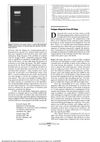 30 citations
,
November 1996 in “Archives of Dermatology”
30 citations
,
November 1996 in “Archives of Dermatology” This report describes cases of increased hair loss and scalp sunburns in patients using 3% minoxidil and 0.01% tretinoin, suggesting caution with tretinoin use on sunny days.
 78 citations
,
June 2005 in “Annals of oncology”
78 citations
,
June 2005 in “Annals of oncology” This case study reported that a 74-year-old woman with metastatic rectal cancer experienced temporary trichomegaly, or eyelash lengthening, associated with cetuximab treatment, which resolved after discontinuation of the drug.
 23 citations
,
December 2004 in “Seminars in oncology”
23 citations
,
December 2004 in “Seminars in oncology” This study found that DVd therapy is at least as effective as VAD/VAd for treating multiple myeloma and causes fewer side effects and reduced hospital visits.
 February 2012 in “Clinical and Experimental Dermatology”
 This article discusses abnormal fingerprints and their potential link to immigration delay disease, but it reports no new clinical findings.