475 citations
,
October 2006 in “Proceedings of the National Academy of Sciences” This study suggests that folliculin, mutated in Birt–Hogg–Dubé syndrome, and its partner FNIP1 may play a role in energy and nutrient sensing through the AMPK and mTOR pathways.
 25 citations
,
November 2018 in “Cell reports”
25 citations
,
November 2018 in “Cell reports” This study found that the ablation of Esrp1 and Esrp2 disrupts epithelial tight junctions by affecting Arhgef11 isoform expressions, highlighting a potential mechanistic link between splicing alterations and epithelial barrier defects.
 64 citations
,
August 2014 in “The journal of allergy and clinical immunology/Journal of allergy and clinical immunology/The journal of allergy and clinical immunology”
64 citations
,
August 2014 in “The journal of allergy and clinical immunology/Journal of allergy and clinical immunology/The journal of allergy and clinical immunology” This study found that biallelic mutations in the TTC7A gene affect lymphocyte and gut epithelial cell function, thereby contributing to the development of inflammatory bowel disease in patients.
 1 citations
,
January 2020 in “Benha Journal of Applied Sciences”
1 citations
,
January 2020 in “Benha Journal of Applied Sciences” This study found that DEFB1 polymorphisms, specifically the rs1800972 CG and GG genotypes, may predict susceptibility to and severity of alopecia areata.
 5 citations
,
August 2019 in “iScience”
5 citations
,
August 2019 in “iScience” In this study, Trf1 genetic deletion in mice, including those with cancer-prone mutations, was shown to not affect overall viability and cause only mild effects, while being necessary for tumor formation, suggesting a potential therapeutic window for Trf1 as an anti-cancer target.
 2 citations
,
January 2000 in “Journal of Toxicologic Pathology”
2 citations
,
January 2000 in “Journal of Toxicologic Pathology” This study identified a single autosomal recessive gene responsible for hypotrichosis in a mutant rabbit strain, affecting hair growth and causing epidermal and hair follicle abnormalities.
 3 citations
,
November 2015 in “Endocrinology, Diabetes & Metabolism Case Reports”
3 citations
,
November 2015 in “Endocrinology, Diabetes & Metabolism Case Reports” This case study reports a rare instance of RC11 associated with precocious puberty, severe hyperandrogenism, insulin resistance, and type 2 diabetes, suggesting a possible link to 11q-syndrome.
January 2020 in “Archivio Istituzionale della Ricerca (Universita Degli Studi Di Milano)” This study found that Polycomb Repressive Complex 1 is crucial for maintaining stem cell identity across different lineages, but its loss results in varied transcriptional outcomes depending on the tissue context.
January 2013 in “Kidney international” This report describes a clinical case of a 38-year-old man diagnosed with Birt-Hogg-Dubé syndrome, confirmed by genetic testing, highlighting the presentation of multiple renal tumors and bilateral lung cysts.
29 citations
,
January 2003 in “Genomics” A new mouse mutation causes skin and hair issues, influenced by another gene.
20 citations
,
November 2003 in “American Journal Of Pathology” Fibroblasts from healthy donors can prevent changes seen in recessive epidermolysis bullosa simplex.
16 citations
,
September 2015 in “International Journal of Molecular Sciences” In this study, a genetic analysis identified a pathogenic variant in the ALOXE3 gene associated with non-bullous congenital ichthyosiform erythroderma, and the patient's response to antifungal treatment highlights the risk of cutaneous fungal infections.
 7 citations
,
June 2016 in “Bone Research”
7 citations
,
June 2016 in “Bone Research” In this study, a Chinese Han family with hereditary vitamin D-resistant rickets was found to have a homozygous missense mutation in the VDR gene, and the affected individual uniquely responded well to treatment with oral calcium and low-dose calcitriol.
 April 2013 in “Developmental Cell”
 This study found that the chromatin remodeler Brg1 plays a crucial role in hair follicle maintenance and epidermal repair by regulating the Shh signaling pathway and forming a positive feedback loop.
60 citations
,
March 2006 in “Journal of Medical Genetics” This study identified a homozygous missense mutation in the KRTHB5 gene linked to pure hair–nail ectodermal dysplasias in a large consanguineous Pakistani family, providing new insights into the condition's molecular pathogenesis.
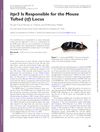 6 citations
,
October 2012 in “Journal of Heredity”
6 citations
,
October 2012 in “Journal of Heredity” This study identified the Itpr3 gene as responsible for the tufted hair loss phenotype in the BTBR mouse strain.
July 2005 in “The American Journal of Human Genetics” The AR gene is linked to male-pattern baldness, TNFSF4 to heart disease, SLC19A3 to BBGD, MCT8 to a syndrome, and segmental duplications to genetic variation.
 12 citations
,
February 1998 in “Gene”
12 citations
,
February 1998 in “Gene” This study identified two high sulfur protein genes, B2E and B2F, in rats, which are expressed in hair cortical cells during anagen and contribute to hair fiber production.
221 citations
,
July 2012 in “Proceedings of the National Academy of Sciences of the United States of America” This study found that the circadian clock in mouse skin regulates cell proliferation and affects sensitivity to UVB-induced DNA damage, with potential implications for understanding human skin cancer risk.
18 citations
,
September 2003 in “International Journal of Cancer” This study found that Epstein-Barr virus infection upregulated a truncated variant of human basic hair keratin 1 (hHb1-ΔN) in gastric carcinoma cell lines, suggesting a possible link to carcinoma differentiation.
47 citations
,
September 2012 in “Human molecular genetics online/Human molecular genetics” This study suggests that the interaction between folliculin and plakophilin-4 (p0071) may play a role in folliculin's tumor suppressor function by regulating RhoA signaling, impacting cell migration and junction formation.
 17 citations
,
June 2017 in “Gene”
17 citations
,
June 2017 in “Gene” This is the first report of the FOXN1 p.R255X mutation from India, demonstrating the global spread of this genetic mutation previously found only in an Italian community.
 7 citations
,
June 2011 in “Movement Disorders”
7 citations
,
June 2011 in “Movement Disorders” A specific gene mutation is linked to a hereditary form of dystonia that responds well to certain medications.
 93 citations
,
April 2003 in “Proceedings of the National Academy of Sciences of the United States of America”
93 citations
,
April 2003 in “Proceedings of the National Academy of Sciences of the United States of America” This study identified an unexpected critical role for the FATP4 protein in skin and hair development in mice, linking it to a potential candidate gene for restrictive dermopathy in humans.
In this study, researchers observed that oncogenic HrasG12V in single murine epidermal cells leads to an initial increase in progenitor cell renewal, but ultimately results in balanced cell fate choices that limit clone growth.
 24 citations
,
July 1994 in “Molecular Endocrinology”
24 citations
,
July 1994 in “Molecular Endocrinology” Researchers found an RNA transcript that might help control a growth factor linked to tumor development.
 February 2023 in “Research Square (Research Square)”
 This study reports that a new mouse model with a CARD14 mutation successfully mimics key human PRP symptoms, and anti-IL-17A antibody significantly reduces these symptoms.
14 citations
,
May 2017 in “Journal of Investigative Dermatology” This study reports a novel homozygous mutation in the DST gene causing a unique form of epidermolysis bullosa simplex with prurigo papules in a 39-year-old Syrian man.
 January 2018 in “bioRxiv (Cold Spring Harbor Laboratory)”
 This study identified a new cis-regulatory element in the mouse Hr gene that influences its expression in skin and brain cells, highlighting a complex molecular network involved in hair follicle formation.
8 citations
,
June 2016 in “Journal of Investigative Dermatology” A rare genetic deletion in the KRT1 gene causes unique skin symptoms in a family.