 4 citations
,
April 2018 in “Journal of Investigative Dermatology”
4 citations
,
April 2018 in “Journal of Investigative Dermatology” This study suggests that hydroxypinacolone retinoate (HPR) may be an effective alternative to tretinoin for anti-aging skin treatments, offering similar collagen production benefits without increased skin irritation.
 4 citations
,
May 2014 in “Javma-journal of The American Veterinary Medical Association”
4 citations
,
May 2014 in “Javma-journal of The American Veterinary Medical Association” The cat had liver cancer and a related hair loss condition, with a likely cause being bile duct cancer.
 3 citations
,
October 2020 in “Internatuinal Journal of Radiation Research”
3 citations
,
October 2020 in “Internatuinal Journal of Radiation Research” This study reports that γ-ray exposure in rats led to dermal endothelial proliferation, new vessel formation around hair follicles, and increased inflammatory markers, suggesting possible early stimulatory effects on hair growth.
 2 citations
,
March 2011 in “Infertility”
2 citations
,
March 2011 in “Infertility” This review highlights that while lifestyle changes may help with many ovulatory disorders, oocyte donation is considered a viable option for patients who cannot undergo ovulation induction; it reports no new results.
1 citations
,
January 2021 in “European Journal of Inflammation” In this study, naringenin and its methylated derivatives reduced depression-like behaviors and inflammation markers in mice exposed to finasteride, suggesting their potential as effective and safe anti-depressive agents.
 1 citations
,
November 2016 in “Journal of the Dermatology Nurses’ Association”
1 citations
,
November 2016 in “Journal of the Dermatology Nurses’ Association” This article reviews the mechanism, use, and alternatives for finasteride in dermatology and provides no new clinical results.
 1 citations
,
January 2013 in “Elsevier eBooks”
1 citations
,
January 2013 in “Elsevier eBooks” The document reviews various hair and nail disorders, their causes, and treatments, emphasizing the need for proper diagnosis and the link between nail changes and systemic diseases.
 September 2025 in “Editora Pasteur eBooks”
 Low-dose oral minoxidil is as effective as or better than topical minoxidil for hair growth but may cause mild side effects.
In this study assessing post-menopausal Asian women, distinct shifts in Malassezia species prevalence on the skin were linked to increased inflammation and impaired skin barrier function, potentially driving disorders like psoriasis and seborrheic dermatitis.
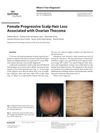 January 2019 in “Skin appendage disorders”
 This report presents a rare case where a bilateral ovarian thecoma in a postmenopausal woman led to an unusual pattern of female androgenetic alopecia mimicking male pattern hair loss.
Tailored nonsurgical cosmetic procedures are crucial for safely treating diverse skin types, especially skin of color.
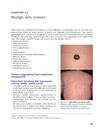
This chapter classifies various benign skin tumors and discusses their characteristics, treatment indications, and potential for recurrence, but reports no new clinical findings.
 January 2016 in “Dermatology Review”
 This review details various skin manifestations linked to different endocrine disorders but does not report any new clinical results.
This study found that in mice with alopecia areata, a single subcutaneous injection of botulinum neurotoxin serotype A significantly reduced hair loss and stimulated hair follicle regeneration.
 September 2003 in “Current Paediatrics”
 This article outlines how pediatric hair problems present and how they can be assessed, without reporting new research results.
 April 2003 in “Journal of Cutaneous Medicine and Surgery”
 Lasers are effective for some skin conditions but can cause side effects like scarring and pigment changes; careful selection is important, and botulinum toxin type A is successful in reducing sweat in palmar hyperhidrosis.
 July 1996 in “Trends in Endocrinology and Metabolism”
 The book is a valuable reference on androgenic disorders for professionals but not suitable for laypeople or medical students.
 July 1980 in “Journal of The American Academy of Dermatology”
 The conference concluded that understanding hair and nail disorders is important, iron deficiency may be linked to hair loss, and while some treatments for skin conditions are effective, they may have risks and high costs.
 60 citations
,
December 1998 in “Clinical Pharmacology & Therapeutics”
60 citations
,
December 1998 in “Clinical Pharmacology & Therapeutics” Both drugs lower DHT levels, with GI198745 being more effective.
 15 citations
,
November 2015 in “Pharmacopsychiatry”
15 citations
,
November 2015 in “Pharmacopsychiatry” This review discusses sexual dysfunction as a side effect of α-blockers and 5-ARIs for BPH/LUTS, highlighting methodological flaws in existing studies and the need for more rigorous research.
 1540 citations
,
October 2008 in “Fertility and Sterility”
1540 citations
,
October 2008 in “Fertility and Sterility” This review discusses the definition of polycystic ovary syndrome proposed by the AE-PCOS Society Task Force, emphasizing hyperandrogenism, ovarian dysfunction, and excluding related disorders, while noting potential variations needing more research.
 1533 citations
,
October 2008 in “Endocrine reviews”
1533 citations
,
October 2008 in “Endocrine reviews” This research highlights that engineered mice lacking the vitamin D receptor show multiple health issues similar to human vitamin D deficiency, underscoring the widespread impacts of the vitamin D endocrine system.
 947 citations
,
February 2004 in “The Journal of Clinical Endocrinology and Metabolism”
947 citations
,
February 2004 in “The Journal of Clinical Endocrinology and Metabolism” In this study, polycystic ovary syndrome was the most prevalent cause of androgen excess, and suppressive hormonal therapy improved hirsutism, menstrual dysfunction, and acne in most patients, though side effects were common.
 633 citations
,
September 1998 in “The Journal of Clinical Endocrinology and Metabolism”
633 citations
,
September 1998 in “The Journal of Clinical Endocrinology and Metabolism” This study observed that among a cohort of reproductive-aged women in the U.S., the prevalence of PCOS was about 4.0%, with no significant racial differences between White and Black women.
 295 citations
,
March 2016 in “Life Sciences”
295 citations
,
March 2016 in “Life Sciences” This review discusses the links between particulate matter exposure and skin diseases, highlighting oxidative stress and inflammation as key mechanisms; it reports no new clinical results.
 277 citations
,
July 2002 in “Molecular Endocrinology”
277 citations
,
July 2002 in “Molecular Endocrinology” In this study, homozygous VDR null mutant mice exhibited nonfunctional vitamin D receptors, leading to growth abnormalities and revealing the limited physiological importance of vitamin D pathways outside the classical receptor.
 275 citations
,
March 1999 in “Journal of The American Academy of Dermatology”
275 citations
,
March 1999 in “Journal of The American Academy of Dermatology” This review elaborates on the skin side effects of chemotherapy and emphasizes identifying and managing both common and life-threatening skin reactions, without presenting new clinical findings.
 248 citations
,
November 2011 in “The EMBO Journal”
248 citations
,
November 2011 in “The EMBO Journal” This study found that Wnt1/βcatenin signaling plays a crucial role in activating the epicardium and cardiac fibroblasts, which supports cardiac repair following acute ischemic injury.
 240 citations
,
February 2005 in “Diabetes Care”
240 citations
,
February 2005 in “Diabetes Care” This review discusses the nutritional and metabolic problems following bariatric surgery, emphasizing the need for ongoing monitoring and treatment, but reports no new clinical results.
 207 citations
,
January 2011 in “Dermatologic Therapy”
207 citations
,
January 2011 in “Dermatologic Therapy” This article discusses the factors involved in optimizing laser hair removal, emphasizing patient selection, laser safety, and understanding laser–tissue interactions, but presents no new clinical findings.