 June 2025 in “INTERANTIONAL JOURNAL OF SCIENTIFIC RESEARCH IN ENGINEERING AND MANAGEMENT”
 This study assessed a herbal dry shampoo comprising natural ingredients like Shikakai and Reetha, finding it effectively passed physicochemical tests but highlighted the need for more research to optimize product quality and safety.
research Amla
December 2024 in “Apple Academic Press eBooks” This source highlights the nutraceutical potential of amla, noting its traditional use in Ayurvedic and Unani medicine and its reported benefits, including antidiabetic and cardioprotective properties, which could drive market growth for food and beverage applications.
 May 2023 in “Journal of pharmacognosy and phytochemistry”
 This study conducted a comprehensive pharmacognostic and phytochemical analysis of Sphagneticola calendulacea stem, identifying tannin-filled cells, various secondary metabolites, and significant physicochemical characteristics, which could aid in authenticating the plant for therapeutic use.
 May 2022 in “Journal of pharmacognosy and phytochemistry”
 This study carried out a detailed pharmacognostic and phytochemical analysis of Sphagneticola calendulacea leaves, which may help authenticate this plant used in treating inflammation and alopecia.
May 2020 in “Business Innovation & Entrepreneurship Journal” This study discusses the development of a turmeric-based herbal hair removal product named PASIKULA, highlighting its potential to increase the economic value of turmeric and acceptance by consumers.
January 2019 in “Springer eBooks” PLGA nanospheres in cosmetics improve skin and hair treatment effectiveness.
 November 2015 in “Indian drugs”
 This study found that the aerial roots of Ficus benghalensis Linn contain flavonoids, phenolics, and saponins, with an ethyl acetate extract being particularly rich in flavonoids.
 January 1997 in “Elsevier eBooks”
 This chapter describes the functions and purposes of hair care cosmetics, including shampoos, hair growth promoters, and grooming products, without reporting new experimental findings.
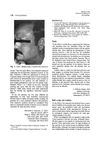 January 1989 in “Journal of The American Academy of Dermatology”
 Dr. Hanke acknowledges the success of CO₂ laser for less severe blast tattoos and suggests dermabrasion for more extensive injuries, while also discussing dermatology's media presence and issues with minoxidil research.
 September 2023 in “Journal of The American Academy of Dermatology”
 This review discusses the use of Raman spectroscopy to evaluate drug penetration in alopecia treatments and suggests it may be a promising tool for enhancing the effectiveness of laser-assisted drug delivery.
This study provides detailed taxonomic and pharmacognostic analyses to authenticate and standardize seven herbal medicines, aiding in their differentiation from common adulterants for improved identification and classification.
January 2008 in “Chinese Journal of Aesthetic and Plastic Surgery” In this study, the authors found that rabbit hair material ground for 8 hours had better suitability and histocompatibility for injectable soft tissue augmentation compared to other tested formulations.
198 citations
,
May 2021 in “Advanced Materials” This review discusses triboelectric nanogenerator (TENG) devices for body-integrated electrical stimulation therapy and suggests they may revolutionize personalized healthcare, but it reports no new clinical results.
 127 citations
,
May 2004 in “PubMed”
127 citations
,
May 2004 in “PubMed” This randomized pilot study suggests that finasteride may benefit some men with category IIIA chronic pelvic pain syndrome, although it is not recommended as monotherapy unless benign prostatic hyperplasia is also present.
 124 citations
,
March 2012 in “JAMA”
124 citations
,
March 2012 in “JAMA” This abstract discusses the unclear role of dihydrotestosterone (DHT) in postembryonic life in marsupials and possibly humans, reporting no new findings.
110 citations
,
February 2024 in “Journal of Chemical Information and Modeling” This study describes the PandaOmics platform, which uses AI and bioinformatics to identify new therapeutic targets and biomarkers for various diseases, demonstrating validation in laboratory and animal studies.
 108 citations
,
December 2003 in “Lasers in surgery and medicine”
108 citations
,
December 2003 in “Lasers in surgery and medicine” This study found that combining near-infrared laser phototherapy with indocyanine green application may improve acne vulgaris by reducing active lesions and inflammation without side effects.
 92 citations
,
September 2019 in “ACS nano”
92 citations
,
September 2019 in “ACS nano” This study observed that a wearable electric stimulation device significantly promoted hair regeneration in rats and mice, outperforming conventional pharmacological treatments and enhancing growth factor secretion.
 72 citations
,
December 2009 in “Organic and Biomolecular Chemistry”
72 citations
,
December 2009 in “Organic and Biomolecular Chemistry” This study describes Hg(OTf)2 as a new and efficient catalyst for various organic synthesis reactions, including alkyne hydration and C–C bond forming cyclizations.
 70 citations
,
June 2017 in “Nature Communications”
70 citations
,
June 2017 in “Nature Communications” This study introduced a new technique, 2Phatal, enabling precise apoptotic cell ablation in living animals, revealing unique cell-type differences in apoptosis-related dynamics.
54 citations
,
January 2021 in “Biophysics Reports” This review highlights the current progress and application pros and cons of various cell-based screening platforms in drug discovery, discussing challenges and potential improvements for these innovative methods.
46 citations
,
December 2018 in “Biomedical Optics Express” In this study, researchers observed that Raman spectroscopy effectively differentiates basal cell carcinoma from normal skin structures by analyzing biochemical markers, suggesting its potential as a surgical guidance tool for cancer margin resection during Mohs surgery.
 46 citations
,
May 2009 in “Maturitas”
46 citations
,
May 2009 in “Maturitas” This study found that taking a daily oral dose of 50mg DHEA for one year had no significant impact on blood lipids, insulin sensitivity, or the endometrium in postmenopausal women with low libido.
 44 citations
,
February 2016 in “Science”
44 citations
,
February 2016 in “Science” Researchers developed a new type of memory using antiferromagnets that is stable, not disrupted by magnets, and works at room temperature.
 41 citations
,
December 2017 in “Lasers in Medical Science”
41 citations
,
December 2017 in “Lasers in Medical Science” This study found that low-level laser therapy may significantly improve androgenic alopecia in both men and women, either alone or alongside treatments like minoxidil and finasteride.
 37 citations
,
September 2003 in “Journal of Medicinal Chemistry”
37 citations
,
September 2003 in “Journal of Medicinal Chemistry” This study found that compound 2g inhibits steroid sulfatase effectively without exhibiting estrogenic activity, making it a promising candidate for breast cancer treatment.
37 citations
,
December 2001 in “Journal of the American Academy of Dermatology” This case report details significant hair regrowth in a patient with lichen planopilaris after treatment with thalidomide, suggesting its potential as a treatment option for this condition.
 32 citations
,
October 1999 in “Journal of women's health and gender-based medicine”
32 citations
,
October 1999 in “Journal of women's health and gender-based medicine” This study found that women with androgenetic alopecia report various negative impacts on their lives due to hair thinning, highlighting emotional concerns and dissatisfaction with appearance.
25 citations
,
January 2013 in “Colloids and surfaces. B, Biointerfaces” This study found that melanin granules in black human hair are key dyeing regions for oxidative hair coloring, as confirmed by nanoscale mass spectrometry analysis detecting deuterium ions.
23 citations
,
May 2017 in “Journal of the American Academy of Dermatology” This study found that patients with frontal fibrosing alopecia had lower epidermal melanocyte counts and reduced epidermal thickness compared to lichen planopilaris patients and controls, suggesting a link with hypopigmentation.