 80 citations
,
March 2004 in “Neuropediatrics”
80 citations
,
March 2004 in “Neuropediatrics” This article presents an update on a family with Coats' plus disorder, documenting additional symptoms and two new similar cases, and reviews literature suggesting a link to dyskeratosis congenita for potential molecular insights.
 197 citations
,
June 2009 in “American journal of human genetics”
197 citations
,
June 2009 in “American journal of human genetics” This study found that previously undescribed WNT10A mutations are a prominent cause of various forms of ectodermal dysplasia, including OODD and Schöpf-Schulz-Passarge syndrome, with gender-specific phenotypic effects noted.
September 2023 in “UCrea (University of Cantabria)” In this study, researchers found that mouse digits without nails could not regenerate after amputation, highlighting the necessity of nails for fingertip regeneration and suggesting a potential role for the Lmx1b gene in this process.
 1 citations
,
March 2023 in “Frontiers in Cardiovascular Medicine”
1 citations
,
March 2023 in “Frontiers in Cardiovascular Medicine” A specific gene variant is linked to heart disease, increased heart muscle, curly hair, and thick skin on palms and soles.
 May 2026 in “Research Square”
 This research reports that the polyG fragment within the Hoxc13 protein alters its gene regulatory functions, which could have influenced mammalian hair evolution by affecting pathways related to hair follicle development.
74 citations
,
October 2012 in “The American Journal of Human Genetics” This study found that loss-of-function mutations in the HOXC13 gene cause autosomal-recessive pure hair and nail ectodermal dysplasia, emphasizing its role in hair and nail development.
3 citations
,
March 2017 in “Pediatric Dermatology” This case report documents the first known instance of FOXN1 duplication linked to congenital hypertrichosis.
January 2024 in “SAGE Open Medical Case Reports” In this study, exome sequencing revealed that two brothers with ichthyosis, born to consanguineous parents, had NIPAL4 autosomal recessive congenital ichthyosis, while the older brother's blindness resulted from separate mutations in the peroxidasin gene, which were also found in an unaffected sister.
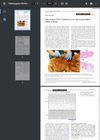 May 2024 in “Animal genetics”
 The researchers investigated a Maine Coon cat with suspected classical Ehlers-Danlos Syndrome and discovered a heterozygous deletion in the COL5A1 gene, underscoring the value of whole-genome sequencing for precise veterinary diagnostics.
56 citations
,
July 2004 in “Mechanisms of Development” Pax9 is crucial for proper tongue surface development and preventing skin-like changes.
 November 2024 in “NeoReviews”
 Pallister-Killian Syndrome is a complex genetic disorder requiring coordinated care and genetic counseling.
 January 2022 in “Revista Dermatológica Centro Uraga”
 This article reviews two cases of monilethrix in siblings, detailing their clinical and dermatoscopic characteristics, but reports no new findings.
 30 citations
,
May 2005 in “Pediatric dermatology”
30 citations
,
May 2005 in “Pediatric dermatology” This report reviews familial cases of aplasia cutis of the scalp, noting large irregular defects at the vertex or anterior along the sagittal suture in six families.
This case report describes a novel mutation in the CDH3 gene in an 11-year-old Iranian boy with sparse scalp hair and macular dystrophy, leading to altered P-cadherin synthesis.
 February 2025 in “Indian Dermatology Online Journal”
 This case report describes a rare occurrence of pincer nail deformity in a patient with systemic lupus erythematosus, potentially linked to Raynaud's phenomena as a contributing factor.
2 citations
,
January 2007 in “Actas Dermo-Sifiliográficas” This case report describes a unilateral contact dermatitis caused by shoe dye containing 4-aminoazobenzene, which was confirmed with patch testing, highlighting its atypical presentation.
6 citations
,
January 2015 in “Indian Dermatology Online Journal” This case report describes a unique presentation of porokeratotic eccrine ostial and dermal duct nevus with lesions on the dorsum of the hand and a focal lichenoid infiltrate, differing from typical palm and sole involvement.
4 citations
,
January 2019 in “Indian Dermatology Online Journal” This report discusses two cases of porokeratotic eccrine ostial and dermal duct nevus and porokeratotic eccrine and hair follicle nevus, suggesting they may represent a single clinical entity, but reports no therapeutic outcomes.
9 citations
,
October 1995 in “Clinical Dysmorphology” This study described a Scottish family with hidrotic ectodermal dysplasia featuring variable symptoms such as hypo/oligodontia, thin hair, and heat tolerance, and concluded they exhibited overlapping traits with Clouston syndrome.
 28 citations
,
February 2010 in “British journal of dermatology/British journal of dermatology, Supplement”
28 citations
,
February 2010 in “British journal of dermatology/British journal of dermatology, Supplement” This article reviews phenotypic variability linked to WNT10A nonsense mutations and does not present new research findings.
 17 citations
,
September 2010 in “Pediatric dermatology”
17 citations
,
September 2010 in “Pediatric dermatology” This report describes a case of widespread Porokeratotic eccrine and hair follicle nevus in a 15-year-old woman with keratitis-ichthyosis-deafness syndrome, involving both eccrine ostia and hair follicle infundibula.
175 citations
,
September 1998 in “British Journal of Dermatology” This study found that mutations in the K17 gene underlie both pachyonychia congenita type 2 and steatocystoma multiplex phenotypes, regardless of the specific mutation involved.
46 citations
,
September 2007 in “Journal of Investigative Dermatology” 7 citations
,
August 2017 in “European journal of endocrinology” This study suggests that mutations in exon 10 of the POC1A gene may be linked to a distinct clinical condition characterized by extreme insulin resistance and short stature, differing from SOFT syndrome.
 1 citations
,
October 2019 in “International journal of contemporary pediatrics”
1 citations
,
October 2019 in “International journal of contemporary pediatrics” This case report highlights a 12-year-old boy with twenty nail dystrophy in isolation, emphasizing the need for thorough physical exams to distinguish nail disorders and provide appropriate management and counseling on the condition's benign nature and good prognosis.
694 citations
,
April 2000 in “Nature genetics” This study found that Msx2-deficient mice exhibit skull and bone formation defects similar to those seen in human MSX2-related conditions, highlighting the gene's importance in skeletal and organ development.
 2 citations
,
August 2023 in “Development”
2 citations
,
August 2023 in “Development” In this study, researchers explored how hair follicle orientation is affected in the rosette fancy mouse and found that a mutation in the PCP gene Fzd6 caused reversed hair orientations in the posterior region, leading to the formation of unique whorls.
January 2026 in “Animal Genetics” This study investigated a Labrador Retriever with paw pad hyperkeratosis and identified a unique de novo heterozygous missense variant in the GJB6 gene, suggesting its potential role in the condition, analogous to Clouston syndrome in humans, although differences between species may provide further insights.
 January 2026 in “Journal of Clinical and Investigative Dermatology”
 This case report describes a father with HOXC13-associated pure hair-nail ectodermal dysplasia, presenting with severe nail dystrophy affecting all digits and notable hypotrichosis or complete alopecia.
 October 2021 in “Journal of Investigative Dermatology”
 This study found no significant difference in SARS-CoV2 IgG seroconversion rates between patients with immune-mediated inflammatory diseases treated with targeted immune-modulating therapies and those on conventional systemic treatments.