 88 citations
,
February 2008 in “Journal of Medicinal Chemistry”
88 citations
,
February 2008 in “Journal of Medicinal Chemistry” Scientists made the first metal-based compounds from a nonsteroidal antiandrogen drug, which showed potential in fighting both hormone-dependent and independent prostate cancer cells.
 87 citations
,
August 2017 in “Scientific Reports”
87 citations
,
August 2017 in “Scientific Reports” This study found that PCL-based nanofiber scaffolds enhanced cell proliferation and extracellular matrix deposition, suggesting they show promise as a cell delivery system for improving skin wound healing.
 85 citations
,
July 2025 in “Nature Communications”
85 citations
,
July 2025 in “Nature Communications” This review examines the evolving field of nanozymes, highlighting their unique properties and biocatalytic capabilities that challenge traditional concepts of biocatalysis, with implications for sustainable applications and potential roles in physiological processes and disease pathogenesis.
 81 citations
,
January 2006 in “Journal of cellular physiology”
81 citations
,
January 2006 in “Journal of cellular physiology” This study found that the absence of the vitamin D receptor disrupts hair follicle structure during the first catagen in mice, linked to increased expression of the hairless gene.
 79 citations
,
January 1982 in “The American Journal of Medicine”
79 citations
,
January 1982 in “The American Journal of Medicine” This study reports that VP-16-213 (etoposide) shows significant therapeutic activity in several cancers including small cell bronchogenic carcinoma and certain leukemias, with hematologic toxicity being the primary side effect.
 76 citations
,
August 2007 in “Supportive care in cancer”
76 citations
,
August 2007 in “Supportive care in cancer” The researchers reported that dermatological side effects from chemotherapy for women's cancers are common and significantly affect quality of life.
 75 citations
,
June 2019 in “International Journal of Molecular Sciences”
75 citations
,
June 2019 in “International Journal of Molecular Sciences” This review discusses the therapeutic potential of costunolide for various diseases, highlighting its bioactivity and mechanisms, but it reports no new experimental results.
 65 citations
,
February 2015 in “Neuro-Oncology”
65 citations
,
February 2015 in “Neuro-Oncology” In this study, four children with recurrent atypical teratoid rhabdoid tumors experienced disease stabilization or regression after treatment with alisertib, suggesting its potential role in future trials for this condition.
 64 citations
,
May 2019 in “Materials Science and Engineering: C”
64 citations
,
May 2019 in “Materials Science and Engineering: C” This review outlines the development, applications, and challenges of microneedle-based drug delivery from 2000-2019, particularly highlighting fabrication techniques, but reports no new clinical results.
 62 citations
,
February 2011 in “Expert review of dermatology”
62 citations
,
February 2011 in “Expert review of dermatology” This review discusses the incidence, reversibility, and impact of chemotherapy-induced alopecia and concludes that scalp cooling is the most effective prevention method in most cases, though some questions remain.
 61 citations
,
November 2020 in “Molecules”
61 citations
,
November 2020 in “Molecules” This review examines the design strategies for creating conductive hydrogels with adjustable properties for various biomedical applications, highlighting their potential for supporting cell growth, wound healing, drug delivery, tissue regeneration, and biosensing.
 61 citations
,
September 2016 in “NPG Asia Materials”
61 citations
,
September 2016 in “NPG Asia Materials” This study developed thermo-reversible glycol chitosan hydrogels that effectively form and maintain 3D cell spheroids within one day, offering a simplified method for creating biologically realistic cultures for tissue regeneration and drug screening applications.
 60 citations
,
August 2008 in “Human molecular genetics online/Human molecular genetics”
60 citations
,
August 2008 in “Human molecular genetics online/Human molecular genetics” This study suggests that a position effect disrupting TRPS1 expression may be linked to hypertrichosis in both Ambras syndrome in humans and a similar phenotype in Koa mice.
 60 citations
,
June 1997 in “Drugs & Aging”
60 citations
,
June 1997 in “Drugs & Aging” Mitoxantrone with a corticosteroid helps manage symptoms for some advanced prostate cancer patients but doesn't extend life.
 58 citations
,
July 2007 in “Clinics in Dermatology”
58 citations
,
July 2007 in “Clinics in Dermatology” This article reviews the use of medical tattooing for cosmetic and therapeutic purposes across various fields, but reports no new clinical results.
 58 citations
,
March 1985 in “Journal of The American Academy of Dermatology”
58 citations
,
March 1985 in “Journal of The American Academy of Dermatology” This review discusses the historical, legal, and clinical aspects of electrolysis and thermolysis, highlighting potential risks due to the lack of standardized training for electrologists in the United States, but reports no new clinical results.
 57 citations
,
June 2021 in “Polymers”
57 citations
,
June 2021 in “Polymers” This review discusses photothermal agent hybrids in hydrogels for antibacterial action, angiogenesis, and osteogenesis in tissue engineering, but reports no new experimental findings.
 57 citations
,
September 2017 in “Journal of controlled release”
57 citations
,
September 2017 in “Journal of controlled release” This review discusses recent advances in using nanocarrier-loaded gels for various medical applications and reports no new clinical results, highlighting potential advantages in therapeutic strategies.
 55 citations
,
November 2004 in “Expert opinion on drug safety”
55 citations
,
November 2004 in “Expert opinion on drug safety” This review describes the variety of mucocutaneous side effects caused by antineoplastic chemotherapy, with emphasis on skin, nails, and mucous membranes, while highlighting potential severity and the possibility of needing to adjust or interrupt treatment in rare cases; it presents no new clinical results.
 54 citations
,
October 2024 in “Nature Communications”
54 citations
,
October 2024 in “Nature Communications” In this study, researchers developed a method to control the valence states of Mo in nanozymes, optimizing their activity for ROS-related therapies, particularly acute kidney injury treatment, and enabling real-time monitoring with photoacoustic imaging.
 50 citations
,
June 1999 in “Annals of Oncology”
50 citations
,
June 1999 in “Annals of Oncology” This study found that long-term weekly administration of docetaxel is feasible at doses up to 45 mg/m² per week with acceptable toxicity, and suggests further evaluation with 40 mg/m² for phase II studies.
 48 citations
,
February 2025 in “Nano-Micro Letters”
48 citations
,
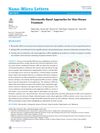
February 2025 in “Nano-Micro Letters” This review summarizes the application of microneedles in treating various skin diseases and highlights challenges like low drug loading, noting no new clinical results are reported.
 48 citations
,
September 2017 in “Frontiers in Bioscience”
48 citations
,
September 2017 in “Frontiers in Bioscience” This review explores the role of nanotechnology in wound healing, highlighting its potential through antimicrobial properties, selective inflammatory action, angiogenesis promotion, and its use in drug and gene delivery.
 48 citations
,
December 2013 in “Drug Delivery and Translational Research”
48 citations
,
December 2013 in “Drug Delivery and Translational Research” This study found that minoxidil-loaded niosomes with a Span 60 and cholesterol ratio of 1:2 significantly increased skin retention of minoxidil compared to control gel.
 48 citations
,
September 2013 in “Oncologist”
48 citations
,
September 2013 in “Oncologist” This study reported that alopecia is a common but often underreported side effect of endocrine-based cancer therapies, with tamoxifen showing the highest incidence of hair loss among analyzed treatments.
 45 citations
,
January 2020 in “International Journal of Molecular Sciences”
45 citations
,
January 2020 in “International Journal of Molecular Sciences” This review discusses the potential of plant polyphenols to overcome multidrug resistance in various solid cancers and reports no new experimental results; further research is suggested.
 44 citations
,
November 2010 in “Current Opinion in Supportive and Palliative Care”
44 citations
,
November 2010 in “Current Opinion in Supportive and Palliative Care” This review discusses interventions for chemotherapy-induced hair loss and reports no new clinical results; scalp cooling and nutritional support are considered potential strategies but not yet substantiated.
 43 citations
,
February 2020 in “Clinica chimica acta”
43 citations
,
February 2020 in “Clinica chimica acta” This review discusses the role of phytochemical nanoparticles in cervical cancer therapy and reports no new clinical results; the authors highlight their potential advantages over conventional chemotherapy.
 42 citations
,
January 2021 in “Journal of Clinical Medicine”
42 citations
,
January 2021 in “Journal of Clinical Medicine” This review discusses advancements in the use of microneedle arrays and nanoparticles for transdermal delivery of therapeutics, noting challenges in overcoming the skin barrier and summarizing recent clinical trial achievements in areas like cancer therapy and gene therapy.
 39 citations
,
January 2015 in “Journal of Electroanalytical Chemistry”
39 citations
,
January 2015 in “Journal of Electroanalytical Chemistry” In this study, a novel electrochemical sensor using a molecularly imprinted polymer was developed for the sensitive detection of minoxidil, successfully measuring its concentration in real samples.