9 citations
,
October 2015 in “Cutaneous and ocular toxicology” This case report observed vemurafenib-induced pityriasis amiantacea, a scalp scaling reaction, in a patient with metastatic melanoma, which was managed symptomatically without altering vemurafenib treatment.
 117 citations
,
March 2013 in “Journal of the European Academy of Dermatology and Venereology”
117 citations
,
March 2013 in “Journal of the European Academy of Dermatology and Venereology” This study reported that while no effective treatment exists for frontal fibrosing alopecia, oral 5-alpha-reductase inhibitors showed the most promise, inducing a good clinical response in 45% of patients.
 22 citations
,
October 2020 in “Frontiers in Cell and Developmental Biology”
22 citations
,
October 2020 in “Frontiers in Cell and Developmental Biology” This study found that resveratrol and fisetin promoted hair growth in mice by inducing telomerase reverse transcriptase expression, which activates hair follicle stem cells and transitions follicles from a resting to a growth phase.
January 2024 in “Pharmaceutical journal/The pharmaceutical journal” In this report, NICE has approved ritlecitinib, an oral kinase inhibitor, as the first recommended treatment for severe alopecia areata in individuals aged 12 and older.
December 2016 in “Anales del sistema sanitario de Navarra” This case study reports successful treatment of frontal fibrosing alopecia with daily 2.5mg finasteride in a 77-year-old woman.
83 citations
,
July 2004 in “Pharmacology Biochemistry and Behavior” Higher 3α,5α-THP levels in the brain may reduce depression in pregnant rats.
65 citations
,
September 2023 in “Cell Reports Medicine” This review examined the common side effects of FGFR inhibitors like erdafitinib, pemigatinib, and futibatinib, and detailed strategies for managing them, highlighting that proactive monitoring and appropriate interventions can effectively mitigate these toxicities.
 7 citations
,
July 2018 in “Journal of Functional Biomaterials”
7 citations
,
July 2018 in “Journal of Functional Biomaterials” This study evaluated a new anti-baldness product, IPSTiC patch hair, designed to treat androgenetic alopecia, and reported that it effectively inhibits NO radical and 5α-reductase activity while maintaining safety and stability, suggesting its potential for topical use.
 50 citations
,
May 2000 in “Fertility and Sterility”
50 citations
,
May 2000 in “Fertility and Sterility” This study found that flutamide was more effective than finasteride in reducing hair growth in women with hirsutism over a one-year period.
21 citations
,
March 2018 in “JEADV. Journal of the European Academy of Dermatology and Venereology/Journal of the European Academy of Dermatology and Venereology” This review reported that 5-alpha-reductase inhibitors were effective in stabilizing disease progression or reducing the rate of progression in some cases of frontal fibrosing alopecia, though evidence on safety remains limited.
3 citations
,
January 2020 in “Acta veterinaria indonesiana” In this case study, a Persian cat with dermatophytosis showed a reduction in skin lesions after being treated with oral itraconazole and topical ketoconazole.
60 citations
,
June 2007 in “Pharmacology Biochemistry and Behavior” In this study, withdrawal from progesterone and treatment with finasteride were associated with increased signs of depression-like behavior in female mice, suggesting decreased allopregnanolone levels may play a role.
 1 citations
,
January 2019 in “Acta dermato-venereologica”
1 citations
,
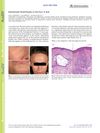
January 2019 in “Acta dermato-venereologica” The woman's skin and hair symptoms were confirmed as frontal fibrosing alopecia, and while facial papules are common in such cases, there's no effective local treatment, but systemic treatments can help.
April 2025 in “Journal of Reproductive Healthcare and Medicine” This study confirmed that an injectable implant known as RISUG-PH™, when administered via the vas deferens, successfully delivers the drug Finasteride to the prostate in male rats for up to 28 days, suggesting a potential localized alternative to oral delivery methods.
This study found that selective deletion of PIKFyve kinase using a PF4 promoter in mice led to defective platelet lysosome biogenesis and a prothrombotic effect, with unexpected macrophage infiltration in multiple organs.
 23 citations
,
September 2017 in “Journal of the American Academy of Dermatology”
23 citations
,
September 2017 in “Journal of the American Academy of Dermatology” This article hypothesizes that apremilast, a phosphodiesterase 4 inhibitor, could be a targeted treatment for alopecia areata due to its ability to suppress interferon-gamma production, but reports no new clinical results.
 April 2023 in “The journal of investigative dermatology/Journal of investigative dermatology”
 This study found that inhibiting the Mitochondrial Pyruvate Carrier in human hair follicles ex vivo activated the integrated stress response, affecting cell proliferation and metabolism.
 April 2016 in “Journal of Investigative Dermatology”
 This study found that a newly developed peptide, FOL-005, significantly inhibited hair growth and counteracted minoxidil's effects in organ-cultured human male scalp skin and mouse models, without apparent toxicity.
 45 citations
,
October 2009 in “Dermatology”
45 citations
,
October 2009 in “Dermatology” This study observed that long-term recombinant interferon alpha-2b therapy was associated with considerable hair loss in some patients, indicated by a telogen effluvium pattern on trichograms.
 January 2018 in “Springer eBooks”
 PDE inhibitors, especially PDE4 inhibitors like apremilast, are effective for certain inflammatory skin conditions but have side effects and can be costly.
 March 1998 in “Journal of dermatological science”
 Diphencyprone initially increases mouse hair growth, then slows it, possibly due to changes in specific protein levels.
 8 citations
,
March 2018 in “Journal of Drug Delivery Science and Technology”
8 citations
,
March 2018 in “Journal of Drug Delivery Science and Technology” This study found that treating paracoccidioidomycosis-infected mice with a nanoparticle formulation of itraconazole led to higher drug accumulation in lung, liver, and spleen tissues, improved treatment efficacy, and reduced side effects compared to traditional oral solutions.
16 citations
,
April 1985 in “Archives of dermatology” This review discusses various treatments for pityriasis rubra pilaris, including vitamin A, methotrexate, and systemic steroids, reporting historical anecdotal evidence without new clinical results.
1 citations
,
January 2024 in “Pharmaceuticals” The researchers reported that dPGS-PCL as a carrier improved the penetration of tofacitinib in an ex-vivo human skin model compared to free tofacitinib, but did not show significant differences in inhibiting IL-6 and IL-8 during short incubation.
3 citations
,
April 2024 in “JAAD Case Reports” This article reviews DPCP's use as a topical immunotherapy for alopecia areata and discusses its suggested mechanism, but reports no clinical results.
2 citations
,
January 2013 in “Journal of cosmetics, dermatological sciences and applications” This study found that both an anti-dandruff shampoo containing piroctone olamine and climbazole and its combination with a tonic reduced dandruff and inflammation, with the combination showing superior results.
August 2026 in “Canadian Journal of Health Technologies” This study found that Litfulo improved hair regrowth in patients aged 12 and older with severe alopecia areata but did not meaningfully improve anxiety or depression symptoms compared to placebo.
 August 2016 in “Journal of Investigative Dermatology”
 This study observed that the osteopontin-derived peptide FOL-005 inhibited hair growth in human scalp skin models, contrary to its hair growth promotion in mice, supporting further clinical testing for excessive hair growth treatment.
 64 citations
,
June 2010 in “Journal of The European Academy of Dermatology and Venereology”
64 citations
,
June 2010 in “Journal of The European Academy of Dermatology and Venereology” This study suggests that 5 mg/day oral finasteride may increase hair density and thickness in normoandrogenic Asian women with female pattern hair loss over 12 months.
28 citations
,
December 2001 in “European Journal of Pharmacology” This study found that the compound M50054 inhibits apoptosis by blocking caspase-3 activation and may improve chemotherapy-induced alopecia and hepatitis symptoms.