 June 2026 in “Kerala Journal of Ayurveda”
 This case report suggests that an Ayurvedic treatment protocol may effectively manage paediatric indralupta, a condition similar to alopecia areata, with complete hair restoration observed in an 11-year-old patient without adverse effects.
 April 2025 in “International Journal of Homoeopathic Sciences”
 In this case report, a 7-year-old boy with patchy hair loss due to alopecia areata showed significant hair regrowth and improvement in psychological well-being after a holistic homeopathic treatment identified emotional distress as a root cause.
 January 2025 in “Journal of Case Reports and Scientific Images”
 In this case study, an 8-year-old girl with alopecia areata showed hair regrowth in patches following homeopathic treatment, suggesting a positive response to this therapeutic approach.
 June 2023 in “Diyala Journal of Medicine”
 In this Baquba city study, alopecia areata was more prevalent among males aged 21 to 30, with most experiencing single lesions on the head, recurring cases, and a history of psychological stress.
 February 2023 in “Global journal of health sciences and research”
 This study found no association between serum zinc levels and alopecia areata severity in patients.
 January 2023 in “Theranostics”
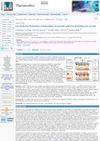
 This study reported that a curcumin-zinc microneedle patch improved hair regrowth and wound healing in animal models, suggesting potential as a versatile treatment for hair loss.
 May 2017 in “Journal of The American Academy of Dermatology”
 This study reported an increase in allergic contact dermatitis cases linked to natural products, particularly propolis and marigold, with a higher incidence in women than men.
 December 2016 in “Springer eBooks”
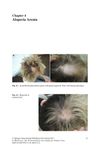
 A 45-year-old woman with autoimmune diseases experienced patchy hair loss due to alopecia areata, which has no cure but can be treated, with varying success.
 February 2013 in “Journal of the American Academy of Dermatology”
 In this study, the HairCheck device was reported to accurately assess changes in hair density and diameter, suggesting its usefulness in monitoring alopecia progression and treatment response.
 148 citations
,
December 2018 in “Journal of autoimmunity”
148 citations
,
December 2018 in “Journal of autoimmunity” This review discusses genetic and environmental factors contributing to autoimmunity in alopecia areata and reports no new clinical findings, emphasizing the need for further study on its aetiology and pathophysiology.
 45 citations
,
January 2010 in “International journal of trichology”
45 citations
,
January 2010 in “International journal of trichology” This review examines topical immunotherapy for severe alopecia areata, noting that diphencyprone and squaric acid dibutylester are non-mutagenic options with similar efficacy but different practical considerations, and reports no new clinical results.
14 citations
,
February 2013 in “PubMed” This study found that 50% of patients with patchy alopecia areata who underwent chronic intralesional triamcinolone acetonide therapy had abnormal bone mineral density, suggesting the need for monitoring and preventive measures.
 1 citations
,
October 2020 in “Journal of Investigative Dermatology Symposium Proceedings”
1 citations
,
October 2020 in “Journal of Investigative Dermatology Symposium Proceedings” This study found that platelet-rich plasma treatment increased hair density and reduced inflammation in patients with patchy alopecia areata, but not in a patient with alopecia universalis.
 January 2026 in “Dermatology Practical & Conceptual”
 In a systematic review and meta-analysis, the researchers found that intralesional triamcinolone acetonide was more effective than cryotherapy for achieving significant hair regrowth in patients with patchy alopecia areata, although both treatments had distinct safety profiles.
 April 2024 in “Dermatology and therapy”
 This study surveyed dermatologists in Greece and Italy and found significant variability and challenges in the diagnosis and treatment of alopecia areata, including limited use of severity scores and diverse treatment approaches, particularly for special site involvement and chronic cases.
 February 2024 in “International neuropsychiatric disease journal”
 In this abstract, the authors provide an overview of the psychological impact of alopecia areata, highlighting how this autoimmune disorder can lead to reduced quality of life, increased anxiety and depression symptoms, and decreased work productivity due to hair loss and its social implications.
June 2023 in “Diyala Journal of Medicine” In this cross-sectional study of 100 patients in Baquba, researchers found that alopecia areata was more prevalent in males aged 21-30, with single lesion patches mainly appearing on the head, and observed a significant association with personal stress history.
July 2024 in “Journal of Investigative Dermatology” JAK inhibitors improve hair growth in alopecia areata, especially in patchy types.
August 2023 in “Annales de Dermatologie et de Vénéréologie” This study provides an updated overview of non-scarring alopecia in lupus erythematosus patients, revealing that diffuse/patchy NSA and lupus hair are strongly associated with systemic activity and respond well to SLE therapy, while progression to scarring alopecia was rare.
53 citations
,
May 2011 in “Dermatologic therapy” This article discusses the pathogenesis and possible biological mechanisms of alopecia areata but reports no new clinical results.
 13 citations
,
June 2010 in “Journal of dermatological treatment”
13 citations
,
June 2010 in “Journal of dermatological treatment” This study found that diphencyprone showed a significant clinical response for treating alopecia areata, while tacrolimus was not effective.
2 citations
,
May 2022 in “The journal of immunology/The Journal of immunology” In vivo using the C3H mouse model, this study observed that BST2 expression occurs before hair loss in alopecia areata and is followed by an increase in epidermal γδ T cell numbers.
 1 citations
,
June 2024 in “Cosmoderma”
1 citations
,
June 2024 in “Cosmoderma” Most patients with alopecia areata in Syria are young adult males, often with patchy scalp hair loss.
1 citations
,
January 2024 in “JOURNAL OF CLINICAL AND DIAGNOSTIC RESEARCH” In this case study, researchers reported that using Raktamokshana therapy through leech application led to symptom relief in a 5-year-old girl with alopecia areata after eight sessions, suggesting this Ayurvedic treatment may be beneficial for children with similar conditions.
1 citations
,
January 2019 in “International Research Journal of Ayurveda & Yoga” This case report demonstrates successful treatment of Indralupta using Prachhana karma, Shirolepa, and Bhringarajadi Rasayana in Ayurvedic practice.
 July 2026 in “Journal of Indian System of Medicine”
 In this case study, a 20-year-old male with alopecia areata achieved successful hair regrowth across all patches and experienced no recurrence after Ayurvedic treatment, which included interventions such as Shodhana, Shamana, and Pracchanna Karma.
 July 2026 in “Journal of King Saud University - Computer and Information Sciences”
 This study introduced a novel framework that significantly improves the accuracy of alopecia areata lesion segmentation in semi-supervised scenarios, outperforming existing methods and aiding in the disease's diagnosis, treatment, and staging, which can impact quality of life and mental well-being.
This review explores the Ayurvedic perspective of Indralupta, linked to Alopecia areata in modern medicine, highlighting disease progression through Tridosha imbalance and comparing it with contemporary understanding of Alopecia's pathogenesis.
 June 2026 in “Zenodo (CERN European Organization for Nuclear Research)”
 This review correlates Indralupta, described in Ayurveda, with modern Alopecia Areata, elaborating on its disease progression and pathogenesis involving Tridosha imbalance, primarily Pitta and Vata, and Rakta dushti, for a better understanding of intervention approaches.
 April 2026 in “The Bioscan.”
 In this case report, a 21-year-old male with alopecia areata showed significant hair regrowth and an improved SALT score after receiving Viddhakarma, an Ayurvedic para-surgical procedure done twice weekly for six weeks, along with internal medications, without adverse effects.