 November 2024 in “PubMed”
 This case report describes an 18-month-old boy who developed a rare phototoxic skin reaction to terbinafine, likely triggered by sunlight exposure, which resolved after treatment with corticosteroid cream and sun avoidance.
 1 citations
,
November 2001 in “British Journal of Dermatology”
1 citations
,
November 2001 in “British Journal of Dermatology” Oral cyclosporin doesn't stop hair loss.
 33 citations
,
December 2013 in “Journal of cutaneous pathology”
33 citations
,
December 2013 in “Journal of cutaneous pathology” A fungal infection can look like a different scalp condition in teens, leading to wrong treatment until proper tests are done.
4 citations
,
January 2018 in “Indian dermatology online journal” This case report found that dermoscopy, showing characteristic "comma" and "corkscrew" hairs, effectively identified tinea capitis in a 7-year-old girl, allowing for early treatment before confirmation with fungal culture.
1 citations
,
June 2022 in “International Journal of Infectious Diseases” This case report identifies a 13-year-old boy with disseminated tinea incognito, emphasizing the importance of considering fungal infections when red and scaly lesions persist despite corticosteroid treatment.

This report describes a case where a patient's rash initially treated as atopic dermatitis with topical steroids was later diagnosed as tinea incognito, an atypical dermatophyte infection that worsened due to steroid use, but was effectively treated with oral and topical antifungals.
March 2022 in “JAAD case reports” This case report highlights the importance of maintaining clinical suspicion for tinea incognito in patients with central centrifugal cicatricial alopecia who do not respond to typical corticosteroid treatments, as misdiagnosis can complicate treatment.
 65 citations
,
January 2005 in “American journal of clinical dermatology”
65 citations
,
January 2005 in “American journal of clinical dermatology” This article reviews the diagnosis and treatment of tinea capitis in children, noting that newer antifungal agents can offer effective systemic therapy alongside supportive topical treatments; it reports no new clinical findings.
 52 citations
,
January 2004 in “Medical mycology”
52 citations
,
January 2004 in “Medical mycology” This study reported an increase in tinea capitis in Stockholm children, mainly caused by Trichophyton violaceum and associated with immigration from Africa and family spread.
 41 citations
,
September 2007 in “Pediatric emergency care”
41 citations
,
September 2007 in “Pediatric emergency care” This review discusses the challenges in diagnosing tinea capitis and highlights the need for laboratory confirmation and systemic treatment due to the limited effectiveness of topical antifungals; no new clinical results are presented.
6 citations
,
February 2019 in “Journal of dermatology” This report details a rare case of favus in Japan, identifying Trichophyton schoenleinii in a 63-year-old woman through DNA sequencing, who was successfully treated with oral terbinafine and topical luliconazole.
6 citations
,
June 2017 in “Aesthetic Surgery Journal” This case report describes a 26-year-old woman who developed an unusual fungal skin infection, possibly facilitated by using a microneedling device at home, highlighting the need for safer procedures and aftercare protocols to prevent infection.
 2 citations
,
October 2019 in “Current sports medicine reports”
2 citations
,
October 2019 in “Current sports medicine reports” This case report describes a high school wrestler whose forearm rash was initially misdiagnosed as eczema, later identified as Majocchi's granuloma, and successfully treated with oral antifungal therapy after a biopsy.
 January 2025 in “Journal of Clinical Medicine”
 In this study, outbreaks of tinea capitis caused by Trichophyton tonsurans were linked to hairdressing in Sardinian barbershops, with 10 young adult men developing the infection following haircuts; timely treatment is crucial to prevent complications like scarring alopecia.
November 2022 in “Indian Journal of Dermatology” This case report describes a 52-year-old woman with erythema annulare centrifugum after using topical luliconazole and oral itraconazole, suggesting a drug-induced reaction confirmed by a positive rechallenge test.
125 citations
,
May 2010 in “Pediatric dermatology” This review presents European guidelines for treating tinea capitis, noting systemic antifungals are essential, with griseofulvin preferred for Microsporum infections and newer antifungals viable for Trichophyton but often costlier.
102 citations
,
January 2020 in “Recent Patents on Inflammation & Allergy Drug Discovery” In this article review, it was reported that systemic oral antifungal treatments are essential for effectively managing tinea capitis, as topical antifungals alone cannot reach the hair follicle roots but may reduce spore transmission when used alongside oral medications.
 33 citations
,
February 1996 in “Journal of The American Academy of Dermatology”
33 citations
,
February 1996 in “Journal of The American Academy of Dermatology” Treat scalp and beard fungal infections early with oral antifungal medication and sometimes topical therapy, avoiding unnecessary allergy tests and surgery.
12 citations
,
August 2011 This paper discusses tinea capitis in adults, emphasizing that it particularly affects postmenopausal African American or Black women, and notes challenges in treatment due to antifungal resistance.
 2 citations
,
May 2009 in “Medicine”
2 citations
,
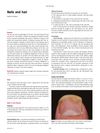
May 2009 in “Medicine” This review discusses skin appendages like hair and nails as indicators of local and systemic pathologies, emphasizing conditions such as inflammatory diseases and infections, but reports no new clinical findings.
 1 citations
,
January 2023 in “Mycopathologia”
1 citations
,
January 2023 in “Mycopathologia” In this case report, a 34-year-old woman with black dot tinea capitis did not respond to oral Itraconazole but was successfully treated with Terbinafine.
 1 citations
,
January 2015 in “Indian journal of dermatology, venereology, and leprology”
1 citations
,
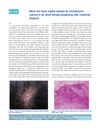
January 2015 in “Indian journal of dermatology, venereology, and leprology” A woman's scalp infection caused by a fungus led to permanent hair loss and was hard to treat but responded to a specific antifungal.

This review discusses various skin-related conditions affecting hair and nails, highlighting associations with systemic pathologies but reports no new clinical findings.
 121 citations
,
January 1991 in “Acta dermato-venereologica”
121 citations
,
January 1991 in “Acta dermato-venereologica” In this study, terbinafine reached high concentrations in stratum corneum and sebum after oral administration, with drug levels remaining above fungicidal concentrations for over three weeks.
5 citations
,
November 2010 in “Veterinary Record” Treatment with oral terbinafine and topical enilconazole was successful in resolving a Trichophyton dermatophytosis outbreak in L'Hoest's monkeys, with complete mycological cure achieved after eight weeks.
 113 citations
,
August 2016 in “Mycopathologia”
113 citations
,
August 2016 in “Mycopathologia” This review discusses the developments in antifungal treatments for dermatophyte infections since 2008, reporting no new oral agents but introducing newer topical options like efinaconazole and tavaborole.
11 citations
,
October 2017 in “Mycoses” In this case report, an 80-year-old male with severe sycosis barbae and no animal contact was successfully treated with oral terbinafine after diagnostic sequencing identified Trichophyton verrucosum as the infecting species.
August 2025 in “Biomedicines” In this case report, half-siblings with bullous congenital ichthyosiform erythroderma were found to have a susceptibility to Trichophyton rubrum infection, successfully treated with oral terbinafine.
In this case study, a 20-year-old man with dermatitis initially misdiagnosed as caused by Herpes simplex was found to have a fungal infection, Trichophyton mentagrophytes, and successfully treated with oral terbinafine and ketoconazole products.
 July 2018 in “Journal of Dairy & Veterinary Sciences”
 In this veterinary case study, a 5-year-old Labrador with pruritus and alopecia tested positive for Malassezia pachydermatitis and recovered after treatment with oral terbinafine and topical ketoconazole.