April 2025 in “Australasian Journal of Dermatology” This report presents the first Australian case of familial frontal fibrosing alopecia involving a mother and daughter and seeks to differentiate clinical features between familial and sporadic cases.
March 2025 in “International Journal of Trichology” This study reports that low-dose oral minoxidil is generally well tolerated from a cardiovascular perspective, and serious side effects like pericardial effusion are associated with higher doses and pre-existing conditions.
 January 2025 in “SKIN The Journal of Cutaneous Medicine”
 This study of baricitinib in adults with severe alopecia areata found that after initial success, 10.9% of participants lost treatment response by Week 152. Factors like longer disease duration and severe baseline symptoms were more common in those losing response.
 January 2025 in “Epsilon Archive for Student Projects (University of Southampton)”
 In this study investigating goat herds in Zambia, both mange and orf were detected, but with low occurrence linked to diagnostic challenges and mild clinical signs; further research, especially in conditions favoring mange mites, is recommended to better understand and manage these diseases.

In this study, a case was reported where oral Minoxidil led to severe ocular complications, specifically Central Retinal Vein Occlusion and Cilioretinal Artery Occlusion, resulting in sudden vision loss which improved upon discontinuation.
 October 2023 in “Journal of Cosmetic Dermatology”
 This study found that an octapeptide binding to Lgr5 can enhance the proliferation and differentiation of human primary hair cells by activating the Wnt/β-catenin signaling pathway, suggesting its potential as a treatment for hair loss in androgenetic alopecia.
October 2023 in “Journal of Pakistan Association of Dermatologists” In this case report, a 33-year-old woman with severe post-COVID alopecia areata experienced hair regrowth after two months of treatment with topical minoxidil, tacrolimus, and scalp PRP with micro-needling, though some bald patches reoccurred.
 October 2023 in “Indian Dermatology Online Journal”
 This case report describes a 1.5-month-old baby with Schimmelpenning-Feuerstein-Mims syndrome, manifested by skin and ocular abnormalities along with developmental delays and hearing loss observed later, highlighting the syndrome's progression and need for multidisciplinary management.
 June 2023 in “British journal of dermatology/British journal of dermatology, Supplement”
 This study reports a rare case of two siblings with lipoedematous scalp, suggesting a possible genetic link that warrants further investigation.
In this study, analyzing over 400 million tweets revealed a broader and milder spectrum of COVID-19 symptoms than clinical research, and illustrated symptom evolution and co-occurrence throughout the pandemic.
 September 2022 in “Plastic and Reconstructive Surgery”
 This article reviews various recent studies and articles relevant to plastic surgeons, covering topics like alopecia treatment, wound therapy, breast implant safety, and surgical techniques, but provides no new clinical results; it aims to update readers on key developments in plastic surgery.
August 2021 in “Journal of the American Academy of Dermatology” In a randomized controlled trial, King et al. found that oral baricitinib at doses of 2 mg and 4 mg significantly improved hair regrowth in adults with alopecia areata compared to placebo, supporting its efficacy and safety for those with substantial scalp hair loss.

In this study, significant hair loss was found to be less common among white male CEOs aged 50-69 years than in the general white male population.
 January 2021 in “Skinmed”
 This study found that significant hair loss among white male CEOs aged 50-69 years occurred less frequently than previously reported for the general white male population.
June 2020 in “bioRxiv (Cold Spring Harbor Laboratory)” This study reported that distinct stem/progenitor populations in the ocular surface epithelium have different cell division frequencies and respond differently to injury, with specific spatial compartmentalization and migration behaviors.
December 2019 in “Saintika Medika” This case report describes a rare instance of a 23-year-old woman with both Epidermolysis Bullosa Acquisita and aggressive systemic lupus erythematosus, suggesting a potential immunogenetic link through HLA-DR2.
 April 2016 in “JAMA Dermatology”
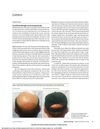
 This commentary highlights the importance of additional sun protection for individuals with alopecia, noting that common headwear like baseball caps may provide insufficient photoprotection for the scalp.
 December 2013 in “Praxis medica”
 In this study, a strong correlation was found between the scores of two dermatology-specific quality of life instruments, DLQI and Skindex-16, suggesting they can provide complementary insights for assessing patients with skin diseases.

This abstract contains subscription and access information for Wolters Kluwer Health journals but reports no research findings.
June 2007 in “Taiwan Journal of Ophthalmology” This case report on a 17-year-old with Vogt-Koyanagi-Harada syndrome found that while steroid treatments improved vision during uveitis episodes, recurring ocular issues led to significant long-term visual impairment.
August 1986 in “Lung India” The researchers reported that finasteride prevents further hair loss in males with androgenetic alopecia by promoting hair growth, which helps maintain scalp coverage, but it is not effective for females.
This study found that testosterone impacts hair follicles from both affected and occipital regions in male pattern androgenetic alopecia, but with different androgen response-profiles, challenging the belief that occipital regions are androgen-insensitive.
January 2018 in “Investigative Ophthalmology & Visual Science” This study observed retinal and optic nerve damage in patients who had taken finasteride, suggesting potential ocular toxicity associated with the drug's use.
130 citations
,
February 2005 in “Proceedings of the National Academy of Sciences” This study found that differentiated cells of the corneal epithelium can be converted to hair and interfollicular epidermis through a multistep process involving dermal developmental signals.
15 citations
,
November 2020 in “Development” This study found that the ocular surface epithelium in mice contains distinct stem cell populations with unique cell division dynamics that change behaviorally in response to different levels of injury.
14 citations
,
September 2021 in “Journal of Inflammation Research” This study suggests that female patients with alopecia areata, especially those with nail abnormalities and atopic diseases, may have higher rates of coexisting autoimmune diseases.
13 citations
,
April 2022 in “BMC Genomics” This study found that dandruff-afflicted individuals had a less integrated microbial network on the scalp and hair surface compared to healthy individuals, with more positive interactions and unstable connections.
5 citations
,
December 2017 in “Atom Indonesia” This study found higher concentrations of chromium, lead, and arsenic in the hair of workshop workers and traffic officers compared to a control group, indicating occupational exposure to these metals. Mercury levels varied across exposed groups, suggesting additional lifestyle factors may influence metal accumulation.
 4 citations
,
July 2014 in “International Journal of Dermatology”
4 citations
,
July 2014 in “International Journal of Dermatology” This case report describes the occurrence of eruptive vellus hair cysts in twin patients, adding to the literature on this dermatological condition.
3 citations
,
June 2024 in “Skin Research and Technology” Higher LDL lipids may increase alopecia areata risk, while higher triglycerides may decrease it.