March 2005 in “The Nurse Practitioner” This update provides information on new drug approvals but does not offer new clinical research findings.
12 citations
,
May 2010 in “Journal of Clinical Oncology” This study found that MK-5108 is well tolerated at high doses as monotherapy in cancer patients, showing stable disease and some antitumor activity, particularly in combination with docetaxel.
3 citations
,
April 2021 in “Oncology Times” This study reports that sacituzumab govitecan achieved a 33.3% overall response rate in patients with metastatic triple-negative breast cancer who had prior treatments, with a median response duration of 7.7 months.
This study found that a mitoxantrone, vincristine, and prednisolone regimen effectively treated recurrent breast cancer with a 70% response rate, though it was associated with significant myelosuppression.
 33 citations
,
December 2023 in “Cell Death Discovery”
33 citations
,
December 2023 in “Cell Death Discovery” This study found that cepharanthine can inhibit gastric cancer cell activity by inducing oxidative stress and altering energy metabolism, suggesting its potential for gastric cancer treatment.
 15 citations
,
December 2014 in “Dermatology and therapy”
15 citations
,
December 2014 in “Dermatology and therapy” This study reports that sorafenib-associated facial acneiform eruption, mimicking chloracne, is a rare cutaneous adverse event which improved upon reducing or discontinuing the drug.
September 2013 in “Oncology Times” This article discusses the discontinuation of the Bexxar regimen for non-Hodgkin's lymphoma, noting that despite its effectiveness, it was under-prescribed due to marketing and development challenges without reporting new clinical results.
 May 2026 in “Zenodo (CERN European Organization for Nuclear Research)”
 In this study, researchers described ONCO-NK-TRANSITION-GM1, a cancer therapy that's manufacturable with current pharmaceutical methods, showing a 60-80% complete response rate across various cancer types and costing $50 per dose, providing a more accessible alternative to existing treatments.
 March 2026 in “Korean Journal of Clinical Pharmacy”
 In this review, researchers discuss 50 novel drugs approved by the FDA in 2024, highlighting key agents like vadadustat for anemia in chronic kidney disease and donanemab for Alzheimer’s, and focusing on their roles in pharmacy education and clinical decision-making.
2 citations
,
May 2016 in “Journal of Clinical Oncology” This study found that topical BPM31543 was safe, tolerable, and showed potential to reduce chemotherapy-induced alopecia at higher dosing levels among adult women with cancer receiving taxane-based chemotherapy.
 8 citations
,
May 2019 in “Journal of dermatological treatment”
8 citations
,
May 2019 in “Journal of dermatological treatment” This study found that vismodegib was effective in treating basal cell carcinoma, achieving complete remission in some patients; however, significant side effects often required careful management to prevent therapy suspension, which can lead to resistance.
 35 citations
,
May 2008 in “Journal of Clinical Oncology”
35 citations
,
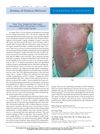
May 2008 in “Journal of Clinical Oncology” A cancer patient died from a severe skin reaction after taking the drug cetuximab.
 January 2025 in “Recent Patents on Anti-Cancer Drug Discovery”
 In this study, neoadjuvant treatment with durvalumab combined with albumin-bound paclitaxel and carboplatin in patients with driver gene-negative stage III NSCLC showed a 65% objective response rate and was associated with high pathological response rates and improved immune function, with most adverse events being mild.
 3 citations
,
February 2005 in “Lung Cancer”
3 citations
,
February 2005 in “Lung Cancer” The new chemotherapy combination for advanced lung cancer showed a 35.7% response rate but caused significant side effects.
22 citations
,
May 2011 in “European Journal of Cancer” This phase I study determined that a combination of oral SU-014813 and docetaxel is a feasible treatment with a manageable safety profile and potential anti-tumor activity, particularly noted in melanoma and GIST patients.
1 citations
,
October 2024 in “Journal of the Endocrine Society” In this case report, researchers observed that the monoclonal antibody bevacizumab may worsen hypothyroidism in patients, as seen in a 60-year-old woman with metastatic duodenal carcinoma. The authors suggest that thyroid function should be monitored when using VEGF inhibitor therapies due to potential adverse effects.
 7 citations
,
March 2011 in “Expert Opinion on Drug Safety”
7 citations
,
March 2011 in “Expert Opinion on Drug Safety” This review discusses the efficacy and safety of exemestane as a treatment for estrogen-receptor-positive breast cancer and reports no new clinical results.
December 2022 in “International Journal of Molecular Sciences” This study used machine learning to identify FDA-approved drugs afatinib, neratinib, and zanubrutinib as potential KRASG12C inhibitors for resistant non-small-cell lung cancer, highlighting the potential of AI in drug repurposing.
6 citations
,
June 1983 in “Cancer” This study found that a chemotherapy regimen combining CMFVP and ACP treatments for unresectable metastatic breast cancer yielded a 66.7% overall response rate, with premenopausal women responding more favorably than postmenopausal women.
 4 citations
,
May 2023 in “Research Square (Research Square)”
4 citations
,
May 2023 in “Research Square (Research Square)” This study found that cephalanthine inhibited the growth of gastric cancer cells in vitro and in vivo by inducing oxidative stress and altering energy metabolism, suggesting its potential as a treatment for gastric cancer.
 August 2022 in “Nature Biotechnology”
 This report highlights Amvuttra's approval for hATTR amyloidosis as a more convenient RNAi therapy, and Olumiant's attention as the first systemic drug for hair loss among recent developments.
1 citations
,
December 2025 in “PLoS ONE” This study evaluated the real-world safety of Tepotinib for treating NSCLC with METex14 skipping mutations, confirming known adverse events and identifying new signals like deafness and taste disorder, especially highlighting early monitoring.
 16 citations
,
December 2012 in “Bioinformation”
16 citations
,
December 2012 in “Bioinformation” This study suggests that natural molecules like curcumin, EGCG, barringtozenol, and finasteride may be effective inhibitors for VEGFR, potentially offering a cancer chemoprevention alternative to pazopanib.
 1461 citations
,
March 2004 in “Annals of oncology”
1461 citations
,
March 2004 in “Annals of oncology” This study found that in first-line treatment of metastatic breast cancer, pegylated liposomal doxorubicin (PLD) provided similar progression-free survival to doxorubicin with significantly less cardiotoxicity.
 March 2018 in “International journal of basic and clinical pharmacology”
 This study found that while the carboplatin-paclitaxel regimen for advanced lung cancer is more affordable than newer treatments and maintains a good performance status, it significantly increases risks of alopecia and peripheral neuropathy.
 29 citations
,
August 2007 in “Annals of Oncology”
29 citations
,
August 2007 in “Annals of Oncology” Docetaxel and oxaliplatin are effective and have manageable side effects for recurrent platinum-sensitive ovarian cancer.
 May 2026 in “Zenodo (CERN European Organization for Nuclear Research)”
 This study describes a novel cancer therapy, ONCO-NK-TRANSITION-GM1, that offers a 60-80% cure rate across multiple cancer types using existing pharmaceutical manufacturing technologies, and costs $50 per dose, presenting a more accessible alternative to current therapies.
 January 2016 in “The Australian Pharmacist”
 Tofacitinib might be used to treat hair loss.
February 2017 in “Cancer Research” In this study involving women undergoing taxane-based chemotherapy, a twice-daily topical application of BPM31543 was well-tolerated and showed potential in reducing severe hair loss, prompting further investigation at higher doses.
 April 2016 in “Journal of Investigative Dermatology”
 This study identified mefloquine as a potent inducer of lethal ER stress that effectively eliminated vemurafenib-resistant and sensitive melanoma cells, suggesting its potential for repurposing as a melanoma treatment.