 September 2023 in “Nature communications”
 This study found that VE-cadherin and Alk1, traditionally linked to vascular functions, also play crucial roles in maintaining nerve homeostasis in mice during hair growth cycles by modulating certain cell populations.
February 2009 in “Journal of Investigative Dermatology” EGFR is essential for organized skin nerve growth and branching.
 7 citations
,
February 2012 in “Facial Plastic Surgery”
7 citations
,
February 2012 in “Facial Plastic Surgery” This article discusses the mini-lift as a cosmetic procedure for minor cheek and neck laxity, emphasizing its benefits like quicker recovery and minimal incisions, but provides no new clinical data.
This study in adult mice found that somatosensory axons innervating Merkel cells in the skin are highly plastic, with significant remodeling in response to epithelial turnover, and that Merkel cells play a role in limiting axonal branching and promoting their maturation.
5 citations
,
July 1999 in “Journal of Anatomy” This study found that methylene blue staining may reveal anatomical details of intraepidermal nerve fibre endings in the rat mystacial pad with greater clarity than the zinc iodide-osmium tetroxide technique.
5 citations
,
July 1999 in “Journal of Anatomy” This study observed that methylene blue staining and zinc iodide-osmium tetroxide techniques effectively revealed anatomical details of intraepidermal nerve fibre endings in the rat's mystacial pad, suggesting their potential role in mechanoreception.
24 citations
,
March 2008 in “Neuroscience Research” This study revealed the complex three-dimensional innervation of touch domes in cat forepaw skin, highlighting the extensive branching and unmyelinated endings associated with Merkel cell–axon complexes.
 1 citations
,
February 2025 in “Scientific Reports”
1 citations
,
February 2025 in “Scientific Reports” In this study, researchers developed a three-dimensional ultrastructural analysis tool using serial block-face scanning electron microscopy to reveal detailed nerve networks and muscle structures in human skin tissues, demonstrating the technique's potential to study structural changes in aging or disease.
1 citations
,
November 2024 in “eLife” This study in mice found that MEIS2 expression in mesenchymal dermal cells is crucial for the formation of whiskers and the initial steps of epithelial placode development, independently of sensory nerve innervation or Foxd1 expression.
This research describes a crucial role for Meis2 expression in mesenchymal cells derived from the neural crest for whisker formation, showing that whiskers can develop without sensory innervation or FOXD1 expression, highlighting an early function of MEIS2.
 130 citations
,
September 2018 in “Cell Reports”
130 citations
,
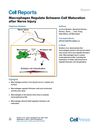
September 2018 in “Cell Reports” This study found that macrophages play a crucial role in nerve regeneration by regulating Schwann cell dynamics and remyelination, with Gas6 identified as a key factor in this process.
 15 citations
,
May 2003 in “The Laryngoscope”
15 citations
,
May 2003 in “The Laryngoscope” In this study, researchers observed that spiral ganglion neurites created more branched networks near FGF-1-coupled beads compared to control beads, highlighting FGF-1's role in hair cell innervation development.
 13 citations
,
December 2018 in “Development, Growth & Differentiation”
13 citations
,
December 2018 in “Development, Growth & Differentiation” This study found that male and female chicken feather morphology and color patterns can be extrinsically modified through molting and resetting the stem cell niche during regeneration.
 12 citations
,
July 2016 in “Atlas of the Oral and Maxillofacial Surgery Clinics”
12 citations
,
July 2016 in “Atlas of the Oral and Maxillofacial Surgery Clinics” This review outlines various brow-lifting techniques, focusing on the endoscopic brow-lift for its minimal scarring and higher patient acceptance, and reports no new clinical results.
 31 citations
,
November 2016 in “Cell Reports”
31 citations
,
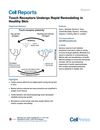
November 2016 in “Cell Reports” This study reveals that somatosensory neurons in mouse skin exhibit structural plasticity during hair-follicle regeneration, which may temporarily impair the reliability of encoding gentle touch.
 19 citations
,
February 2012 in “International Journal of Urology”
19 citations
,
February 2012 in “International Journal of Urology” This review discusses gender identity disorder in Japan, highlighting the high prevalence and challenges in accessing appropriate treatment, and calls for wider understanding among medical professionals.
 13 citations
,
July 2017 in “Biopolymers”
13 citations
,
July 2017 in “Biopolymers” This study presents recombinant human hair keratins K31 and K81, observing novel nanostructures from their self-assembly and emphasizing disulfide crosslinking's role in this process.
 10 citations
,
January 2014 in “Journal of prosthodontic research”
10 citations
,
January 2014 in “Journal of prosthodontic research” This study found that while both natural and bioengineered salivary glands showed similar protein concentrations in response to taste stimulation, their protein compositions and amylase concentrations differed, which may affect nerve signal balance.
 4 citations
,
January 2018 in “Advances in Experimental Medicine and Biology”
4 citations
,
January 2018 in “Advances in Experimental Medicine and Biology” This article discusses the structures surrounding hair follicles and introduces aspects like follicle groups and the dermal sheath, but it reports no new research findings.
 April 2024 in “Materials today bio”
 In this study, the researchers developed a novel wound dressing incorporating copper-doped calcium silicate and curcumin, which significantly promoted nerve and blood vessel regeneration in deep burn wounds, emphasizing the crucial role of bioactive chelation in neuralized skin repair.
 25 citations
,
July 2020 in “Journal of cosmetic dermatology”
25 citations
,
July 2020 in “Journal of cosmetic dermatology” In this study, the authors reported that while deoxycholic acid effectively reduces submental fat, it can cause adverse effects such as edema, numbness, and skin necrosis, making knowledge of possible complications essential for clinicians.
 August 2016 in “InTech eBooks”
 This source highlights the diverse scope of facial plastic and reconstructive surgery, noting the specialty's adaptability to changing trends and ethnic preferences for aesthetic outcomes, without reporting specific study results.
 13 citations
,
November 2014 in “Clinics in Plastic Surgery”
13 citations
,
November 2014 in “Clinics in Plastic Surgery” This article reviews the use of the transtemporal approach for midface and lower eyelid-cheek junction rejuvenation, detailing surgical techniques, post-operative care, and potential complications, but reports no new clinical results.
 9 citations
,
July 2014 in “Facial Plastic Surgery”
9 citations
,
July 2014 in “Facial Plastic Surgery” The authors find the endoscopic forehead midface lift to be a reliable and safe method for facial rejuvenation.
 77 citations
,
July 2020 in “Cell”
77 citations
,
July 2020 in “Cell” This study found that sympathetic nerves and arrector pili muscles form a niche that modulates hair follicle stem cell activity, revealing their role in hair follicle regeneration.
 29 citations
,
February 2013 in “Proceedings of the National Academy of Sciences of the United States of America”
29 citations
,
February 2013 in “Proceedings of the National Academy of Sciences of the United States of America” This study found that Merkel cell clusters require Frizzled6 signaling for their polarity information, while other hair follicle-associated structures align their orientation based on the hair follicle itself.
 18 citations
,
July 1996 in “Facial Plastic Surgery”
18 citations
,
July 1996 in “Facial Plastic Surgery” Knowing detailed head and neck anatomy is crucial for safe and effective facelift surgery.
 February 2025 in “Journal of Cosmetic Dermatology”
 This case report describes a 34-year-old Asian female who experienced prolonged localized facial blanching following botulinum toxin type A injection, marking the first such documented case in this population.
10 citations
,
September 2024 in “Neural Regeneration Research” This study found that using induced pluripotent stem cell-derived mesenchymal stem cells with acellular nerve allografts significantly improved axon regeneration and functional recovery in rats with sciatic nerve injuries, suggesting a promising approach for clinical nerve repair therapies.
13 citations
,
November 2023 in “International Journal of Nanomedicine” This review explores the potential of nanofiber scaffolds as an advanced intervention in peripheral nerve regeneration, detailing their fabrication, cellular interactions, controlled bioactive agent release, clinical translation prospects, emerging trends, and biocompatibility considerations for treating peripheral nerve injuries.