 January 2011 in “Journal of Human Genetics”
 This study found a severe MBTPS2 gene mutation in a Japanese IFAP syndrome patient, suggesting other factors may influence the syndrome's clinical features compared to previously studied patients.
 1 citations
,
January 2001 in “Cosmetics and toiletries”
1 citations
,
January 2001 in “Cosmetics and toiletries” This study found that purified apple juice containing procyanidin B-2 promoted hair growth in both mouse models and human clinical trials for male pattern baldness.
July 2024 in “Journal of Investigative Dermatology” 117 citations
,
August 1999 in “Nature Genetics”  April 2023 in “Journal of Investigative Dermatology”
 This study suggests that MPZL3, a mitochondrially localized protein, may play an integral role in regulating hair follicle cycles, with potential therapeutic implications for hair growth disorders if findings translate to humans.
 December 2020 in “Lasers in Surgery and Medicine”
 In this study, using a 1064 nm picosecond Nd:YAG laser effectively removed undesirable scalp micropigmentation in four patients within 1–3 treatment sessions, with no unexpected adverse events reported.

CaBP1 and CaBP2 are important for maintaining hearing by supporting continuous calcium currents and nerve signaling in the ear.
3 citations
,
July 2020 in “International Journal of Applied Pharmaceutics” This study evaluated shampoo formulations containing banana corm extract and found that they possess favorable physical and stability characteristics, suggesting potential as a natural haircare product.
November 2006 in “評価・診断に関するシンポジウム講演論文集” This study found that KSR1 is essential for v-Ha-ras-mediated skin tumor formation in mice but not for MT-driven mammary tumor genesis, suggesting its potential as a therapeutic target in Ras/MAPK signaling.
April 2021 in “The journal of investigative dermatology/Journal of investigative dermatology” This study found that MPZL3 plays a crucial role in regulating the hair cycle clock in mice, with its absence leading to accelerated hair follicle cycling and suggesting potential therapeutic pathways for alopecia treatment.
19 citations
,
October 1994 in “The Journal of Clinical Endocrinology and Metabolism” May 2005 in “Molecular Carcinogenesis” This study found that mrp/plf-mRNA expression in murine skin increases in response to different tumor promoters, suggesting its potential as a short-term biomarker for chemical carcinogenesis.
December 2021 in “Figshare” This study found that BBS7 expression is crucial for maintaining Sonic hedgehog signaling and periodontal ligament homeostasis in occlusal hypofunctional conditions.
This study found that DNA methylation may regulate the differential expression of the BMP7 gene in Hu sheep lamb skin of different patterns, and it influences the proliferation and cell cycle of dermal papilla cells, with demethylation treatment increasing BMP7 expression and cell proliferation.
 April 2019 in “Journal of Investigative Dermatology”
 This study reported that gain-of-function mutations in TRPV3 lead to hair loss in mice by disrupting inner root sheath keratinocyte differentiation, ultimately causing follicular keratinocyte stem cell exhaustion and permanent follicle disruption.
5 citations
,
July 2023 in “Microorganisms” This study analyzed skin biopsies from human monkeypox virus (hMPXV1) cases and found characteristic pustular stage features, including epidermal necrosis, shadow cell appearance, ballooned keratinocytes, and a dense inflammatory infiltrate, expanding histological knowledge crucial for understanding this disease and related Orthopoxvirus infections.
 10 citations
,
July 2013 in “British Journal of Dermatology”
10 citations
,
July 2013 in “British Journal of Dermatology” High MUC-18/MCAM levels in blood indicate a worse outlook for melanoma patients.
 May 2023 in “Elsevier eBooks”
 This article discusses scalp micropigmentation as a noninvasive method to conceal various forms of hair loss and scalp abnormalities and reports no clinical results; the authors highlight its safe and effective application.
 9 citations
,
January 2020
9 citations
,
January 2020 This case series observed that macular changes from popper use can resolve completely after cessation, even in individuals with chronic use.
 2 citations
,
May 2018 in “International Society of Hair Restoration Surgery”
2 citations
,
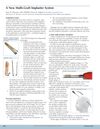
May 2018 in “International Society of Hair Restoration Surgery” The new system makes hair transplants faster and more precise.
August 2025 in “Journal of Medical and Biological Engineering” In this study, a needle-free supersonic atomizer delivering Bacopa monnieri extract with hyaluronan was found to enhance hair growth in mice more effectively than the traditional smear method and minoxidil.
1 citations
,
January 2023 in “Dermatologic Therapy” This study reported that a single treatment using macrofocused ultrasound energy with a 2 mm transducer significantly reduced pore count, pore volume, and pore index in 34 Thai subjects with enlarged facial pores over a 6-month period, with no adverse events observed.
14 citations
,
June 2021 in “British Journal of Dermatology” This article discusses the BIOMAP consortium's efforts in standardizing data for atopic dermatitis and psoriasis research to facilitate personalized medicine, but it presents no new research findings.
December 2021 in “Figshare” This study found that BBS7 downregulation in occlusal hypofunctional PDL affects Sonic hedgehog signaling activity, impacting PDL homeostasis.
 September 2023 in “Journal of The American Academy of Dermatology”
 In this study, researchers evaluated how subjects perceive the effectiveness of three FDA-cleared photobiomodulation devices for home use in treating androgenetic alopecia, though specific outcomes or comparative effectiveness are not reported in the abstract.
53 citations
,
July 1981 in “Journal of Endocrinology” In this study, α-MSH and cyclic AMP were found to stimulate melanogenesis in hair follicle cultures, while cyclic GMP and melatonin inhibited melanin production but not tyrosinase activity.
37 citations
,
July 2002 in “Archives of Pathology & Laboratory Medicine” The authors concluded that antibodies against tyrosinase and gp100 may be effective in diagnosing melanoma, including challenging variants like amelanotic and desmoplastic types, when appropriate antigen retrieval techniques are used.
 2 citations
,
April 2017 in “Molecular Medicine Reports”
2 citations
,
April 2017 in “Molecular Medicine Reports” In this study, blocking autophagy with 3-methyladenine significantly improved the survival of inner ear hair cells in a gentamicin-induced ototoxic mouse model.
 4 citations
,
July 2021 in “bioRxiv (Cold Spring Harbor Laboratory)”
4 citations
,
July 2021 in “bioRxiv (Cold Spring Harbor Laboratory)” This study suggests that BLMP-1 is important for timely molting and oscillatory gene expression in C. elegans, indicating a potentially conserved mechanism for rhythmic skin regeneration.
43 citations
,
May 1999 in “Journal of Biological Chemistry” This study found that full-length Agouti protein modulates melanocortin receptor signaling through a dual mechanism involving competitive antagonism and receptor down-regulation, whereas the carboxyl-terminal fragment acts solely as a competitive antagonist.