 January 2023 in “Pediatric Endocrinology Diabetes and Metabolism”
 This review discusses current knowledge of isolated premature pubarche in infants and reports no new findings, highlighting it as a mild, self-limiting condition that necessitates exclusion of serious causes.
 July 2021 in “Advances in laboratory medicine”
 This article reviews differential diagnosis approaches for 46,XY DSD, proposing a diagnostic algorithm focused on biochemical and genetic data, without presenting new clinical results.
 January 2021 in “touchREVIEWS in Endocrinology”
 Surgery successfully treated a hidden ovarian tumor causing hair loss and excess hair growth in a postmenopausal woman.
January 2020 in “Proyecto de investigación:” This study found a significant association between AGDAC measurements and the presence of PCOS, suggesting it could be an effective clinical tool in diagnosing the condition and its phenotypes, especially when combined with AMH.
 July 2019 in “Acta Scientiae Veterinariae”
 This case report describes a Canadian Husky dog with sertolioma that exhibited dermatological symptoms and aggressive behavior, both of which improved significantly after surgery.
 May 2019 in “bioRxiv (Cold Spring Harbor Laboratory)”
 This study observed that circulating testosterone affects baseline sex differences in voiding function in C57BL/6J mice, with prostate lobe mass having a lesser impact.
 January 2019 in “The Annals of Thoracic Surgery”
 The document concludes that careful planning and execution of facial gender affirmation surgery after at least 12 months of hormonal therapy can improve the quality of life for transgender individuals.
 January 2019 in “Springer eBooks”
 Acne can appear or persist in adulthood due to hormonal changes, external factors, or substance use, and requires appropriate treatment.
 April 2018 in “Routledge eBooks”
 This article discusses the assumptions linking sex, gender identity, gender role, and sexual orientation, highlighting that these inferences are often incorrect, but it reports no new empirical results.
This article reviews the role of hormones in human penis development and associated conditions due to hormonal imbalances, but reports no new findings, suggesting hormone replacement can manage some conditions.
 November 2016 in “Elsevier eBooks”
 This chapter reviews genetic defects in female sexual differentiation, focusing on 46,XX disorders of sex development and the impact of genetic factors and sex steroids on development, but reports no new clinical findings.
January 2016 in “Dermatology Online Journal” This review discusses dermatologic issues specific to transgender patients undergoing hormonal therapy and offers guidance for dermatology providers, but does not report new clinical results.
 December 2015 in “University of Birmingham Institutional Research Archive (University of Birmingham)”
 This study showed that regulation of adipose androgen generation via AKR1C3 may contribute to a cycle of hyperinsulinaemia and lipid accumulation in women with PCOS.
 November 2014 in “Elsevier eBooks”
 This article reviews the clinical and biochemical features of genetic mutations affecting dihydrotestosterone production and their potential role in male pseudo-hermaphroditism, but presents no new clinical results.
 January 2012 in “S. Karger AG eBooks”
 This article reviews treatment processes and outcomes for transsexualism, reporting improved quality of life and reduced gender dysphoria post-gender reassignment, though increased psychiatric risks remain compared to the general population.
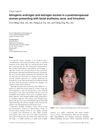 August 2009 in “International Journal of Dermatology”
 This case report describes a postmenopausal woman who experienced facial erythema, acne, and hirsutism due to excess androgen and estrogen levels.
 April 2008 in “Obstetrics, gynaecology and reproductive medicine”
 This article reviews the diagnosis and management of hirsutism in women, discussing its causes, assessment, and treatment options; no new clinical findings are included.

This review discusses various syndromes of severe insulin resistance, their biochemical and clinical features, and potential therapeutic options, but it reports no new clinical results.
 November 2004 in “John Wiley & Sons, Ltd eBooks”
 This chapter reviews polycystic ovary syndrome (PCOS), focusing on its definition, causes, and treatment approaches, but reports no new research findings.
 November 2004 in “Medical Journal of Indonesia”
 This review discusses the impact of hormonal changes on female skin and hair loss and suggests that antiandrogenic treatments may help mitigate these effects, but reports no new clinical results.
3 citations
,
February 2021 in “JAMA Dermatology” Masculinizing hormone therapy increases the risk of hair loss in transgender and gender-diverse patients.
105 citations
,
June 2010 in “The journal of sexual medicine” In this study, female-to-male transsexuals treated with long-acting testosterone undecanoate experienced an increase in lean mass but no change in fat mass or bone mineral density over 24 months.
51 citations
,
August 2012 in “Differentiation” This study found that penile and clitoral differentiation in mice is influenced by androgen exposure, with penile features developing postnatally requiring prenatal and ongoing androgen presence.
 November 2022 in “Journal of the Endocrine Society”
 This case report describes a rare instance of virilizing androgen production due to an ovarian serous cystadenoma in a 59-year-old woman, with testosterone levels normalizing after its removal.
 January 2014 in “European Geriatric Medicine”
 A postmenopausal woman's virilization was caused by a rare ovarian tumor that was hard to detect but was successfully treated with surgery.
 724 citations
,
April 2004 in “Lancet Oncology”
724 citations
,
April 2004 in “Lancet Oncology” This review summarizes the use and neonatal outcomes of chemotherapy during pregnancy, noting its potential for safe use in the second and third trimesters, and reports no new clinical results.
 441 citations
,
May 2008 in “British Journal of Pharmacology”
441 citations
,
May 2008 in “British Journal of Pharmacology” This article reviews the potential clinical use of anabolic steroids in treating muscle loss from chronic diseases and aging and highlights both the benefits and risks of these substances in sports.
 156 citations
,
October 1996 in “Science of The Total Environment”
156 citations
,
October 1996 in “Science of The Total Environment” This study observed that tributyltin pollution induces imposex, reduces reproductive success, and leads to population decline in Ocinebrina aciculata, highlighting its sensitivity compared to other prosobranch species.
 54 citations
,
April 2010 in “Baillière's best practice and research in clinical endocrinology and metabolism/Baillière's best practice & research. Clinical endocrinology & metabolism”
54 citations
,
April 2010 in “Baillière's best practice and research in clinical endocrinology and metabolism/Baillière's best practice & research. Clinical endocrinology & metabolism” This review discusses 46,XY disorders of sex development caused by defects in androgen production and highlights the need for long-term care from experienced multidisciplinary teams, but it reports no new clinical findings.
 43 citations
,
May 1988 in “British Journal of Dermatology”
43 citations
,
May 1988 in “British Journal of Dermatology” This study reported that patients with acanthosis nigricans and insulin resistance exhibited higher insulin levels and were associated with increased insulin resistance correlating with serum testosterone levels.