20 citations
,
April 2019 in “BioMed Research International” This study found that DNA hypermethylation was present in melasma lesions, and treatments with sunscreen, niacinamide, and retinoic acid were associated with decreased methylation and clinical improvement.
 1 citations
,
July 2023 in “Journal of Ayub Medical College Abbottabad”
1 citations
,
July 2023 in “Journal of Ayub Medical College Abbottabad” In this case study, a 30-year-old woman with symptoms including fever, joint pain, and skin ulcers was diagnosed with Lupus Vasculitis and treated with steroids, mycophenolate mofetil, and hydroxychloroquine after tests showed positive anti-nuclear and anti-Ro antibodies and reduced serum complement levels.
 July 2023 in “Journal of Ayub Medical College Abbottabad”
 This case study details a 30-year-old woman diagnosed with Lupus Vasculitis, presenting with symptoms like intermittent fever, joint pain, and respiratory issues, after tests revealed specific antibody patterns and reduced complement levels, leading to treatment with steroids, mycophenolate mofetil, and hydroxychloroquine.
 1 citations
,
June 2015 in “Australasian Journal of Dermatology”
1 citations
,
June 2015 in “Australasian Journal of Dermatology” This case report describes a patient with Cronkhite–Canada syndrome, where immunosuppression and nutritional support led to disease remission.
 23 citations
,
April 2004 in “American Journal of Ophthalmology”
23 citations
,
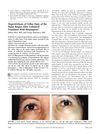
April 2004 in “American Journal of Ophthalmology” This case report found that topical bimatoprost usage in a female Hispanic patient with open-angle glaucoma was associated with hypertrichosis and increased pigmentation of vellus hairs on the malar region.
 15 citations
,
March 2004 in “American Journal of Ophthalmology”
15 citations
,
March 2004 in “American Journal of Ophthalmology” This case report found that topical bimatoprost in a female Hispanic patient with glaucoma led to increased hair growth and pigmentation in the malar region, which resolved after discontinuing use and epilation.
 February 2009 in “Springer eBooks”
 Hyperpigmentation is common in pregnancy and may not fully fade after birth; melasma, also frequent, can persist but has limited treatment options during pregnancy.
2 citations
,
October 2016 in “Nutrition in clinical practice” This case report describes a rare instance of reversible melasma-like hyperpigmentation linked to vitamin B12 deficiency due to pernicious anemia, and explores possible mechanisms for this association.
 1 citations
,
January 2017 in “Journal of Pakistan Association of Dermatology”
1 citations
,
January 2017 in “Journal of Pakistan Association of Dermatology” This study found that cutaneous manifestations in children with systemic lupus erythematosus differ from adults, with no female preponderance and less frequent photosensitivity and vascular lesions.
 149 citations
,
July 2002 in “Dermatologic clinics”
149 citations
,
July 2002 in “Dermatologic clinics” This review discusses the pathogenesis, clinical presentation, diagnosis, and treatment of cutaneous lupus erythematosus, reporting no new clinical findings.
 46 citations
,
January 2015 in “Pediatric Rheumatology”
46 citations
,
January 2015 in “Pediatric Rheumatology” This review highlights the importance of recognizing mucocutaneous lesions in diagnosing juvenile-onset systemic lupus erythematosus, noting that these lesions often improve with controlled lupus and can indicate disease activity.
 35 citations
,
December 2014 in “Clinical Obstetrics and Gynecology”
35 citations
,
December 2014 in “Clinical Obstetrics and Gynecology” This article discusses skin changes during pregnancy and emphasizes the importance of recognizing these physiological manifestations to prevent unnecessary tests and stress for pregnant patients; it reports no new study findings.
 33 citations
,
February 2019 in “Journal of Tissue Engineering and Regenerative Medicine”
33 citations
,
February 2019 in “Journal of Tissue Engineering and Regenerative Medicine” This review discusses the use of platelet-rich plasma for various dermatological conditions and highlights the need for more research to standardize its protocols and understand its biological mechanisms.
 32 citations
,
September 1989 in “Medical Clinics of North America”
32 citations
,
September 1989 in “Medical Clinics of North America” This review describes the types of skin lesions associated with systemic lupus erythematosus, discussing their histopathological features, serologic associations, pathogenesis, and prognostic implications.
26 citations
,
December 2022 in “Molecules” This review discusses various nanotechnology-based strategies for managing melasma and reports no new clinical results, highlighting the potential of innovative drug delivery systems in treating hyperpigmentation.
 6 citations
,
July 2008 in “Clinical and experimental optometry”
6 citations
,
July 2008 in “Clinical and experimental optometry” This case report describes a rare complication of prostaglandin analogue eye drops for glaucoma, where a patient experienced extensive unwanted malar hair growth, leading to potential therapy discontinuation.
 5 citations
,
January 2018 in “Springer eBooks”
5 citations
,
January 2018 in “Springer eBooks” Acne in dark skin is influenced by environmental factors and can lead to hyperpigmentation, with various treatment options available.
 1 citations
,
July 2016 in “British Journal of Dermatology”
1 citations
,
July 2016 in “British Journal of Dermatology” Men with a certain type of hair loss often use facial moisturizers, and a specific antibiotic treatment may help another hair condition.
 1 citations
,
January 2015 in “Journal of Pigmentary Disorders”
1 citations
,
January 2015 in “Journal of Pigmentary Disorders” This review discusses the complex relationship between melasma and factors like female sex hormones, genetics, and ultraviolet light exposure, but reports no new clinical findings.
 1 citations
,
January 2015 in “Journal of Pigmentary Disorders”
1 citations
,
January 2015 in “Journal of Pigmentary Disorders” This article reviews melasma in men, its causes, and treatment options, but reports no new clinical findings.
 June 2023 in “NILES Journal forGeriatric and Gerontology/NILES Journal for Geriatric and Gerontology”
 In this study, oral tranexamic acid significantly improved melasma in 40 female patients over three months, with no adverse effects like post-inflammatory hyperpigmentation or bleeding, demonstrating its potential as a safe and effective treatment option.

Tailored nonsurgical cosmetic procedures are crucial for safely treating diverse skin types, especially skin of color.
 22 citations
,
April 1985 in “Australasian Journal of Dermatology”
22 citations
,
April 1985 in “Australasian Journal of Dermatology” This review discusses the uncommon but potentially serious cutaneous reactions to beta-adrenergic blockers and the uncertain pathogenesis, with no new clinical results reported.
 38 citations
,
February 2012 in “Aesthetic Surgery Journal”
38 citations
,
February 2012 in “Aesthetic Surgery Journal” This article discusses the importance of individualized treatment plans based on the morphological characteristics of the aging face in surgical rejuvenation, but it provides no new findings.
 141 citations
,
January 1984 in “Journal of The American Academy of Dermatology”
141 citations
,
January 1984 in “Journal of The American Academy of Dermatology” This review discusses skin changes during pregnancy, highlighting both pregnancy-specific and common physiologic changes, but reports no new clinical findings.
 64 citations
,
June 1992 in “International Journal of Dermatology”
64 citations
,
June 1992 in “International Journal of Dermatology” Pregnancy often causes skin changes like darkening, stretch marks, and hair growth, which may improve after childbirth.
 61 citations
,
March 2009 in “The Journal of the American Board of Family Medicine”
61 citations
,
March 2009 in “The Journal of the American Board of Family Medicine” This article reviews current diagnostic and treatment approaches for discoid lupus erythematosus, emphasizing the importance of early treatment and photoprotection, but reports no new clinical findings.
 51 citations
,
February 2006 in “Clinics in Dermatology”
51 citations
,
February 2006 in “Clinics in Dermatology” This review discusses the physiological changes in the female body during pregnancy, relating them to hormonal shifts, and comments on treatment considerations, but it presents no new research findings.
 47 citations
,
May 2002 in “Journal of Cutaneous Medicine and Surgery”
47 citations
,
May 2002 in “Journal of Cutaneous Medicine and Surgery” This review discusses normal skin changes during pregnancy such as pigmentary and glandular alterations, highlighting the need for physician awareness to avoid unnecessary treatments, and reports no new clinical findings.
 22 citations
,
September 2004 in “Journal of The European Academy of Dermatology and Venereology”
22 citations
,
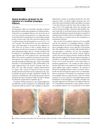
September 2004 in “Journal of The European Academy of Dermatology and Venereology” Bimatoprost can cause longer, thicker, darker eyelashes and eyebrows.