 May 2023 in “Elsevier eBooks”
 This study found that low-level laser/light therapy is effective and safe for treating mild to moderate androgenetic alopecia in individuals with certain skin types, especially when combined with other treatments, although further research is needed to refine protocols and verify long-term outcomes.
July 2025 in “Frontiers in Medicine” This study identified compound heterozygous mutations, c.1101del and c.736 T > A, in the LIPH gene responsible for causing autosomal recessive woolly hair in a child, with c.1101del being a novel frameshift mutation.
24 citations
,
July 2015 in “Molecular Medicine Reports” This study found that lysophosphatidic acid increases mesenchymal stem cell proliferation and migration through signaling pathways and reactive oxygen species, implicating potential applications in stem cell expansion.
 52 citations
,
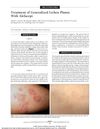
February 2006 in “Archives of Dermatology”
52 citations
,
February 2006 in “Archives of Dermatology” This case report describes a 25-year-old woman with widespread lichen planus who did not respond to multiple systemic treatments, including antihistamines, hydroxychloroquine sulfate, and corticosteroids.
 1 citations
,
October 2024 in “Cureus”
1 citations
,
October 2024 in “Cureus” This review suggests that platelet-rich plasma injections may be an effective treatment for greater trochanteric pain syndrome, but emphasizes the need for more high-quality trials to confirm these findings.
1 citations
,
January 2016 in “Dermatology Online Journal” This case report documents a rare instance of triangular temporal alopecia in an adult woman, emphasizing the importance of correct diagnosis to avoid unnecessary treatments, and reviews the literature on TTA.
1 citations
,
January 2021 in “Journal of Cutaneous and Aesthetic Surgery” This review indicates that low-level laser therapy may stimulate hair growth in both men and women with androgenetic alopecia, showing similar efficacy to minoxidil in some studies, but requires more robust evidence.
 9 citations
,
January 2015 in “Current problems in dermatology”
9 citations
,
January 2015 in “Current problems in dermatology” This review discusses partial longitudinal-follicular unit transplantation (PL-FUT) for hair loss and notes its potential to multiply hair follicles while preserving donor areas, but reports no new clinical results.
1 citations
,
September 2020 in “Journal of dermatology” This study identified a novel mutation and confirmed a previous mutation in the LIPH gene in a woman with autosomal recessive woolly hair, expanding the mutation spectrum for this condition.
2 citations
,
February 2021 in “Indian Dermatology Online Journal” This case report describes the first instance of classical lichen planopilaris with atrophic lichenoid plaques developing in a Blaschko-linear pattern due to imatinib treatment in a patient with chronic myeloid leukemia.
11 citations
,
January 2018 in “Jaypee's international journal of clinical pediatric dentistry” This report describes the clinical presentation of Papillon-Lefèvre syndrome in two brothers and reviews the related literature, without providing new clinical outcomes.
 August 2022 in “bioRxiv (Cold Spring Harbor Laboratory)”
 This study found that in mice, competition for hair follicles guides the organization of follicle-innervating LTMR neurons during early development, with different neuronal subtypes showing varying adaptive responses to increased neuron populations.
 April 2017 in “Journal of Investigative Dermatology”
 This study found that a single dose of TRP significantly reduced the number of UV-B-induced actinic keratosis lesions in a mouse model and was associated with improved skin histology and minimal side effects.
 January 2018 in “Springer eBooks”
 This abstract describes the use of lasers in hair transplantation for creating recipient sites and enhancing hair growth but reports no new findings.
 7 citations
,
June 2010 in “Journal of The American Academy of Dermatology”
7 citations
,
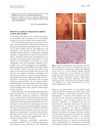
June 2010 in “Journal of The American Academy of Dermatology” This paper reports a single case of lichenoid cutaneous sarcoidosis that was unresponsive to standard treatments but showed marked improvement with the administration of oral tranilast.
January 2023 in “Indian Dermatology Online Journal” This case report identifies a 23-year-old man with congenital triangular alopecia, a non-scarring alopecia characterized by preserved follicles and vellus hair, for which unnecessary interventions should be avoided.
2 citations
,
May 2020 in “The journal of investigative dermatology/Journal of investigative dermatology” This study describes a family where a TP63 mutation was linked with prominent alopecia and mild ectodermal dysplasia features.
 3 citations
,
December 2016 in “Springer eBooks”
3 citations
,
December 2016 in “Springer eBooks” This study found that activating Toll-like receptor 3 in periodontal ligament stem cells enhanced their stem cell and immunosuppressive properties, potentially supporting effective periodontal tissue regeneration.
151 citations
,
August 2011 in “The EMBO Journal” The enzyme PA-PLA1α is important for proper hair follicle development.
3 citations
,
March 2024 in “Journal of the American Academy of Dermatology” Low-dose naltrexone helps improve symptoms and stabilize frontal fibrosing alopecia and lichen planopilaris.
 May 2017 in “Journal of The American Academy of Dermatology”
 An intact skin barrier is crucial to prevent infection in cases of tether-induced tenosynovitis.

This article reports a rare case of a postmenopausal woman with coexisting lichen planus pigmentosus and classic lichen planopilaris, alongside a review of related literature.
 December 2025 in “Medical Lasers”
 This prospective study found that 1,927-nm fractionated thulium laser treatment significantly increased hair and terminal hair counts in 11 men with pattern hair loss, although it did not change average hair thickness, suggesting it may be a promising therapy for this condition.
May 2005 in “Molecular Carcinogenesis” This study found that mrp/plf-mRNA expression in murine skin increases in response to different tumor promoters, suggesting its potential as a short-term biomarker for chemical carcinogenesis.
 41 citations
,
December 2017 in “Lasers in Medical Science”
41 citations
,
December 2017 in “Lasers in Medical Science” This study found that low-level laser therapy may significantly improve androgenic alopecia in both men and women, either alone or alongside treatments like minoxidil and finasteride.
 February 2024 in “Australasian journal of dermatology”
 This research letter discusses the use of Janus kinase inhibitors for treating lichen planopilaris, although specific results or conclusions from the study are not provided.
 April 2021 in “Journal of Investigative Dermatology”
 This study found that CD1a-restricted CD4+ T cells responsive to lysyl-phosphatidylglycerol were more frequent in the blood of atopic dermatitis patients, suggesting a potential role in the disease's Th2-mediated pathology.
990 citations
,
October 1999 in “Development” This study found that LEF1/TCF3 is necessary but not sufficient for TOPGAL activation in hair follicle development, indicating complex regulation in the skin.
 3 citations
,
August 1998 in “Dermatologic Surgery”
3 citations
,
August 1998 in “Dermatologic Surgery” Bobby Limmer was crucial in developing a hair transplant method that uses natural hair groupings for a more realistic look.
 April 2023 in “The journal of investigative dermatology/Journal of investigative dermatology”
 This study provides ex vivo proof-of-principle that low-intensity ultrasound may protect human hair follicles from paclitaxel-induced damage, potentially reducing chemotherapy-related alopecia.