 1 citations
,
September 2016 in “Dermatologic Surgery”
1 citations
,
September 2016 in “Dermatologic Surgery” New hair loss subtype found, mimics common baldness.
July 2022 in “Journal of Investigative Dermatology” This study analyzed randomized trials on low-level light therapy combined with minoxidil for androgenetic alopecia, reporting either superior or equivalent hair regrowth compared to minoxidil alone, with initial improvements tapering over time.
 September 2021 in “CRC Press eBooks”
 This review discusses the clinical and trichoscopic features of lichen planopilaris and notes its potential underdiagnosis prior to hair transplant, but it reports no new findings.
January 2024 in “ResearchWorks at the University of Washington (University of Washington)” This study found that while measuring zinc in hair did not allow calculation of individual hair growth rates, it effectively characterized zinc, lead, and mercury concentrations and improved methods for analyzing these exposures using LA-ICP-MS.
2 citations
,
January 2022 in “Indian dermatology online journal” This case report details the dermoscopic features of bilateral cutaneous larva migrans in an adult male, noting similarities with lymphangioma circumscriptum but highlights that typical dermoscopy magnification may be insufficient for diagnosis.
27 citations
,
December 2006 in “Environmental Science & Technology” This study found that laser ablation-inductively coupled plasma-mass spectrometry can effectively reconstruct time-resolved mercury exposure in micrometer segments of a single hair strand from fish-eaters.
7 citations
,
July 2013 in “InTech eBooks” This article describes the various presentations of oral lichen planus and notes it often requires topical or systemic immunosuppressive treatment for associated discomfort, but it reports no new clinical results.
14 citations
,
July 2007 in “Lupus” In this study, repeated pregnancies in a murine model of systemic lupus erythematosus altered skin inflammation and cytokine expression but worsened kidney function and survival compared to controls.
 June 2017 in “Journal of The American Academy of Dermatology”
 Most men with lichen planopilaris had it confirmed by biopsy and often had thyroid issues, sexual dysfunction, or prostate cancer, hinting at a link with hormonal problems.
August 2022 in “Journal of The European Academy of Dermatology and Venereology” June 2025 in “British Journal of Dermatology” This reported case of lichen planopilaris in siblings suggests a potential genetic predisposition, supporting the hypothesis of inherited susceptibility in this condition.
 May 2024 in “Journal of cosmetic dermatology”
 This study investigated the effects of heat-treated Limosilactobacillus fermentum LM1020 on hair growth and reported increased hair density, improved cellular activity, and beneficial scalp microbiota changes in patients with androgenetic alopecia over 24 weeks.
 5 citations
,
November 2020 in “Cells”
5 citations
,
November 2020 in “Cells” The researchers reported that using a concentrate of conditioned mesenchymal stem cells derived from the placenta accelerated wound healing and regeneration in laboratory animals with severe local radiation injuries.
 July 2025 in “New Phytologist”
 This study demonstrated that the FER/MLO signaling module regulates calcium dynamics and ROS accumulation in root hair growth, with the constitutively active MLO (faNTA) able to restore normal development and signaling in specific mutant genotypes, highlighting MLO15's role in root hair tip growth regulation.
2 citations
,
January 2012 in “PubMed” This study found that mycophenolate mofetil is effective for both induction and maintenance therapy in children with severe lupus nephritis, significantly improving proteinuria and antibody levels, without renal flares during maintenance.
 December 2023 in “The journal of investigative dermatology/Journal of investigative dermatology”
 In a mouse model study, researchers observed that the absence of MCPIP1 in myeloid cells decreased susceptibility to chemically induced skin papillomas but caused significant hair loss and skin pigmentation changes, suggesting a role for MCPIP1 in skin carcinogenesis and follicle integrity.
 1 citations
,
May 2025 in “The Journal of Rheumatology”
1 citations
,
May 2025 in “The Journal of Rheumatology” This case report highlights the challenge of distinguishing between neuropsychiatric lupus and rituximab-associated progressive multifocal leukoencephalopathy in systemic lupus erythematosus patients, emphasizing the importance of early recognition and careful management.
 January 1994 in “Nippon Ronen Igakkai Zasshi Japanese Journal of Geriatrics”
 In this study, both VEPA and ML-Y1 treatment regimens for older patients with non-Hodgkin's lymphoma showed similar response and survival rates, but neither was sufficient, indicating the need for a more effective approach.
1 citations
,
January 2015 in “Hair transplant forum international” This review discusses low level laser therapy for hair loss but reports no new research findings; it serves as an introduction to understanding existing knowledge before upcoming evaluations of recent studies.
March 2026 in “Oral Presentations” This abstract reports pooled safety data from the WILLOW study for participants with cutaneous lupus erythematosus and systemic lupus erythematosus but does not provide new findings.
 6 citations
,
November 2018 in “Photodiagnosis and Photodynamic Therapy”
6 citations
,
November 2018 in “Photodiagnosis and Photodynamic Therapy” This study found that using a wearable low-level light therapy device for photodynamic therapy significantly reduced actinic keratosis lesions and improved quality of life in patients with AK of the scalp.
 19 citations
,
April 2018 in “International Journal of Dermatology”
19 citations
,
April 2018 in “International Journal of Dermatology” This study found that female patients with frontal fibrosing alopecia are significantly more likely to have systemic lupus erythematosus compared to controls.
12 citations
,
June 2020 in “Lupus” This study found that treating a murine model of systemic lupus erythematosus with early and optimally dosed mesenchymal stem cells effectively suppressed disease severity.
65 citations
,
April 1999 in “Journal of Parasitology” This study found that all lesions in mice treated with a new topical formulation, WR 279,396, healed completely without relapse, outperforming other formulations and showing no toxicity.
 March 2024 in “Case Reports in Dermatology”
 This report details a case where diffuse lichen planopilaris and female pattern hair loss in a 32-year-old woman mimicked diffuse alopecia areata, highlighting the diagnostic value of dermoscopy-guided biopsies and the importance of timely treatment to prevent disease progression.
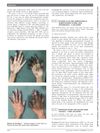
In this case report, a 19-year-old woman with systemic lupus erythematosus experienced significant improvement in neuropsychiatric symptoms, including psychosis and seizures, following treatment with high-dose corticosteroids, immunosuppressants, and antidepressants.
9 citations
,
September 2022 in “Frontiers in Physics” This study found that Mueller Matrix microscopy can accurately identify, detect, and evaluate hair follicles in mouse skin tissue, suggesting its potential for skin structure research and dermatological applications.
 January 2012 in “Human health handbooks”
 This review discusses the application of low-level light therapy for hair loss treatment, particularly androgenetic alopecia, and reports no new clinical results; the authors suggest consideration of light source characteristics and potential pros and cons.
106 citations
,
February 2014 in “eLife” This study concluded that terminal Schwann cells are essential for the maintenance and regeneration of mechanosensory lanceolate complexes at hair follicles in adult mice.
2 citations
,
August 2022 in “Frontiers in Endocrinology” This study reported that myeloid-specific Wnt production did not affect wound healing or blood vessel density in mice but influenced endovascular progenitor cell kinetics during angiogenesis.