June 2010 in “Chinese Journal of Dermatology” This study found a novel R430Q gene mutation in hHb6, which may be linked to the hereditary hair disorder monilethrix in the examined family.
100 citations
,
November 1997 in “Human Genetics” In this study, researchers found that the prevalent Glu 410 Lys mutation in hHb6 and a new Glu 403 Lys mutation in hHb1 are linked to monilethrix, suggesting a mutational hotspot in type II hair keratins.
 10 citations
,
June 2018 in “Journal of visualized experiments”
10 citations
,
June 2018 in “Journal of visualized experiments” This study demonstrated that lactate dehydrogenase activity is notably high in quiescent hair follicle stem cells within mouse skin using a specific enzymatic activity assay.
 9 citations
,
February 2018 in “The Journal of Dermatology”
9 citations
,
February 2018 in “The Journal of Dermatology” This study identified a novel splice site mutation in the LIPH gene associated with autosomal recessive woolly hair, contributing to understanding the genetic basis of this condition.
5 citations
,
June 2015 in “The Journal of Dermatology” This study identified "HTLV-1-associated lichenoid dermatitis" as a skin condition in HTLV-1-infected individuals, characterized by reactive eruptions associated with increased immunity toward infected CD4+ T cells.
 24 citations
,
May 2019 in “PLOS genetics”
24 citations
,
May 2019 in “PLOS genetics” This study reports that compound heterozygous loss-of-function mutations in the HEPHL1 gene in a child were associated with abnormal hair and cognitive issues, linking altered ferroxidase activity to hair disorders.
3 citations
,
January 2013 in “Journal of cosmetics, dermatological sciences and applications” This study found that the new HCC additive enhances the permeation of pigments and active ingredients into hair, suggesting potential use in developing functional cosmetic hair products.
 8 citations
,
July 2020 in “Medicine”
8 citations
,
July 2020 in “Medicine” In this study, low-level light therapy using a new helmet-type device significantly increased hair density and thickness in patients with androgenetic alopecia, showing no adverse events or side effects, suggesting it may be a safe and effective treatment option for both sexes.
15 citations
,
February 2014 in “PloS one” This study identified two prevalent and one newly proposed founder LIPH mutations in Japanese patients with autosomal recessive woolly hair/hypotrichosis and associated these mutations with different severities of hair loss.
January 1996 in “Studia iuridica” This study identified two novel point mutations in the hHb6 gene associated with monilethrix, suggesting these mutations could serve as diagnostic markers for this genetic hair disorder.
 January 2012 in “Human health handbooks”
 This review discusses the application of low-level light therapy for hair loss treatment, particularly androgenetic alopecia, and reports no new clinical results; the authors suggest consideration of light source characteristics and potential pros and cons.
2 citations
,
August 2024 in “Molecular Genetics & Genomic Medicine” In this case study, an 8-day-old neonate with holocarboxylase synthetase deficiency showed dramatic improvement in lactic acidosis and overall clinical condition following biotin mega-dose therapy, highlighting the importance of early genetic testing and timely treatment in such metabolic disorders.
 55 citations
,
November 2018 in “American journal of human genetics”
55 citations
,
November 2018 in “American journal of human genetics” This study identified five mutations in the gene LSS in individuals with unexplained hypotrichosis simplex, highlighting a potential role of mislocalized LSS proteins in disrupting hair follicle biology.
 4 citations
,
May 2015 in “Hair transplant forum international”
4 citations
,
May 2015 in “Hair transplant forum international” The review concluded that better studies are needed to prove if Low-Level Laser Therapy devices for hair growth really work.
79 citations
,
March 2005 in “Journal of Medical Genetics” This study identified a novel heterozygous missense mutation in the hHb3 gene associated with monilethrix, highlighting its role in this hair disorder.
34 citations
,
November 1998 in “Journal of Investigative Dermatology” A common mutation in the hHb6 gene is linked to monilethrix, but other factors may also play a role.
September 2025 in “Indian Journal of Dermatology” In this case report, researchers detailed a 22-year-old Turkish woman diagnosed with autosomal recessive woolly hair/hypotrichosis (ARWH/H), linked to a mutation in the LIPH gene, resulting in sparse, poorly growing, curly hair, highlighting the need for genetic consideration in similar hair conditions.
 April 2025 in “Journal of Investigative Dermatology”
 This study found that elevated luteinizing hormone levels were significantly associated with female pattern hair loss, and implicated LH/LHR signaling in the aging and damage of hair follicles.
1 citations
,
January 2015 in “Hair transplant forum international” This review discusses low level laser therapy for hair loss but reports no new research findings; it serves as an introduction to understanding existing knowledge before upcoming evaluations of recent studies.
 November 2025 in “Clinical Cosmetic and Investigational Dermatology”
 LIPH mutations cause woolly hair in some Chinese people.
 17 citations
,
October 2006 in “Molecular and Cellular Endocrinology”
17 citations
,
October 2006 in “Molecular and Cellular Endocrinology” This study found that the L457(3.43)R mutation in the human luteinizing hormone receptor increases phosphodiesterase activity, reducing hormonal response despite elevated basal cAMP levels.
 1 citations
,
February 2009 in “Clinical and Experimental Dermatology”
1 citations
,
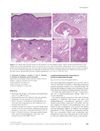
February 2009 in “Clinical and Experimental Dermatology” This study reports an improvement in lymphomatoid papulosis type A in a 52-year-old patient who concurrently used hormone-replacement therapy.
50 citations
,
February 2004 in “Genomics” This study identified a missense mutation in the rat Desmoglein 4 gene, causing abnormal hair shaft development in lanceolate hair mutant rats by disrupting a critical calcium binding site.

This study found that the long non-coding RNA lnc056 promotes the proliferation of hair follicle stem cells by upregulating TRIP6 expression through interaction with the transcription factor HNRNPUL1, suggesting a potential target for hair loss treatment.
January 2010 in “Chinese Journal of Dermatovenereology of Integrated Traditional and Western Medicine” This study found a novel nonsynonymous genetic variant in the hHb1 gene of a family with monilethrix, which differs from ten previously reported pathogenic mutations.
 January 2017 in “Clinical approaches and procedures in cosmetic dermatology”
 This review explores clinical studies on low-level laser therapy (LLLT) for alopecia and suggests it may benefit patients unresponsive to conventional treatments, but larger studies are needed to confirm efficacy.
 May 2025 in “Frontiers in Genetics”
 This study reported discovering a novel missense variant in a case of autosomal recessive woolly hair in a 31-year-old Chinese woman, which significantly reduced secretion of the encoded protein, likely leading to disease by impairing its hydrolytic function.
 5 citations
,
November 2014 in “Hair transplant forum international”
5 citations
,
November 2014 in “Hair transplant forum international” This article introduces a series on low level laser light therapy, focusing on its science, regulatory aspects, and controlled trial methodologies, but reports no new clinical results.
 33 citations
,
March 2017 in “Dermatologic Surgery”
33 citations
,
March 2017 in “Dermatologic Surgery” In this clinical study, low-level laser therapy using the HANDI-DOME LASER device increased hair counts by 51% compared to controls, indicating its potential as a safe and effective treatment for androgenetic alopecia in women aged 18 to 60.