 19 citations
,
May 2016 in “Aging Cell”
19 citations
,
May 2016 in “Aging Cell” This study found that reduced cell cohesiveness in eccrine sweat gland outgrowths contributed to delayed wound healing in elderly skin compared to younger skin.
 June 2011 in “Oncology times”
 This article outlines the author's personal strategies for managing dermatological toxicities, such as acneiform rash and dry skin, associated with EGFR inhibitor therapy; it does not present new research findings.
 1 citations
,
August 2022 in “Piel”
1 citations
,
August 2022 in “Piel” This study found a statistically significant association between dermatological manifestations with vasculonecrotic damage and increased probability of severe COVID-19 disease among patients in Guatemala.
 December 2017 in “Springer eBooks”
 Transplant patients often get skin problems, with treatments varying by condition.
 275 citations
,
March 1999 in “Journal of The American Academy of Dermatology”
275 citations
,
March 1999 in “Journal of The American Academy of Dermatology” This review elaborates on the skin side effects of chemotherapy and emphasizes identifying and managing both common and life-threatening skin reactions, without presenting new clinical findings.
 14 citations
,
November 1987 in “Journal of The American Academy of Dermatology”
14 citations
,
November 1987 in “Journal of The American Academy of Dermatology” A woman developed a severe skin reaction called toxic epidermal necrolysis after taking the antibiotic cephalexin.
24 citations
,
January 2009 in “International Journal of Trichology” This review discusses the mechanisms by which sunlight exposure aggravates hair aging and highlights the role of hair pigments in providing photochemical protection, reporting no new results.
 4 citations
,
January 2023 in “Experimental dermatology”
4 citations
,
January 2023 in “Experimental dermatology” This study suggests that both age and photoexposure may decrease maximum viable epidermis thickness and impact the dermal-epidermal junction in women with Fitzpatrick skin types II-III.
 16 citations
,
July 2002 in “Australasian Journal of Dermatology”
16 citations
,
July 2002 in “Australasian Journal of Dermatology” This case report illustrates the risk of skin necrosis in patients with high antiphospholipid antibody levels after stopping anticoagulation therapy, highlighting the necessity for careful monitoring.
December 2021 in “Meditsinskiy sovet = Medical Council” This case study describes the experience of using dermatocosmetic products to manage radiation dermatitis in a patient, but it reports no new clinical results.
82 citations
,
November 1985 in “Archives of Dermatology” This case report describes a black male newborn who developed bullae that healed with hypopigmentation, linked to collagenolysis and RER vacuoles potentially containing proteolytic enzymes.
1 citations
,
July 2021 in “Dermatologic Therapy” 1 citations
,
November 2019 in “Dermatologic Therapy” January 2021 in “Dermatologic Therapy” November 2020 in “Dermatologic Therapy” May 2020 in “Dermatologic Therapy” March 2020 in “Dermatologic Therapy” January 2020 in “Dermatologic Therapy”  14 citations
,
February 2023 in “Frontiers in immunology”
14 citations
,
February 2023 in “Frontiers in immunology” This review discusses the range of cutaneous immune-related adverse events induced by immune checkpoint inhibitors and the proposed mechanisms underlying these skin reactions, but reports no new clinical results.
 April 2017 in “Journal of Investigative Dermatology”
 This study identified that dominant mutations in the KLHL24 gene cause epidermolysis bullosa through dysregulated autoubiquitination, leading to excessive degradation of keratin 14.
 41 citations
,
October 2000 in “Dermatologic clinics”
41 citations
,
October 2000 in “Dermatologic clinics” This paper reviews hair structure and damage from grooming and cosmetic exposure but reports no new clinical findings; it suggests collaboration between dermatologists and cosmetic chemists to improve hair care products.
July 2026 in “Journal of Medical Imaging and Radiation Oncology” This study reviewed evidence on cutaneous reactions and associated radiation doses from cranial or spinal neurointerventional procedures, finding that alopecia/epilation was most common and onset doses often aligned with known thresholds, highlighting the need for standardized dose reporting and follow-up.
 November 2022 in “PubMed”
 This study found that inadequate thickness of deep dermal tissue in pigs is a key factor leading to fibrosis, with fibrosis likely serving a compensatory function for skin thickness.
November 2025 in “Contact Dermatitis” This study reported a case of acute kidney injury and toxic contact dermatitis in a 25-year-old woman following exposure to a glyoxylic acid-containing hair straightening product, highlighting glyoxylic acid's potential role in cutaneous and renal complications and underscoring the need for stronger regulation and awareness.
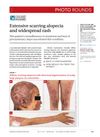 March 2022 in “The Journal of Family Practice”
 Following treatment plans is crucial to prevent worsening skin and hair conditions.
1 citations
,
June 2006 in “Journal of Cosmetic Dermatology” This study found that photoepilation in mice may disrupt normal dermal wound healing and increase the risk of hypertrophic scars or keloids.
 7 citations
,
July 2019 in “The Journal of Dermatology”
7 citations
,
July 2019 in “The Journal of Dermatology” This case report describes an 18-year-old male with kerion celsi from Trichophyton tonsurans infection whose condition improved with terbinafine treatment, and highlights that although IL-17A expression increased in skin lesions, it was associated with disrupted antimicrobial peptide expression and severe inflammation, causing tissue damage.
 2 citations
,
March 2025 in “Archives of Dermatological Research”
2 citations
,
March 2025 in “Archives of Dermatological Research” HEV light can harm or help skin and scalp, so safe exposure guidelines are needed.
19 citations
,
September 2008 in “Journal of Cellular Physiology” This article explores potential mechanisms of acneiform skin eruptions linked to EGFR inhibition in cancer patients, focusing on EGFR's role in controlling IL-1-dependent inflammation at hair follicles, but reports no clinical results.
 37 citations
,
June 2021 in “Journal of the European Academy of Dermatology and Venereology”
37 citations
,
June 2021 in “Journal of the European Academy of Dermatology and Venereology” This review discusses how acute exposures to environmental and internal stressors can quickly alter skin functions, leading to various dermatological symptoms, and calls for more research on these short-term effects.