7 citations
,
June 2015 in “EMBO Reports” This article discusses how DNA-based phenotyping is used by police to create visual profiles of suspects from crime scene samples, but reports no new research findings.
5 citations
,
April 2024 in “JAAD International” AI can accurately measure hair loss severity in alopecia areata.
 5 citations
,
April 2024 in “bioRxiv (Cold Spring Harbor Laboratory)”
5 citations
,
April 2024 in “bioRxiv (Cold Spring Harbor Laboratory)” This study found that by using an automated system to analyze skin histology, 108 structural features were significantly affected by age, and it identified four new aging biomarkers and notable sex-based differences in skin aging.
 5 citations
,
February 2015 in “JEADV. Journal of the European Academy of Dermatology and Venereology/Journal of the European Academy of Dermatology and Venereology”
5 citations
,
February 2015 in “JEADV. Journal of the European Academy of Dermatology and Venereology/Journal of the European Academy of Dermatology and Venereology” This article is a letter discussing optical coherence tomography-assisted diagnosis of follicular keratosis of the chin and reports no new research findings.
 3 citations
,
April 2019 in “Journal of psychosexual health”
3 citations
,
April 2019 in “Journal of psychosexual health” This review discusses the psychiatric and sexual comorbidities of PCOS, emphasizing the need for a multidisciplinary approach to manage sexual dysfunction due to high prevalence rates found in recent studies.
 3 citations
,
September 2013 in “Journal of the European Academy of Dermatology and Venereology”
3 citations
,
September 2013 in “Journal of the European Academy of Dermatology and Venereology” This study suggests that using ex vivo dermatoscopy can improve the accuracy of scalp biopsy processing by correctly guiding tissue bisection and potentially reducing laboratory costs and turnaround time.
 2 citations
,
August 2023 in “Development”
2 citations
,
August 2023 in “Development” In this study, researchers explored how hair follicle orientation is affected in the rosette fancy mouse and found that a mutation in the PCP gene Fzd6 caused reversed hair orientations in the posterior region, leading to the formation of unique whorls.
 2 citations
,
July 2021 in “Journal of The European Academy of Dermatology and Venereology”
2 citations
,
July 2021 in “Journal of The European Academy of Dermatology and Venereology” This review examines skin conditions found in notable world leaders post-World War II and discusses their potential impacts on political life, reporting no new clinical findings.
 2 citations
,
March 2019 in “PubMed”
2 citations
,
March 2019 in “PubMed” This article discusses various forms of alopecia and introduces Biofibre® as a current technique for addressing hair loss, without reporting new clinical results.
2 citations
,
February 2018 This study found that Raman spectroscopy has potential for detecting biophysical differences in basal cell carcinoma compared to normal skin structures, supporting its future use in Mohs surgery.
 1 citations
,
September 2025 in “Journal of Ultrasound in Medicine”
1 citations
,
September 2025 in “Journal of Ultrasound in Medicine” This study found that AI using YOLOv11 architecture can reliably differentiate between hyaluronic acid and silicone oil cosmetic fillers on ultrasound, achieving high accuracy, whereas identifying calcium hydroxyapatite and polymethylmethacrylate remains less consistent, requiring further improvements.
1 citations
,
June 2023 in “Journal of Visualized Experiments” This study describes a new intravital microscopy method for observing intestinal regeneration by tracking crypt dynamics in living mice after laser-induced tissue damage, revealing events like crypt fission, fusion, and disappearance over multiple weeks.
1 citations
,
April 2022 in “Journal of Cosmetic Dermatology” This review highlights that androgenetic alopecia significantly impacts psychological well-being and quality of life, emphasizing the need for integrated psychological support alongside dermatological treatment.
 1 citations
,
April 2018 in “Lasers in Surgery and Medicine”
1 citations
,
April 2018 in “Lasers in Surgery and Medicine” This review summarizes late-breaking abstracts from the American Society for Laser Medicine and Surgery, 2018, and reports no new clinical findings.
 1 citations
,
March 2015 in “Journal of Visualized Experiments”
1 citations
,
March 2015 in “Journal of Visualized Experiments” This study developed a method to quantify hair loss in mice, aiding the evaluation of new treatments for alopecia.
 1 citations
,
October 1984 in “Clinics in dermatology”
1 citations
,
October 1984 in “Clinics in dermatology” This article discusses the psychological impact of skin imperfections and suggests establishing a Cosmetic Dermatology Service within public health systems to address these issues ethically.

This scoping review seeks to map existing research on appearance care and self-management for adolescent and young adult cancer survivors in Japan, aiming to highlight knowledge gaps and guide future studies and interventions to enhance supportive care for this population.
 June 2026 in “International Journal of Ayurvedic Medicine”
 In this study, researchers investigated the alignment of trichoscopic findings with ayurvedic signs (lakshanas) for diagnosing hair loss, suggesting that integrating these perspectives could enhance diagnostics and management of hair and scalp conditions.
June 2026 in “Journal of Orthopaedic Science and Research” In this case study, a 65-year-old man with a complete ACL rupture showed MRI-documented re-continuity and restoration of function after delayed conservative treatment with platelet-rich plasma, highlighting the potential for recovery in older patients and supporting further research into patient selection and treatment protocols.
June 2026 in “Minia Journal of Medical Research” This study found that applying 5% topical minoxidil gel on treatment-resistant vitiligo patches may promote early repigmentation, showing significant improvement at one month compared to a placebo, though later differences were not statistically significant.
May 2026 in “International Journal of Molecular Medicine” This corrigendum addresses an update or correction to a previous publication in the International Journal of Molecular Medicine. Specific results or findings are not reported in the abstract.
 March 2026 in “International Journal of Health Science”
 This review discusses the emotional impact of androgenetic alopecia and emphasizes the importance of integrating emotional support into dermatological nursing care to improve patient outcomes.

This review discusses how permanent micropigmentation can restore eyebrow appearance and potentially improve psychosocial well-being in cancer survivors experiencing alopecia after chemotherapy, but it reports no new clinical results.

This abstract does not report results, instead, it explores the often personal and emotional experience of noticing hair loss, noting the lack of clear medical symptoms and the potential social impact, which can lead to confusion about seeking appropriate medical care.
January 2026 in “British Journal of Health Psychology” This review highlights the significant impact of alopecia on personal identity and social interactions, emphasizing the need for personalized, non-pharmacological interventions and improved collaboration in healthcare training to better support those with appearance-altering conditions.
 August 2025 in “Advanced Science”
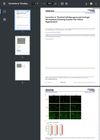
 In this study, corrected data confirmed that AHFS seed microspheres exhibit good biocompatibility with fibroblasts, validating the initial results.
April 2025 in “Journal of Cosmetic Dermatology” This study evaluated a new AI-linked imaging device for grading dandruff severity, finding high correlation with expert assessments and suggesting its potential application in other skincare areas due to its versatility and ease of use.
February 2025 in “Skin Research and Technology” This study highlights the potential of novel non-invasive testing techniques to enhance the diagnosis, treatment, and care of scalp hair diseases, urging future research to improve their accuracy and efficiency.
This study found that a deep learning framework using the ResNet50 model achieved 95% overall accuracy in classifying 10 categories of hair diseases, demonstrating reliable performance but also identifying potential improvements due to misclassifications between similar conditions.
 January 2025 in “Diagnostics”
 This study found that a new three-dimensional high-frequency ultrasound (3D-HFUS) can successfully visualize skin tumors and inflammatory hair diseases, offering promising noninvasive diagnostic and evaluation capabilities compared to traditional two-dimensional methods.