 15 citations
,
October 2016 in “Steroids”
15 citations
,
October 2016 in “Steroids” This study developed and validated a label-free assay using LC-MS to screen for S5αR inhibitors, identifying Thai herbal extracts, Impatiens balsamina L. and Curcuma longa L., as promising sources.
3 citations
,
July 2025 in “Clinical and Experimental Dermatology” This study reported that patients with alopecia areata treated with ritlecitinib in a real-life setting had a higher rate of positive response on the Severity of Alopecia Tool score compared to those in the ALLEGRO trial.
 May 2023 in “Siriraj Medical Journal”
 This study demonstrated that the Thai version of the FDLQI is a valid and reliable tool for assessing the quality of life of family members of patients with dermatological diseases.
 November 2025 in “Mendeley Data”
 This study observed that JAK inhibitors were safe and effective for patients with moderate-to-severe alopecia areata and comorbid latent hepatitis B or stable tuberculosis, with careful monitoring and selective prophylaxis.
 84 citations
,
August 2023 in “Drugs”
84 citations
,
August 2023 in “Drugs” This article describes the development milestones and recent approvals of ritlecitinib for treating severe alopecia areata, with approvals in the USA and Japan and ongoing regulatory reviews in other regions.
 October 2024 in “American Journal of Case Reports”
 This case report describes a 54-year-old Saudi woman with systemic lupus erythematosus and severe alopecia, where conventional treatments were ineffective. When belimumab was ineffective, baricitinib led to significant improvement in her condition, suggesting further research is needed to evaluate baricitinib's role in managing SLE.
 155 citations
,
June 2009 in “International Journal of Dermatology”
155 citations
,
June 2009 in “International Journal of Dermatology” This extensive review discusses the clinical manifestations, potential associations, and treatment approaches for lichen planus, but reports no new clinical results, highlighting gaps in evidence for therapeutic strategies.
1 citations
,
January 2015 in “The Journal of Dermatology” This letter to the editor presents a case of non-Herlitz junctional epidermolysis bullosa associated with a COL17A1 mutation and reports no new clinical findings.
 December 2023 in “Journal of Ayub Medical College Abbottabad”
 In this study, Ritlecitinib was reported as a newly approved treatment for alopecia areata that can be used in patients aged 12 and older; after 24 weeks, it resulted in 80% or more scalp hair coverage in treated patients compared to a placebo.
May 2019 in “Clinica chimica acta” This study reported that mice with more diverse gut microbiota showed higher hair levels of certain hormones and 1-AG compared to those with less diverse microbiota, though plasma differences were more complex and varied by stress and sex.
 June 2026 in “bioRxiv (Cold Spring Harbor Laboratory)”
 This study found that inhibiting the interaction between HOTAIR and EZH2 can block pro-fibrotic gene expression in fibroblasts and interfere with tissue remodeling in systemic sclerosis patient skin.
This abstract provides information on various oral contraceptives, their potential hazardous interactions, and possible side effects, without presenting new research findings.
September 2009 in “MedEdPORTAL” This resource outlines a structured oral examination approach for internal medicine students using a case study of systemic lupus erythematosus, highlighting its convenience and effectiveness based on student feedback.
 November 2025 in “DOAJ (DOAJ: Directory of Open Access Journals)”
 This study observed that the choice between using Belimumab and Anifrolumab for treating active Systemic Lupus Erythematosus was mainly based on clinical phenotype, with Anifrolumab linked to chronic-active disease and Belimumab associated with relapsing-remitting disease.
 September 2023 in “Journal of The American Academy of Dermatology”
 In this study, baricitinib was evaluated for its effectiveness in promoting concurrent regrowth of scalp hair, eyebrows, and eyelashes in patients with severe alopecia areata, showing clinically meaningful responses compared to placebo.
November 2022 in “Journal of Investigative Dermatology” March 2026 in “IntechOpen eBooks” This chapter explores the promising use of low-power laser irradiation for post-hysterectomy reconstructive care, emphasizing enhancements like a flexible fiber optic module, to potentially improve genitourinary rehabilitation in cervical cancer patients.
 1 citations
,
October 2023 in “Skin research and technology”
1 citations
,
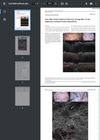
October 2023 in “Skin research and technology” This study found that line-field confocal optical coherence tomography effectively visualized key diagnostic features of classic lichen planopilaris in real time, suggesting its potential as a valuable diagnostic tool.
14 citations
,
January 2025 in “Journal of Dermatological Treatment” In this multicenter retrospective study, 61.5% of Italian patients with severe alopecia areata achieved significant hair improvement after 52 weeks of treatment with baricitinib, with no major safety issues reported, indicating long-term effectiveness in a real-world setting.
 1 citations
,
March 1997 in “Journal of Chromatography B: Biomedical Sciences and Applications”
1 citations
,
March 1997 in “Journal of Chromatography B: Biomedical Sciences and Applications” This study discovered that the disposition of LY191704 enantiomers in rats and dogs is both stereoselective and species specific.
 September 2024 in “Drugs & Therapy Perspectives”
 In this study, ritlecitinib, an oral medication approved for adolescents and adults, significantly reduced scalp hair loss and promoted eyebrow and eyelash regrowth in severe alopecia areata patients, with benefits sustained over 48 weeks and generally well-tolerated minor side effects.
 December 2021 in “International research journal of pharmacy”
 This study evaluated the physicochemical properties of Neelibhringadi keratailam and found significant variations in market samples compared to a prepared sample, indicating potential quality control issues.
 38 citations
,
January 2002 in “Biological & Pharmaceutical Bulletin”
38 citations
,
January 2002 in “Biological & Pharmaceutical Bulletin” This study reported that the aqueous ethanol extract of Lygodii Spora demonstrated in vitro testosterone 5alpha-reductase inhibition and in vivo anti-androgenic activity, potentially due to oleic, linoleic, and palmitic acids.
 February 2025 in “PubMed”
 This case report observed successful hair regrowth with ritlecitinib in a patient with severe alopecia who did not respond to a previous year of baricitinib therapy.

The document is retracted and cannot be summarized.
November 2025 in “Informatica” This study introduces a novel image enhancement method that significantly improves the visual quality of low-light sports images by utilizing improved bilateral filtering and the CLAHE algorithm, achieving a 65.24% improvement in color and edge detail preservation compared to state-of-the-art methods on the LOL dataset.
May 2026 in “Bioorganic Chemistry” 23 citations
,
October 2024 in “British Journal of Dermatology” In this study, ritlecitinib showed sustained effectiveness and a favorable safety profile in treating alopecia areata in patients aged 12 and older over 24 months, with improvements observed in hair and eyebrow regrowth and patient satisfaction.
 November 2008 in “Journal of Generic Medicines”
 The document updates on EU legal changes, including pharmaceutical patents, class actions in Italy, and various drug-related rulings.
 10 citations
,
January 2010 in “Journal of cosmetic and laser therapy”
10 citations
,
January 2010 in “Journal of cosmetic and laser therapy” This article describes a non-blinded study investigating low level laser therapy for seven patients but reports no new clinical findings.