 January 2025 in “International Journal of Homoeopathic Sciences”
 This article discusses individualized homeopathy for treating alopecia areata and reports promising results, suggesting potential effectiveness; however, it highlights the unpredictability of hair follicle remission with conventional treatments.
 24 citations
,
July 2017 in “Structure”
24 citations
,
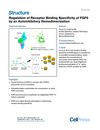
July 2017 in “Structure” In this study, researchers found that ligand homodimerization controls the receptor binding specificity of the FGF9 subfamily, preventing off-target activation of FGFR "b" isoforms.
79 citations
,
March 2005 in “Journal of Medical Genetics” This study identified a novel heterozygous missense mutation in the hHb3 gene associated with monilethrix, highlighting its role in this hair disorder.
January 2010 in “Chinese Journal of Dermatovenereology of Integrated Traditional and Western Medicine” This study found a novel nonsynonymous genetic variant in the hHb1 gene of a family with monilethrix, which differs from ten previously reported pathogenic mutations.
 13 citations
,
July 2017 in “Biopolymers”
13 citations
,
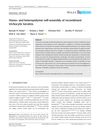
July 2017 in “Biopolymers” This study presents recombinant human hair keratins K31 and K81, observing novel nanostructures from their self-assembly and emphasizing disulfide crosslinking's role in this process.
 March 2024 in “Homœopathic Links”
 This study evaluated two cases of individualised homoeopathic treatment for alopecia areata and found that Phosphorus treatment resulted in complete hair regrowth and symptom resolution over 18 months.
22 citations
,
January 1990  January 2025 in “International Journal of Homoeopathic Sciences”
 This report documented a case where a 6-year-old with alopecia areata experienced complete resolution of bald patches after three months of individualized homeopathic treatment, with no recurrence during follow-up.
June 2010 in “Chinese Journal of Dermatology” This study found a novel R430Q gene mutation in hHb6, which may be linked to the hereditary hair disorder monilethrix in the examined family.
20 citations
,
October 1995 in “Biochimica et Biophysica Acta (BBA) - Gene Structure and Expression” hHb1, hHb3, and hHb6 mRNAs start expressing at the same time in hair follicles.
November 2025 in “Journal of the European Academy of Dermatology and Venereology” In this study, single-cell RNA sequencing of hair follicle populations from hidradenitis suppurativa patients identified three endotypes, suggesting distinct epithelial-immune interactions that may guide stratified therapeutic approaches.
 April 2026 in “International Journal of Homoeopathic Sciences”
 This case report highlights the role of mental symptoms in tailoring homoeopathic treatment for a 24-year-old male with alopecia barbae, a localized non-scarring hair loss condition affecting the beard, emphasizing the psychological component in its management.
 April 2026 in “International Journal of Homoeopathic Sciences”
 In this case report, individualized homeopathic treatment based on symptom totality led to anxiety reduction, halted lesion progression, and complete cosmetic recovery in a 30-year-old male with alopecia areata barbae, highlighting a potential area for further controlled studies.
 April 2017 in “Journal of Investigative Dermatology”
 This case study reports that a heterozygous missense GJA1 mutation, p.Gly138Ser, in a 2-year-old boy with oculodentodigital syndrome primarily resulted in syndactyly, fifth finger hypoplasia, and hypotrichosis, without neurological or craniofacial abnormalities.
6 citations
,
December 2021 in “International Journal of High Dilution Research - ISSN 1982-6206” This review covers clinical studies on using homoeopathy to treat PCOS and concludes that further rigorous research is necessary to substantiate its effectiveness.
 9 citations
,
February 2018 in “The Journal of Dermatology”
9 citations
,
February 2018 in “The Journal of Dermatology” This study identified a novel splice site mutation in the LIPH gene associated with autosomal recessive woolly hair, contributing to understanding the genetic basis of this condition.
 September 2017 in “Journal of Investigative Dermatology”
 This study found that after four weeks of daily use, the roughness of the hair surface significantly decreased, as shown through quantitative image analysis using HIROX.
8 citations
,
January 1991 in “Soviet physics. Doklady” This article suggests that testosterone therapy might be considered if other treatments fail, but emphasizes discussing potential risks and benefits with patients before prescribing.
9 citations
,
June 2017 in “American journal of ophthalmology. Case reports” This case report identifies a novel CDH3 gene mutation associated with hypotrichosis with juvenile macular dystrophy in a 13-year-old Turkish girl, highlighting implications for future genetic analysis and counseling.
January 2008 in “HAL (Le Centre pour la Communication Scientifique Directe)” This study identified complex regulatory elements and interactions involving the Hr gene and HR protein that are crucial for hair follicle formation and cycling in mammals.
 3 citations
,
February 2011 in “Journal of Biomedical Research/Journal of biomedical research”
3 citations
,
February 2011 in “Journal of Biomedical Research/Journal of biomedical research” This study identified a novel mutation, R430Q in the KRT86 gene, in a Han family with monilethrix, which may contribute to the disease's pathogenic mechanism.
 August 2026 in “International Journal of Homoeopathic Sciences”
 In this case report, researchers described using individualized homeopathic treatment with Phosphorus 1M over 18 months for a 7-year-old girl with alopecia areata, resulting in nearly 90% hair regrowth and improvements in associated symptoms like constipation and allergic rhinitis.
143 citations
,
January 2012 in “Cell and Tissue Research” January 2026 in “International Journal of Homoeopathic Sciences” This study observed substantial improvements in scalp-hair coverage, symptom burden, and psychosocial functioning in 100 patients with alopecia areata treated with individualized homeopathic medicines, noting statistically significant reductions in SALT scores and improvements in AA-IGA categories over 18 months.
February 1985 in “PubMed”  July 2025 in “International Journal of Homoeopathic Sciences”
 In this case study, an 8-year-old girl with complete hair loss on her head was successfully treated with individualized homoeopathic medicine, Natrum Muriaticum, over four months, suggesting a positive role for homoeopathy in treating alopecia areata.
 January 2026 in “Journal of Case Reports and Scientific Images”
 This paper highlights the potential efficacy of constitutional homeopathic medicine, supplemented with dietary guidance and management of associated diseases like thyroid disorders, in treating alopecia areata to expedite recovery and reduce recurrence.
July 2022 in “Journal of Investigative Dermatology”  April 2022 in “Our Dermatology Online”
 This case report details a 40-year-old woman with idiopathic hirsutism, as she exhibited terminal hair on the left side of her chin without signs of hyperandrogenism.
26 citations
,
October 1998 in “Experimental Dermatology” This study describes a co-dominant E410D mutation in keratin hHb6 associated with severe hair loss and extensive papules in homozygous individuals, with variable expression in heterozygous family members.