 March 2026 in “International Journal of Homoeopathic Sciences”
 This case report describes the improvement of papulo-pustular acne in a 27-year-old woman through individualized homoeopathic treatment with Kalium bromatum, placebo, and lifestyle advice, highlighting its potential usefulness in acne management.
 February 2026 in “International Journal of Homoeopathic Sciences”
 In this case report, a 20-year-old woman with chronic spontaneous urticaria experienced clinical improvement after receiving personalized homeopathic treatment with Natrum muriaticum 1M, underscoring the potential role of individualized homeopathy in managing this condition.
32 citations
,
January 2000 in “Human Heredity” This study found that the mutation Glu402Lys in keratin hHb6 may be associated with monilethrix, and homozygous patients in a consanguineous family exhibited more severe symptoms.
21 citations
,
January 1995 in “Molecular Biology Reports” This study identified a novel human type I hair keratin, hHa3-II, as an isoform of a previously described hHa3 keratin, with distinct sequence differences indicating separate gene encoding.
 47 citations
,
January 2019 in “Nature communications”
47 citations
,
January 2019 in “Nature communications” This study found that polyamines enhance genome integrity by facilitating homologous recombination-mediated DNA repair, suggesting a novel role for polyamines beyond promoting cell growth and proliferation.
 June 2026 in “bioRxiv (Cold Spring Harbor Laboratory)”
 This study found that inhibiting the interaction between HOTAIR and EZH2 can block pro-fibrotic gene expression in fibroblasts and interfere with tissue remodeling in systemic sclerosis patient skin.
 7 citations
,
January 2015 in “Case reports in genetics”
7 citations
,
January 2015 in “Case reports in genetics” This case report illustrates how SNP array testing helped identify a DCAF17 mutation linked to Woodhouse-Sakati syndrome in consanguineous Qatari siblings with shared features including alopecia and hypogonadotropic hypogonadism.
 January 2026 in “International Journal of Applied Research”
 This review examines the potential role of homoeopathy in managing autoimmune diseases, focusing on evidence from recent case reports and studies. It discusses clinical outcomes in various conditions and explores possible immunomodulatory mechanisms associated with homoeopathic interventions.
1 citations
,
April 2019 in “The journal of investigative dermatology/Journal of investigative dermatology” This study observed significant differences in the skin microbiome between hidradenitis suppurativa patients and healthy individuals, notably with decreased β-diversity and a distinct abundance of certain bacteria in affected skin.
26 citations
,
December 2003 in “Experimental Dermatology” In this study, researchers identified two de novo germline missense mutations in the hair keratins hHb1 and hHb6 in patients with monilethrix whose parents were not clinically affected.
 7 citations
,
December 2014 in “Australasian journal of dermatology”
7 citations
,
December 2014 in “Australasian journal of dermatology” In this study, insulin resistance was observed at similar rates in non-obese women with idiopathic hirsutism, those with PCOS, and healthy controls.
 1 citations
,
October 2022 in “Dermatology practical & conceptual”
1 citations
,
October 2022 in “Dermatology practical & conceptual” Isolated patchy heterochromia with pili annulati can occur without other health issues.
 58 citations
,
August 2015 in “The Indonesian Biomedical Journal”
58 citations
,
August 2015 in “The Indonesian Biomedical Journal” This article reviews recent advancements in understanding the diverse populations of skin stem cells and their role in skin homeostasis, but it reports no new experimental findings.
74 citations
,
March 2013 in “Development” This study found that Hopx labels a long-lived progenitor population in hair follicles, which contributes to hair follicle stem cell homeostasis and has an alternative origin from previously thought progenitors.
 May 2026 in “Zenodo (CERN European Organization for Nuclear Research)”
 This case report describes how an 11-year-old boy with alopecia areata was successfully treated using homeopathic medicine, specifically Sepia Officinalis, following holistic homeopathic principles, which alleviated bald spots and associated symptoms.
21 citations
,
March 2003 in “Clinical and Experimental Dermatology” This study found two recurrent missense mutations in the hHb6 gene associated with monilethrix in families from Russia and Colombia, supporting their role in this hair disorder worldwide.
May 2025 in “Dermatology Reports” In this case study from King Fahad University Hospital, an 11-month-old Saudi boy with a history of short, non-growing hair was diagnosed with autosomal recessive woolly hair/hypotrichosis, attributed to a homozygous mutation in the LIPH gene.
 January 2026 in “International Journal of Homoeopathic Sciences”
 In this case study, a 26-year-old woman with hypothyroidism experienced significant improvements in energy, emotional balance, and physical discomfort after individualized homeopathic treatment with Kalium carbonium, demonstrating the potential benefits of a holistic approach to care.
 April 2025 in “International Journal of Homoeopathic Sciences”
 In this study, a 17-year-old male with a recurring pilonidal sinus improved within two months after receiving homeopathic treatment with Silicea and Echinacea mother tincture, suggesting a potential role for homeopathy in managing such surgical cases.
 12 citations
,
November 1987 in “Pediatric dermatology”
12 citations
,
November 1987 in “Pediatric dermatology” This report identified longitudinal grooves in the hair shafts of four children, diagnosing them with uncombable-hair syndrome.
March 2014 in “Journal of the American Academy of Dermatology”  1 citations
,
June 2022 in “Chinese medical journal/Chinese Medical Journal”
1 citations
,
June 2022 in “Chinese medical journal/Chinese Medical Journal” This study identified two novel mutations in the CDH3 gene causing HJMD in a Chinese patient, expanding the genetic and phenotypic understanding of the disorder.
July 2026 in “International Journal of Homoeopathic Sciences” In this case report, researchers documented significant improvement in alopecia areata symptoms using a single dose of the homeopathic remedy Fluoric acid 30C, noting changes in clinical outcomes and dermatology life quality scores over four months, with a causal relationship score of +9/13.
 February 2023 in “Journal of dermatology”
 This letter reports the first known Japanese case of autosomal recessive woolly hair/hypotrichosis with compound heterozygous mutations in the LIPH gene.
3 citations
,
January 2011 in “生物医学研究杂志:英文版” In this study, a novel heterozygous transition mutation in the KRT86 gene was identified, which may be pathogenic for monilethrix in a Chinese family.
 May 2026 in “Zenodo (CERN European Organization for Nuclear Research)”
 This case report describes successful treatment of an 11-year-old boy with alopecia areata using homeopathic medicine, specifically Sepia Officinalis, following holistic homeopathic principles, resulting in improvement of scalp bald spots and symptoms.
 September 2022 in “Indian journal of research in homeopathy/Indian journal of research in homoeopathy”
 This case series from Nehru Homoeopathic Medical College and Hospital reported that all seven PCOS patients experienced symptomatic improvement and cyst resolution after treatment with constitutional homoeopathic medicines.
 June 2026 in “Indian Journal of Research in Homoeopathy”
 This case series evaluated the effects of individualised homoeopathic treatment on five patients with alopecia areata, finding clinical improvement and new hair growth in those treated with specific remedies like Phosphorus and Tuberculinum.
 January 2025 in “International Journal of Homoeopathic Sciences”
 This article discusses individualized homeopathy for treating alopecia areata and reports promising results, suggesting potential effectiveness; however, it highlights the unpredictability of hair follicle remission with conventional treatments.
 24 citations
,
July 2017 in “Structure”
24 citations
,
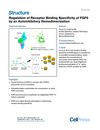
July 2017 in “Structure” In this study, researchers found that ligand homodimerization controls the receptor binding specificity of the FGF9 subfamily, preventing off-target activation of FGFR "b" isoforms.