27 citations
,
July 1997 in “PubMed” This study suggests that the harlequin ichthyosis mouse model closely resembles human type 2 harlequin ichthyosis, indicating its potential as a useful model for studying the human condition.
4 citations
,
March 1999 in “International Journal of STD & AIDS” This report details a case of severe recurrent bacterial vaginosis in a woman with Netherton's syndrome.
36 citations
,
July 1996 in “The journal of investigative dermatology/Journal of investigative dermatology” This research reports a new autosomal recessive mutation in mice, 'lanceolate hair', causing generalized alopecia and hair shaft abnormalities, which may serve as a model for Netherton's syndrome in humans.
 4 citations
,
October 2005 in “Pediatric Transplantation”
4 citations
,
October 2005 in “Pediatric Transplantation” This study identified that pediatric transplant recipients experience specific skin changes related to medication use, with unique conditions like ichthyosiform xerosis in kidney recipients and skin scaling with pellagroid appearance in bone marrow recipients.
 January 2025 in “Clinical Dermatology Review”
 In this case report, a 16-year-old female with Netherton syndrome, a rare genetic disorder, exhibited symptoms such as skin issues, hair abnormalities, and elevated serum IgE levels. The diagnosis was supported by skin biopsy, and treatment included topical therapies, NB-UVB, and infliximab.
November 2025 in “Вопросы современной педиатрии” In this case report, the researchers observed that combining growth hormone therapy with the biologic drug dupilumab effectively improved growth and health outcomes in a patient with Netherton syndrome and comorbid hypopituitarism, suggesting a multidisciplinary approach may be beneficial for managing such cases.
October 2025 in “Indian Journal of Paediatric Dermatology” In this case report, a 6-year-old boy with Netherton syndrome was diagnosed using trichoscopy, which revealed characteristic hair shaft abnormalities such as bamboo, golf tee, and matchstick hairs.
 53 citations
,
October 1978 in “Archives of dermatology”
53 citations
,
October 1978 in “Archives of dermatology” This study reports two cases of acquired zinc deficiency presenting with skin symptoms such as hair loss and acrodermatitis, suggesting these manifestations may help in diagnosing zinc deficiency in humans.
 7 citations
,
July 2003 in “Clinics in Dermatology”
7 citations
,
July 2003 in “Clinics in Dermatology” This article reviews several benign skin conditions in newborns, emphasizing the importance of correct identification to prevent unnecessary concern and interventions, but reports no new clinical results.
1 citations
,
February 2013 in “InTech eBooks” This article discusses research about Netherton syndrome, highlighting its contributions to understanding epidermal structure, immune responses, and processes like atopic dermatitis, but it reports no new clinical findings.
September 2021 in “Pediatrics in review” This case study describes a 7-month-old boy diagnosed with keratitis-ichthyosis-deafness syndrome due to a de novo GJB2 gene mutation, highlighting the challenges in treatment and eventual fatal outcome due to severe complications.
 29 citations
,
January 2007 in “American Journal of Clinical Dermatology”
29 citations
,
January 2007 in “American Journal of Clinical Dermatology” This article reviews the social and functional impact of eyebrow loss and highlights the limited treatment options compared to scalp alopecia, but reports no new clinical results.
 26 citations
,
March 2014 in “Journal of cutaneous medicine and surgery”
26 citations
,
March 2014 in “Journal of cutaneous medicine and surgery” This study provides evidence-based recommendations for the off-label use of topical vitamin D in treating certain skin conditions, but highlights the need for higher quality studies for further validation.
 24 citations
,
October 2014 in “Cold Spring Harbor Perspectives in Medicine”
24 citations
,
October 2014 in “Cold Spring Harbor Perspectives in Medicine” Genetic research has advanced our understanding of skin diseases, but complex conditions require an integrative approach for deeper insight.
 18 citations
,
June 1995 in “International Journal of Dermatology”
18 citations
,
June 1995 in “International Journal of Dermatology” Women experience various skin issues at different life stages, requiring careful treatment and awareness.
2 citations
,
March 2020 in “JAAD case reports” This article discusses the various clinical manifestations of kwashiorkor, resulting from severe protein malnutrition, and reports no new research findings.

In this study, trichoscopy was found to be a valuable non-invasive tool for diagnosing scalp lesions, enhancing diagnostic accuracy and reducing the need for scalp biopsies by identifying specific trichoscopic features associated with conditions like psoriasis, seborrheic dermatitis, and alopecia areata.
 108 citations
,
July 2002 in “Molecular and cellular biology”
108 citations
,
July 2002 in “Molecular and cellular biology” This study found that overexpressing Dsg3 in the suprabasal epidermis of transgenic mice resulted in flaking skin and abnormal hair growth, supporting Dsg3's role in regulating epidermal differentiation.
 55 citations
,
October 2003 in “Dermatologic Clinics”
55 citations
,
October 2003 in “Dermatologic Clinics” This article discusses the complexities of treating hair and scalp disorders in African American patients, emphasizing the importance of understanding their specific hair care practices and the unique impact on quality of life, but reports no new empirical findings.
51 citations
,
August 2013 in “The Journal of experimental medicine/The journal of experimental medicine” This study found that Wnt secretion is important for maintaining skin homeostasis in mice, as Evi-deficient mice developed psoriasis-like skin lesions and had an imbalance in immune cell populations.
 22 citations
,
November 2014 in “Psychiatric Clinics of North America”
22 citations
,
November 2014 in “Psychiatric Clinics of North America” This article reviews stress-related skin reactions, psychodermatology, and neuropsychiatric skin manifestations, and reports no new clinical results.
 1 citations
,
May 2018 in “The journal of investigative dermatology/Journal of investigative dermatology”
1 citations
,
May 2018 in “The journal of investigative dermatology/Journal of investigative dermatology” This meeting synopsis on the 66th Annual Montagna Symposium reports no new results but outlines discussions on precision dermatology, integrating molecular insights with clinical applications for personalized skin care.
 1 citations
,
July 2016 in “Elsevier eBooks”
1 citations
,
July 2016 in “Elsevier eBooks” Understanding skin structure and development helps diagnose and treat skin disorders.
 January 2024 in “bioRxiv (Cold Spring Harbor Laboratory)”
 In this study, the researchers found that deleting ceramide synthase 4 in the skin's epidermis alters stem cell differentiation, disrupting hair follicle structure and barrier function, potentially leading to immune responses similar to atopic dermatitis.
Vitamin D is crucial for skin health and managing skin diseases.
 67 citations
,
September 2003 in “Journal of cutaneous pathology”
67 citations
,
September 2003 in “Journal of cutaneous pathology” This review discusses the various skin manifestations associated with end-stage renal disease and their potential causes but reports no new clinical findings; the authors emphasize pruritus as a significant condition.
 47 citations
,
December 2020 in “Journal of the European Academy of Dermatology and Venereology”
47 citations
,
December 2020 in “Journal of the European Academy of Dermatology and Venereology” This article reviews the classification, diagnosis, and management of hair disorders, emphasizing the role of trichoscopy and early diagnosis for effective treatment but reports no new clinical findings.
 5 citations
,
January 2016 in “Journal of The American Academy of Dermatology”
5 citations
,
January 2016 in “Journal of The American Academy of Dermatology” This review discusses inflammatory and medication-related nephrocutaneous disease associations and emphasizes the importance of timely referral to nephrology for early management, but it reports no new clinical results.
 April 1963 in “Archives of Dermatology”
 This case study details the progression of a woman's skin conditions, initially diagnosed as acanthosis nigricans and later as mycosis fungoides, with changes in lesion characteristics and distribution over time.
 11 citations
,
October 2011 in “Allergologia et immunopathologia”
11 citations
,
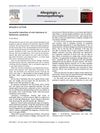
October 2011 in “Allergologia et immunopathologia” A girl with Netherton syndrome was able to eat wheat without allergies after a special treatment.