 December 2024 in “Journal of Clinical Research in Pediatric Endocrinology”
 This study explains that congenital adrenal hyperplasia due to 21-hydroxylase deficiency presents as a continuous phenotype and involves symptoms ranging from virilization to accelerated growth in children, with diagnosis relying on clinical, biochemical, and genetic evaluation.

This case study highlights a 38-year-old woman with lichen planopilaris experiencing gingival hypertrophy linked to high serum cyclosporine levels and relevant dosage, which improved after reducing the cyclosporine dose.
April 2020 in “Journal of the Endocrine Society” In this case report, successful management of a pituitary macroadenoma was achieved with thyroid hormone therapy, leading to reduced tumor size and improvement in symptoms like galactorrhea and headaches.
This study suggests that specific mutations in the MFN2 gene, including the p.Arg707Trp allele, can result in tissue-selective mitochondrial dysfunction leading to excessive upper body fat growth and low leptin levels.
April 2016 in “The journal of investigative dermatology/Journal of investigative dermatology” This study observed that sebaceous gland atrophy in psoriatic lesions correlates with the down-regulation of specific lipid biosynthetic gene modules, potentially affecting hair appearance without damaging follicles.
 January 2010 in “Actas Dermo-Sifiliográficas”
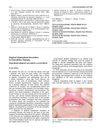
 A woman developed thick gums from everolimus treatment after a kidney transplant.
January 2005 in “Enlighten: Publications (The University of Glasgow)” In this transgenic mouse study, preliminary findings suggest that overt melanocyte hyperplasia may require prior keratinocyte hyperplasia, indicating a potential role for keratinocyte mutation in early melanoma development.
 1707 citations
,
December 2003 in “The New England Journal of Medicine”
1707 citations
,
December 2003 in “The New England Journal of Medicine” Combination therapy of doxazosin and finasteride safely and effectively reduces benign prostatic hyperplasia progression risk.
408 citations
,
May 2004 in “The Journal of clinical endocrinology and metabolism/Journal of clinical endocrinology & metabolism” This study found that dutasteride more effectively reduced serum dihydrotestosterone levels than finasteride in patients with benign prostatic hyperplasia.
235 citations
,
September 2004 in “The Journal of urology/The journal of urology” This review discusses the role of dihydrotestosterone in benign prostatic hyperplasia and reports no new results; the authors highlight 5alpha-reductase inhibitors as a well-established treatment option.
188 citations
,
January 2022 in “PubMed” This review discusses recent advancements in congenital adrenal hyperplasia research, including improved diagnostic techniques, alternative treatments, and insights from long-term outcome data, but it reports no new clinical results.
 157 citations
,
May 2021 in “Endocrine Reviews”
157 citations
,
May 2021 in “Endocrine Reviews” This review discusses recent advancements in understanding and managing congenital adrenal hyperplasia, including improvements in screening, diagnostics, and potential genetic and cell-based treatments, but reports no new clinical findings.
 151 citations
,
December 2004 in “Annals of the New York Academy of Sciences”
151 citations
,
December 2004 in “Annals of the New York Academy of Sciences” This review discusses nonclassical 21-hydroxylase deficiency as the most common autosomal recessive disorder in humans and highlights the effectiveness of glucocorticoid treatment in reversing related symptoms.
 150 citations
,
November 2007 in “The Journal of Clinical Endocrinology and Metabolism”
150 citations
,
November 2007 in “The Journal of Clinical Endocrinology and Metabolism” This study determined that nonclassical congenital adrenal hyperplasia has a 2.2% prevalence among hyperandrogenic women in Spain, with basal serum 17-hydroxyprogesterone showing excellent diagnostic performance.
 117 citations
,
May 2017 in “Human Reproduction Update”
117 citations
,
May 2017 in “Human Reproduction Update” This review examines the epidemiology, pathophysiology, diagnosis, and management strategies for non-classic congenital hyperplasia due to 21-hydroxylase deficiency, and provides evidence-based recommendations for its treatment and genetic counseling.
 100 citations
,
May 2011 in “Journal of Pediatric and Adolescent Gynecology”
100 citations
,
May 2011 in “Journal of Pediatric and Adolescent Gynecology” This review covers the pathophysiology, diagnosis, and treatment of congenital adrenal hyperplasia due to 21-hydroxylase deficiency and reports no new findings.
 88 citations
,
April 2017 in “Journal of Pediatric and Adolescent Gynecology”
88 citations
,
April 2017 in “Journal of Pediatric and Adolescent Gynecology” This review discusses the pathophysiology, diagnosis, and treatment of congenital adrenal hyperplasia, but reports no new research results.
 82 citations
,
February 1989 in “The Journal of clinical endocrinology and metabolism/Journal of clinical endocrinology & metabolism”
82 citations
,
February 1989 in “The Journal of clinical endocrinology and metabolism/Journal of clinical endocrinology & metabolism” This study found that in men with benign prostatic hyperplasia, a 3-month treatment with a long-acting GnRH agonist significantly reduced intraprostatic DHT and 3α-diol levels by about 90% and testosterone by about 75%.
 70 citations
,
November 2013 in “The BMJ”
70 citations
,
November 2013 in “The BMJ” This study observed a temporal association between tamsulosin use for benign prostatic hyperplasia and an increased risk of severe hypotension requiring hospital admission during the first eight weeks of treatment initiation and restart.
 67 citations
,
February 2015 in “Life Sciences”
67 citations
,
February 2015 in “Life Sciences” This review discusses phytotherapy options for managing benign prostatic hyperplasia, noting some herbal agents show promise in trials for mild-moderate symptoms but more evidence is needed for others.
 66 citations
,
April 2017 in “International Journal of Andrology”
66 citations
,
April 2017 in “International Journal of Andrology” This study found that 5α-reductase inhibitors significantly increase the risk of erectile dysfunction and hypoactive sexual desire in men with benign prostatic hyperplasia, compared to placebo.
 62 citations
,
March 2011 in “European journal of endocrinology”
62 citations
,
March 2011 in “European journal of endocrinology” This study found that parents identified with cryptic NCCAH through genetic testing are mostly asymptomatic but may experience temporary female infertility and require glucocorticoid stress coverage in specific circumstances.
 59 citations
,
January 2010 in “International Journal of Pediatric Endocrinology”
59 citations
,
January 2010 in “International Journal of Pediatric Endocrinology” This review discusses the pathophysiology, diagnosis, and treatment of nonclassic congenital adrenal hyperplasia due to 21-hydroxylase deficiency and provides no new clinical results.
 56 citations
,
December 2011 in “Steroids”
56 citations
,
December 2011 in “Steroids” This review discusses the genetics and variable phenotypic expression of nonclassic congenital adrenal hyperplasia, and reports no new clinical results; the authors call for further research on long-term health impacts and treatment strategies.
 55 citations
,
August 2008 in “Reviews in endocrine and metabolic disorders”
55 citations
,
August 2008 in “Reviews in endocrine and metabolic disorders” This review discusses clinical, hormonal, and genetic aspects of nonclassic adrenal hyperplasia and reports no new findings; the condition is highlighted as a potential cause of premature adrenarche and other symptoms in young people.
54 citations
,
September 2002 in “Annals of Pharmacotherapy” This review discusses various herbal therapies, such as Serenoa repens and Pygeum africanum, for treating benign prostatic hyperplasia, noting their potential but highlighting unresolved questions about their efficacy and safety.
 54 citations
,
May 1998 in “Urology”
54 citations
,
May 1998 in “Urology” This study demonstrates that patients with benign prostatic hyperplasia have a higher severity and frequency of male pattern baldness compared to a control group.
 49 citations
,
January 2010 in “International Journal of Pediatric Endocrinology”
49 citations
,
January 2010 in “International Journal of Pediatric Endocrinology” This review covers the pathophysiology, diagnosis, and treatment of nonclassic congenital adrenal hyperplasia due to P450c21, but it reports no new clinical results.
 43 citations
,
August 2016 in “Scientific Reports”
43 citations
,
August 2016 in “Scientific Reports” This animal study found that Cinnamomi cortex water extract reduced prostate weight and improved histological changes in a benign prostatic hyperplasia model, suggesting potential as a treatment.
 42 citations
,
April 2013 in “Steroids”
42 citations
,
April 2013 in “Steroids” This review discusses the pathophysiology, molecular genetics, and management of non-classic congenital adrenal hyperplasia due to 21-hydroxylase deficiency, with no new clinical findings reported.